A year after its dramatic ouster from both federal and provincial government, the Nepali Communist Party (NCP), which is the unified front of the former CPN (Maoist Centre) and the CPN (Unified Socialist) among others, is preparing for a political comeback across provinces.
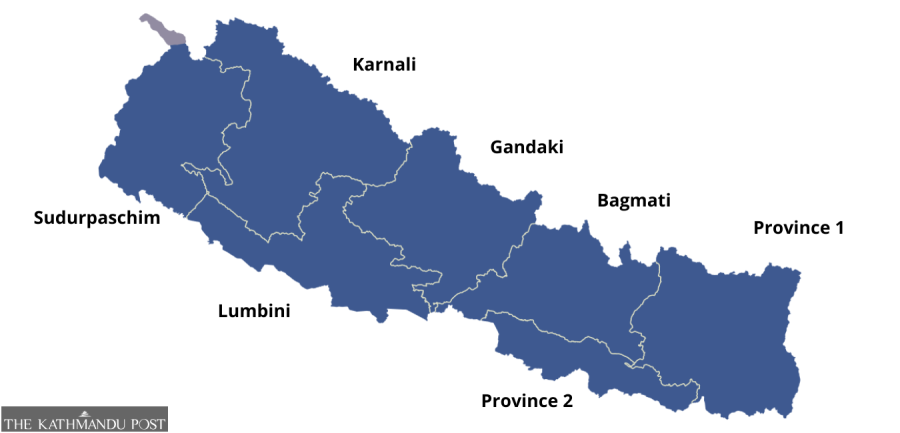
With a serious political rift between the Nepali Congress and CPN-UML, the NCP has launched parallel negotiations with both forces to reshape regional power dynamics. The political realignment has advanced rapidly in Sudurpaschim and Karnali, while tremors are felt across Lumbini and Bagmati. The party leadership confirmed that they are positioning themselves to lead multiple provincial executives by forming customised alliances depending on local legislative arithmetic.
While the NCP is demanding the chief minister's post in provinces where it believes it commands the strongest position, it is also keeping the option of joining governments as a coalition partner elsewhere.
The most immediate political realignment is unfolding in Sudurpaschim province, where relations between the Congress and the UML have deteriorated sharply. Claiming to be the largest force in the provincial assembly following the unification with Nagarik Unmukti Party lawmakers, the NCP has formally staked its claim to lead the provincial government.
"The chief minister's post belongs to us as the largest party in Sudurpaschim," NCP spokesperson Prakash Jwala said. "Discussions are progressing on that basis."
The 52-member provincial assembly in Sudurpaschim requires 27 votes for a majority. The NCP now commands 22 seats, while the UML has 11, giving the two parties a comfortable majority if they agree to govern together. The Congress has 18 seats, meaning an alternative Congress-NCP alliance would also command a majority.
The NCP has demanded the resignation of Chief Minister Kamal Bahadur Shah of the Congress, arguing that the collapse of the Congress-UML coalition has rendered his government politically untenable. The immediate trigger for the breakdown came after Shah dismissed four UML ministers from his Cabinet.
UML secretary Padma Aryal said the dismissal fundamentally altered the coalition's future.
"The coalition ran into trouble after our four ministers were removed from the government," said Aryal. "Now discussions will naturally move towards forming another alliance."
Karnali has also emerged as a likely venue for a new political arrangement. Congress and the NCP lawmakers have already registered a no-confidence motion against Chief Minister Yamlal Kandel of the UML, proposing Congress parliamentary party leader Jiban Bahadur Shahi as his replacement.
The 40-member assembly requires 21 votes to form a government. With 14 seats each, the Congress and the NCP together enjoy a clear majority over the UML, which holds 10 seats.
Beyond these two provinces, the NCP is closely monitoring political developments in Lumbini and Bagmati provinces. Indrajit Tharu, NCP lawmaker in Lumbini, said the party would join a new coalition government in Lumbini if the current alliance collapsed. "If circumstances lead to a new coalition, we are ready to participate in the government," said Tharu.
The Congress has repeatedly expressed dissatisfaction with the Lumbini provincial budget, fuelling speculation about strains within the ruling alliance.
The provincial assembly currently has 83 serving members after vacancies. A government requires 42 votes. The Congress has 27 seats and the NCP 13, leaving them two seats short of a majority. Fringe parties, including the Nagarik Unmukti Party, the Rastriya Prajatantra Party, the Janata Samajbadi Party and the Janamat Party, could therefore become decisive in government formation. An alternative UML-NCP alliance would command 43 seats, enough for a majority.
In Bagmati province, former chief minister and NCP leader Shalikram Jamkattel said his party would insist on leading any new coalition if the existing arrangement collapsed. "The Congress-UML coalition continues despite internal dissatisfaction. If a new coalition is formed with our participation, we will claim the chief minister's position,” said Jamkattel.
Although the 110-member assembly in Bagmati currently has six vacant seats, leaving 104 serving lawmakers, the Congress and the NCP together would comfortably exceed the 53-seat majority threshold. A UML-NCP coalition, however, would require support from smaller parties such as the Rastriya Prajatantra Party or Hamro Nepali Party.
By contrast, Koshi and Gandaki provinces remain relatively stable under the existing coalition. UML leader Hikmat Karki continues as chief minister in Koshi, while Congress leader Surendra Pandey heads the Gandaki government, leaving the NCP in opposition in both provinces.
According to party leaders, NCP coordinator Pushpa Kamal Dahal held discussions this week with Congress President Gagan Thapa and UML Chairman KP Sharma Oli before leaving for Sri Lanka for an event.
According to Jwala, further decisions would follow Dahal's return. "Once our coordinator returns, there will be greater clarity about coalition arrangements in Sudurpaschim and other provinces," he said. "Discussions with both the Congress and the UML are ongoing at both federal and provincial levels." He maintained that a broader understanding among the three major parties would have been preferable.
"Our preference has always been for the parties that drafted the constitution to work together in provincial governments instead of competing solely for power," he said. "Unfortunately, the conflict between the Congress and the UML, beginning in Sudurpaschim, has made that increasingly difficult."
Congress General Secretary Gururaj Ghimire said his party remained open to provincial cooperation while believing that democratic competition required at least one major party to remain in opposition.
"Our position is that it is healthier for one major party to sit in opposition rather than having all three governing together," said Ghimire. "Even if the alliance has broken down in Sudurpaschim, that does not automatically mean cooperation with the UML cannot continue elsewhere." Ghimire added that discussions between Dahal and Thapa had deliberately kept future provincial cooperation options open.
The current manoeuvring reflects a dramatic reversal from last July, when the Congress-UML alliance pushed the NCP out of power at both federal and provincial levels.




 24.79°C Kathmandu