Pitch overhaul in progress for NPL and U19 World Cup
While curators strip Kirtipur’s clay to give pacers a fighting chance in the NPL before tight deadlines take over, Mulpani’s grounds have the luxury of time ahead of the U19 World Cup.Ground staff and curators work in tandem to level and sprig fresh turf on the main pitch block at the TU International Cricket Ground in Kirtipur on Friday. Hemanta Shrestha/TKP
Madhu Tamang dug his thumbs into the black clay, feeling for roots on the pitches at the Tribhuvan University International Cricket Ground in Kirtipur on Friday morning.
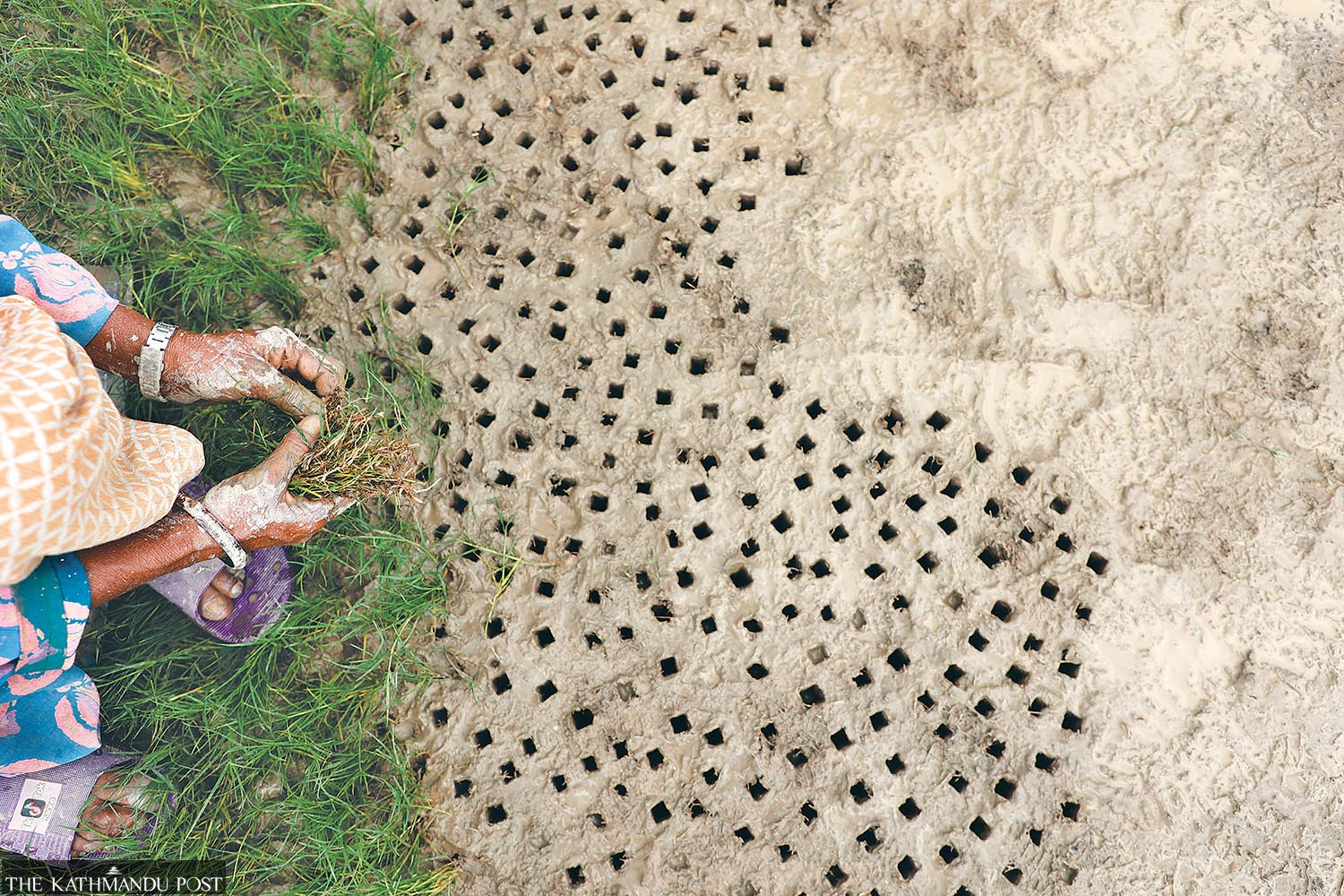
Around Tamang, ground staff stripped away topsoil—scraping the pitch down to its foundation to yank out dead vegetation before transplanting fresh local grass taken from inside the 30-yard circle.
“Ground staff have removed the ruined soil all the way down to the roots while preparing the new pitch, after which they started planting grass, which will be completed today,” said Roshan Kumar Singh, vice president of the Cricket Association of Nepal (CAN) and tournament coordinator for the U19 World Cup preparations.
For two years, this strip of dirt has held a dirty secret in Nepali cricket.
When the previous season of the NPL kicked off, franchise scouts built rosters around pace because Kirtipur’s pitches were laid with fresh green grass. Teams anticipated a permanent shift in surface behaviour—one that would offer genuine carry for pacers alongside traditional spin.
Early on, it delivered. Sudurpaschim Royals’ Scott Kuggeleijn, Chitwan Rhinos’ Sohail Tanvir and Rijan Dhakal, Janakpur Bolts’ Kishor Mahato, and Kathmandu Gorkhas’ Karan KC found immediate success.
But the seam movement was short-lived. Within a week, the grass withered, and the pitch reverted to its low, slow nature. Spinners like Janakpur’s Lalit Narayan Rajbanshi, Karnali Yaks’ Bipin Sharma, and Sudurpaschim’s Saif Zaib dominated the remainder of the tournament.
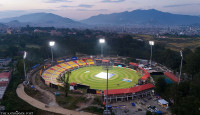
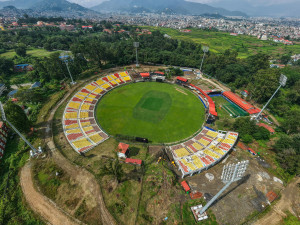
While the TU Ground itself has gradually transformed into a modern international facility with grandstands and floodlights, the pitch characteristics have remained unchanged. Now, CAN is undertaking a major pitch overhaul across three venues ahead of the upcoming NPL third edition and the 16-nation ICC U19 Women’s T20 World Cup—the largest cricket event Nepal has co-hosted with Bangladesh.
A ground staff member manually sprigs local grass into damp clay as part of pitch renovation work at the Lower Mulpani Ground on Friday.
Grass laying at Kirtipur was completed on Friday, following earlier work at Upper Mulpani, while work at Lower Mulpani remains ongoing. In total, eight pitches are being constructed in Kirtipur, seven in Upper Mulpani, and six in Lower Mulpani.
“The crucial factor is how long the grass remains on the wicket. As long as the grass stays, the pitch remains good. Once it dies off, the surface turns flat,” Singh explained. “If grass roots penetrate four inches deep, they bind the soil together, allowing the wicket to set properly.”
Achieving that four-inch depth typically requires four months. However, curators have barely two and a half months before the NPL returns after Dashain. Furthermore, as the month of Bhadra begins, root growth naturally slows.
“Given the tight timeframe, the chances of roots reaching the full four inches are slim,” Singh admitted. “Had we used Bermuda grass, the wicket would have lasted for years, but we simply did not have the lead time. Still, we are confident it will perform well.”
CAN is also leaning on the weather. Because deep moisture encourages root penetration, a prolonged monsoon could work in their favour despite the delayed start.
"If the monsoon stretches out, it will actually help," Singh noted. "We expect grass to hold on the wicket for about two weeks into the NPL. After that, based on past behavior, the pitch will likely turn flat again."
The entire pitch renovation across Kirtipur and Mulpani is estimated at Rs7 to 8 million—excluding major infrastructure—funded upfront by CAN and subject to reimbursement by the ICC.
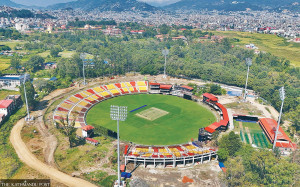
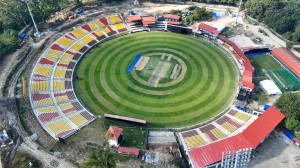
While TU Ground will be the primary host for the NPL, all three venues will serve the U19 World Cup, with Lower Mulpani accommodating 5,000 fans and Upper Mulpani adding a 2,000-seat temporary stand. Curators Prafulla Pradhan and Bangladesh’s Mohammad Abdul Al Mamun are overseeing operations at Mulpani.
“Once the playing surfaces are finalised, full facility upgrades will commence at Kirtipur—including renovated dressing rooms, ice baths, dining halls, VIP boxes, numbered seating, and streamlined entry gates,” Singh said. “Security remains a top priority, and comprehensive protocols will be locked in once ICC representatives arrive.”
For CAN and its groundskeepers, the coming weeks will reveal whether time and weather are on their side—or if Kirtipur’s turf will once again have the final say.




 15.74°C Kathmandu