Shashank Koirala set to spearhead split in Nepali Congress
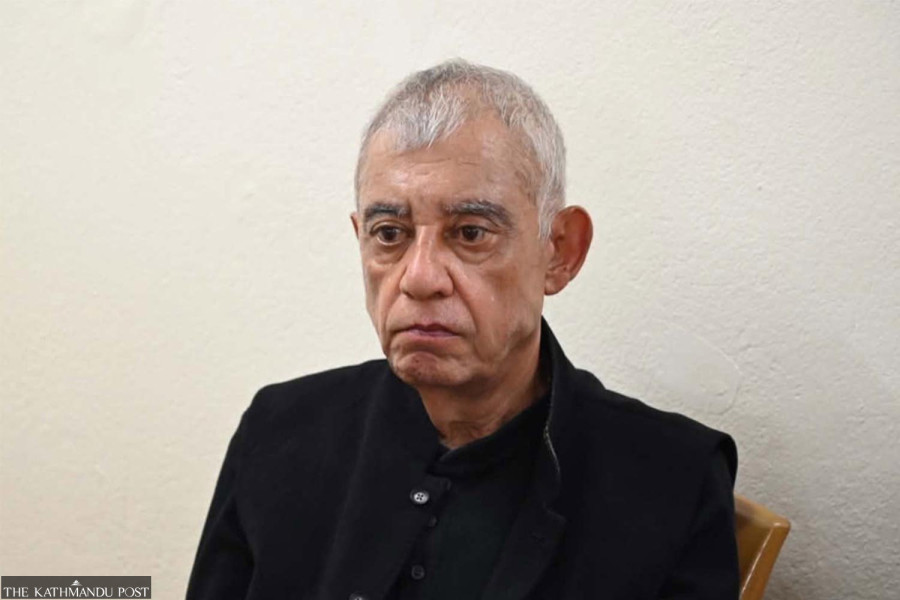
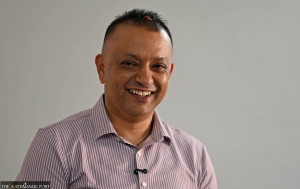
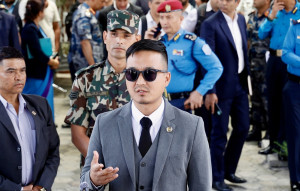
When former acting president Khadka hesitated to lead the party towards a split, the Deuba faction appointed Koirala on Saturday to steer a 521-member committee. Shashank Koirala Post file photo
Shashank Koirala may have harboured the ambition of leading the Nepali Congress as its president, but the former general secretary now stands at a historic crossroads. He is preparing to lead a prospective new political outfit outside the traditional four-starred banner and election symbol “tree”.
Following opposition from the Sher Bahadur Deuba-led faction to the Congress’s special general convention held earlier this year, the group is organising a three-day national gathering in Kathmandu from August 14 to 16. It will prepare for the formation of a separate political party, unless a dramatic reconciliation occurs between the Congress factions anytime soon.
When the former acting president Purna Bahadur Khadka stepped back from coordinating the event, the Deuba faction appointed Koirala on Saturday to steer the 521-member main organising committee. Until then, Khadka had been heading the activities of the Deuba faction.
On Saturday, Shashank not only replaced Khadka but also took on the leadership role with a firm commitment to spearheading a new party—minus the tree symbol and the four-starred flag.
“Shashank Koirala is our leader today, and he will remain our leader moving forward,” said senior party leader Bimalendra Nidhi.
The day after his appointment, Shashank hosted the first top-level strategic meeting at his residence in Maharajgunj on Sunday. However, his decision has drawn sharp criticism across social media platforms, with many accusing the son of the legendary founder BP Koirala, of engineering a party split. Public sentiment remains largely hostile to the move.
Muktinath Panta, a former security supervisor currently employed at the Smithsonian Institution’s National Air and Space Museum, expressed deep dismay over Shashank’s decision on Facebook. “My goodness, what has happened to the intellect of BP’s son? Where will following leaders like Mohan Bahadur Basnet, Min Bishwakarma, Kanchharam Tamang, and Kundan Raj Kafle lead him after breaking the party? Destruction leads to perverted wisdom. What would BP think from above? He could have at least remained inactive. After enjoying power for so many years on his father’s legacy, he is now choosing to sink the ship along with himself.”
Tej Bahadur Raut, a former teacher currently residing in South Korea, wrote, “He [Shashank] neither possesses the capacity to establish a party nor the ability to run one successfully.
“Nor did he accomplish anything significant while remaining within the Nepali Congress. He has no proven capability other than receiving things served on a platter.”
Addressing Shashank directly, former senator of Tribhuvan University Pankaj Subedi posted, “Personally, Dr Shashank Koirala is a good man. I remain hopeful that he will act in the broader interest of the Nepali Congress. Please engage in restrained and constructive discussions with President Gagan Thapa to build a unified Nepali Congress. Do not allow this conspiracy to stain your legacy permanently.”
Although a few supporters attempted to defend his move, such positive responses were heavily outnumbered on social media.
Prior to entering full-time politics, both Shashank Koirala and his cousin Shekhar Koirala worked in the medical profession. Shashank established his reputation as an ophthalmologist, while Shekhar practised as a physician. Both transitioned into active politics primarily to assist the late party president Girija Prasad Koirala. Their entry into central-level politics came formally during the party’s 11th general convention in 2006.
During that convention, Shashank was elected as a central working committee member when only 25 seats were open for election, securing the highest number of votes after Sushil Koirala. In contrast, Shekhar was nominated to the committee directly by Girija Prasad Koirala.
At the 13th general convention in 2016, Shashank was elected general secretary with minimal campaign effort. During that election, he defeated Gagan Thapa, who now serves as the party president. Another prominent leader, Arjun Narsingh KC was also in the contest. Yet, Shashank did not even need to actively solicit votes from the delegates. At the time, he was viewed across the party rank and file as the physical living shadow of BP. The heavy political legacy of the Koirala family, paired with emotional appeal and widespread trust among cadres, positioned him as the natural successor for the party presidency. However, during his five-year tenure as general secretary, he failed to translate that organisational capital into active leadership.
Shashank was rarely seen taking a proactive role in party organisation, refrained from driving ideological debates, and remained largely silent in parliament. As his term progressed, he gradually transitioned from a decisive figure into an inactive politician. Although he held strong ambitions to run for party president at the 14th general convention, neither the establishment faction showed interest in backing him nor did the opposition faction place its ultimate trust in him. The establishment re-nominated Sher Bahadur Deuba, while the opposition group put forward Shekhar.
Even when his own cousin Shekhar ran for the post, Shashank refrained from openly endorsing him. Instead, his close proximity to Deuba drew severe criticism from within the opposition camp. Consequently, he was completely left out of the presidential race he wished to contest.
Having spent over four decades in Nepali Congress politics and enjoying a natural stature as the youngest son of BP Koirala, Shashank now stands at a decisive juncture. Once expected to lead the entire Nepali Congress by carrying forward BP’s legacy, he has chosen a path that strays from the political tradition founded by his own father.
How Shashank agreed to lead the breakaway faction
Until Friday, the question of who would assume the leadership remained unresolved even within the Deuba faction. According to a senior leader from the Deuba camp, Khadka maintained a firm stance against leading a party split from the outset, which excluded his name from serious consideration.
Consequently, attention shifted entirely toward the Koirala brothers. Leaders within the faction noted that a majority agreed to project Shekhar if he was willing to accept the role.
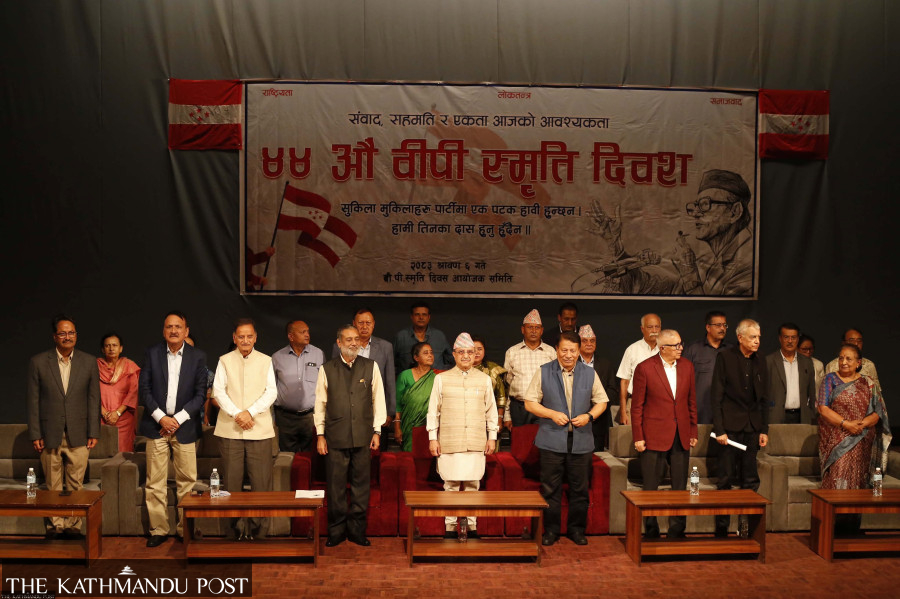
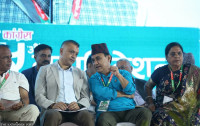
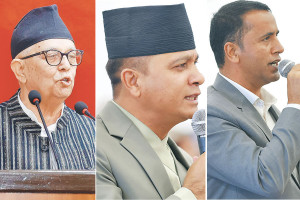
Leaders of the Nepali Congress dissident faction pictured at a function organised to mark the 44th death anniversary of BP Koirala, the party’s founding leader and ideologue, at Nepal Academy in Kamaladi, Kathmandu, on July 22. Post file photo
Sources revealed that a high-level meeting involving leaders Bimalendra Nidhi, Krishna Prasad Sitaula, Prakash Man Singh, Prakash Sharan Mahat, NP Saud, and Bijay Kumar Gachhadar took place on Friday to settle the leadership issue. The key turning point occurred when Shekhar, who was in Biratnagar on Friday, telephoned Sitaula and proposed projecting Shashank instead, signalling his own reluctance to head a breakaway faction.
Following Shekhar’s retreat, the meeting turned to Shashank as the primary choice. Before reaching a final decision, leaders posed a direct question to him: “Are you ready to lead not just the national gathering on August 14, but all subsequent political processes that follow?” When Shashank explicitly replied “I am ready,” the committee formally put his name forward.
Unless dramatic political developments unfold within the next two weeks, Shashank is set to become the president of a newly registered party, officially separating from the mainstream Nepali Congress.
Among BP Koirala’s three sons, the eldest Prakash, and Shashank were active in politics. Following King Gyanendra’s takeover in 2005, Prakash joined the royal cabinet as the minister for environment, science, and technology.
Due to his support for the royal move, the Nepali Congress expelled Prakash even from ordinary party membership. Since the collapse of the King’s direct rule, Prakash has been unable to return to Congress politics and has largely vanished from the national scene.
Following Prakash’s exit from the mainstream, Girija brought Shekhar and Shashank into central politics together to establish an institutional line of succession within the Koirala family. Now, following Prakash’s footsteps, Shashank is also prepared to abandon the party founded by his father.
When asked how he views the departure of both sons of BP from the party mainstream, Prakash said, “I could not remain active in the Nepali Congress mainly because of the governance style observed over the past 10 to 15 years and the party’s decision to abolish the constitutional monarchy. The core issue was that I disapproved of the political parties’ governance style following the royal palace massacre.”
Prakash further claimed that Girija never intended to make him the political heir. “Had that been the case, why would I have reached the point of leaving the party?”
However, Gokarna Paudel, a senior party leader who spent 20 years as an aide to Girija, clarified that the original line of succession was never centered on BP’s sons, but rather on the trio known colloquially as ‘RSS’—Ramchandra Poudel, Shailaja Acharya, and Sher Bahadur Deuba.
In the initial years, Deuba was the primary favourite. Later, Girija shifted his preference to Ramchandra. As trust eroded with Poudel as well, Sushil Koirala emerged as the key successor. “It was only after Sushil came to prominence that a desire to promote Shashank over Shekhar became apparent,” said Paudel.
“Sushil and Shashank were uncle and nephew. During their years in exile, they shared a room and maintained a close personal bond. That is why Sushil favoured Shashank over Shekhar,” said Paudel. “Sushil’s true wish was to see Shashank become the president of the party. Now, it appears he may get the opportunity to become the president of one faction, if not the entire Nepali Congress.”
Meanwhile, Prakash Koirala argues that establishing a new party from within the Nepali Congress holds no practical utility in contemporary politics, criticising his younger brother’s decision as ill-advised.
“He has taken a decision out of confusion and frustration. One must exercise patience in politics. BP Koirala exercised immense patience, which ultimately saved the nation and ushered in democracy. That historical lesson must not be forgotten,” said Prakash. “Now is not the time to form a new party. There are already numerous political groups operating in BP’s name. The goal should be to bring everyone together under one roof, rather than plunging the country into further chaos.”
Defending his decision, Shashank stated that circumstances forced him onto this path. “Despite our continuous efforts, patience, and initiatives to maintain complete unity within the party, leaders in executive positions failed to play a meaningful role. Therefore, we were compelled to organise this national gathering to address the deep disappointment prevailing among party leaders, cadres, elected representatives, supporters, and well-wishers,” said Shashank, addressing a press conference on Saturday after assuming the coordinator's role.
Party insiders say that these developments are happening with the full knowledge of former president Deuba. However, it remains uncertain whether Deuba himself will actively participate in the national gathering or the formal registration of a new party.
Deuba’s own actions contributed significantly to the internal rift. On April 17, the Supreme Court upheld the Election Commission’s decision to recognise the special general convention and the central working committee headed by Thapa. Unsatisfied with the verdict, the Deuba faction filed a review petition with the court.
Unless a dramatic turn of events unfolds prior to the gathering, the registration of a new party remains nearly certain. Leaders aligned with the Deuba faction indicated that the new party will be officially announced during the closed-door session following the inauguration of the national gathering on August 14.
Although the name of the new party has not been decided, internal discussions on it are ongoing. Sitaula has proposed naming it the ‘Nepali Congress (Muldhar)’, while Nidhi suggested “Progressive Congress”. Other leaders have argued for the 'Nepali National Congress' to connect the entity with its historical legacy. Nidhi stated that all operational guidelines and party directions will be finalised at the upcoming gathering.




 23.39°C Kathmandu