Madhesh tensions ease after all-party talks, heightened security
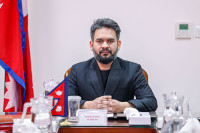
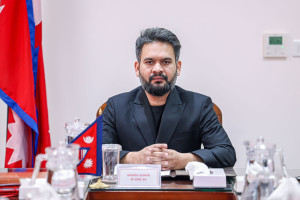
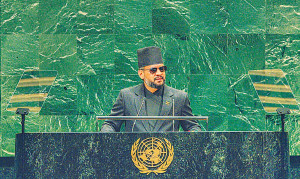
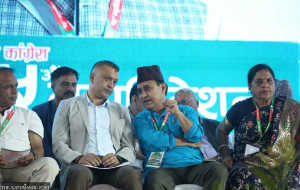
Prime Minister Shah met Madhesh leaders and lawmakers Friday, while home minister reached agreements with victims’ families in Sunsari and Siraha Thursday.Prime Minister Balendra Shah consults political leaders from the Madhesh on Friday. RSS/Handout
Tensions across parts of Madhesh and Koshi provinces have begun to ease following a series of all-party meetings involving senior political leaders, local administrations, civil society representatives, religious leaders and community elders, backed by a heightened security presence in sensitive areas.
Security forces remain on alert after several days of unrest triggered by local communal disputes that spread to multiple districts. Curfews remain in force in parts of Sunsari, Siraha, Saptari and Dhanusha, while the District Administration Office has continued restrictions on public gatherings and demonstrations in Parsa.
The Nepali Army has been deployed alongside reinforced contingents of the Nepal Police and the Armed Police Force to maintain order. Nepal Police Headquarters has also dispatched senior officers to Koshi and Madhesh provinces to oversee security operations and coordinate the response.
Deputy Inspector General Abi Narayan Kafle, central spokesperson of police, noted that the situation across the Tarai is gradually returning to normal following appeals for calm from political leaders and peace initiatives led by local administrations and community groups.
“We have taken 38 people into custody from various locations in Koshi and Madhesh provinces on charges of disturbing public order, spreading inflammatory content and attempting to incite communal discord,” said Kafle, who is stationed in Saptari to supervise security operations.
He said plainclothes personnel have been deployed in sensitive areas for round-the-clock surveillance, while drones are being used to monitor large gatherings and identify potential security risks.
Kafle said the situation improved after Home Minister Sudan Gurung visited Sunsari and Siraha where he held talks with victims’ families and community representatives, leading to agreements late on Thursday.
Amid the heightened security measures, Prime Minister Balendra Shah on Friday convened a meeting at the Prime Minister’s Office with lawmakers from the Rastriya Swatantra Party and other elected representatives from the Tarai-Madhesh region to discuss the government’s response.
According to participants, the prime minister said the government’s immediate priority was to provide relief to affected families, ensure public safety and conduct an impartial investigation into the incidents.
“The government has adopted a comprehensive approach to maintain law and order, protect vulnerable communities and prevent any further escalation,” Shah told the meeting. He also urged lawmakers to return to their constituencies and help strengthen trust between local communities and the state.
Before meeting lawmakers, Shah held separate consultations with leaders representing Madhesh-based parties. Those attending included Janamat Party chair CK Raut, Janata Samajbadi Party Nepal leaders Upendra Yadav and Mahantha Thakur, Rastriya Mukti Party Nepal leader Rajendra Mahato, Rastriya Nirman Dal chief Samim Miya Ansari, and lawmakers Prabhu Sah, Amaresh Kumar Singh and Sharat Singh Bhandari.
The discussions focused on measures to maintain public order and prevent similar incidents in the future.
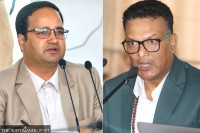
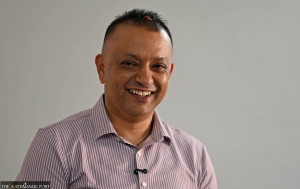
After the meeting, CK Raut said the government should establish permanent district-level mechanisms for dialogue instead of responding only after violence erupts. He proposed creating local religious and civic councils comprising faith leaders, youth representatives and respected community members to hold regular discussions aimed at preventing tensions.
“In every community there are individuals capable of provoking conflict. We need preventive measures at the local level before such incidents escalate,” Raut said.
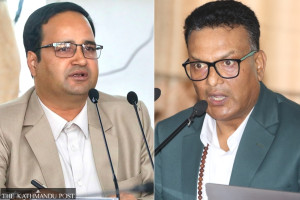
Rajendra Mahato said lasting peace would require both effective policing and sustained political commitment to address underlying grievances.
Samim Miya Ansari, however, questioned the government’s initial response, saying the home minister’s visit to Sunsari came several days after the first incidents were reported.
“We spent more than two hours discussing the situation with the prime minister. It is concerning when a local dispute develops into wider communal unrest,” Ansari said. “There is a public perception that the state did not respond decisively during the initial phase of the crisis.”
The developments also prompted concern from the country’s highest constitutional offices.
President Ramchandra Paudel held consultations at Sheetal Niwas with former President Ram Baran Yadav and former Vice President Paramananda Jha on the situation in Tarai.
The meeting focused on ways to ease communal tensions, strengthen social harmony and preserve national unity. Speaking to reporters afterwards, Yadav said security measures alone would not resolve the crisis and urged the government to build trust with political parties, civil society and local communities through dialogue.
National Assembly chair Narayan Prasad Dahal also expressed concern over growing polarisation and appealed to all sections of society to uphold Nepal’s tradition of religious tolerance and social harmony.
Nepali Congress president Gagan Thapa on Friday held a meeting with party leaders, mayors and provincial assembly members from Koshi and Madhesh provinces, urging them to help prevent the spread of misinformation.
“Misinformation can cause irreversible harm before it is exposed,” Thapa said, urging citizens to verify information through official sources before sharing or reacting to content on social media.
He also called on party workers to help defuse tensions.
“Regardless of how the incidents began, our collective responsibility is to restore peace through restraint, dialogue and mutual trust,” he said.
While political leaders met in Kathmandu, local administrations, religious leaders, business organisations and community groups stepped up peace-building efforts in several districts.
In Panchthar, local residents gathered at the Sumhalung Temple in Phidim Municipality to release doves as a symbolic appeal for peace and communal harmony.
In Biratnagar, political parties, civil society groups and local organisations organised a peace march that passed through the city’s main streets.
“Only dialogue, respect for the law and mutual trust can restore normalcy,” said Wasim Alam, one of the participants.
In Parsa, the Birgunj Chamber of Commerce and Industry appealed for calm, warning that prolonged unrest was disrupting businesses and daily life. It urged all sides to resolve differences through dialogue and safeguard Nepal’s social harmony.
Chamber president Hari Prasad Gautam said curfews and violence had affected trade, businesses and supply chains, adding that stability was essential for economic activity to resume.
Authorities also intensified local coordination efforts in districts that have remained peaceful but are considered sensitive.
In Rautahat, Chief District Officer Dinesh Sagar Bhusal chaired an all-party meeting attended by local representatives, security officials and civil society members. Participants agreed to strengthen coordination to preserve communal harmony and take legal action against anyone attempting to disturb public order.
In Saptari’s Khadak Municipality, Rastriya Swatantra Party lawmaker Sitaram Sah led a goodwill march through Kalyanpur market, where participants carrying banners promoting harmony urged people of all communities to maintain peaceful coexistence.
At Lumbini, Buddhist monks from the Theravada and Mahayana traditions gathered at the Mayadevi Temple to offer joint prayers for peace. Organised by the Lumbini Development Trust, the gathering called for non-violence, reconciliation and peaceful resolution of disputes.
In Banke, Chief District Officer Dil Kumar Tamang convened an all-party security meeting in Nepalgunj, where participants agreed to organise a social harmony march on Saturday.
The district administration also banned the use of high-volume sound boxes in public places and prohibited the display of weapons or objects that could be used as weapons during religious and public processions.
With political outreach continuing in Kathmandu and reconciliation efforts gathering pace in affected districts, authorities say their immediate priority is to maintain public order and strengthen confidence among communities as normal life gradually returns across the southern plains.




 17.6°C Kathmandu