What makes a Nepali film work today? Industry insiders explain hits, flops, and changing viewer habits
While some films become nationwide sensations, others struggle to survive beyond a few screenings, raising questions about their stories and marketing.Shutterstock
Nepali cinema today exists in a striking duality. At one end, there are films that become cultural phenomena and nationwide obsessions. Reviews flood among the audience with packed cinema halls and week-long screenings. At the other end are the films that disappear within days of their release.
Board Member of Film Development Board, Nepal, Ganesh Prasad Subedi says, “Everyone wants to make a good film. What ultimately determines its appeal is how truthfully it reflects life.”
“Cinema is art and art comes from life,” he adds. “Audience preferences may differ, but cinema that drifts too far away from reality can struggle to resonate with viewers.”
Representation of socioeconomic and political realities can also determine the film’s longevity and emotional impact.
Behind this incentive lies the film ‘Purna Bahadur Ko Sarangi’—recorded as the highest grossing Nepali film to have earned over Rs468.74 million, ‘Kabaddi 4’ with over Rs214 million, ‘Chhakka Panja 4’ with Rs175 million and ‘Jaari’ with Rs174.47 million.
All of these movies are rooted in social realism and indigenous and regional narratives. Screen presence of celebrated Nepali actors, including Dayahang Rai, Bijay Baral, Miruna Magar, and Priyanka Karki, also amplified their popularity. However, such is not always the case.
Rajesh Hamal is one of the most celebrated actors of Nepal. Known as ‘Mahanayak’, his profound rebellious presence and defiance of authority on screen were revolutionary during the Maoist Insurgency. At the time, his characters became role models, heroes.
Today, however, the social mindset has shifted. Relatability to such rebellion has declined, and bringing the same outrage on screen no longer carries the same emotional weight.
Kathmandu’s answer to burnout: dancing at sunrise instead of drinking at night.
“Bringing the same character in films today feels excessively dramatised and therefore cannot leave an impact,” says Subedi.
He believes the layers of movies, including context, plot, cinematography, setting, costume, language, songs, and the embodiment of culture, become central to their appeal in cinema halls.
Commerciality of a film is also largely determined by its marketing strategies and advertisements, which prove whether it is a ‘Blockbuster’ or not.
To promote her horror film ‘Mummy’, Priyanka Karki was found dressed as a ghost, frightening the public on the streets of Kathmandu. Similarly, in the premiere show of ‘Ek Mutthi Badal’, which represents the psychological complexities of a woman surrounding her marriage, Aanchal Sharma introduced the film in a bridal dress designed by Manish Rai.
Dances of viral Nepali movies’ songs such as ‘Nira Jahile Risaune’ from ‘Purano Dunga’, ‘Rukum Maikot’ from ‘Khusma’, ‘Maya Pirati’ from ‘Kabaddi Kabaddi Kabaddi’, ‘Kutu Ma Kutu’ from ‘Dui Rupaiya’, ‘Gojima Dam Chaina’ from ‘Changa Chet’ on Facebook, Instagram, X, and TikTok, also spark curiosity regarding the films to the viewers.
Integration of Artificial Intelligence is said to revolutionise film advertising, providing databases and insights that enable filmmakers to tailor their narratives accordingly. This, however, still remains far from practice in Nepali Cinema.
Suchitra Shrestha, one of the first female directors in Nepal, recalls how the counters at cinema halls used to have little to no space left for the audience to buy tickets. Advertisements came through radio, newspapers, and word of mouth, and Nepali cinema, despite having debatable plots, was celebrated loudly. Today, with advancing technology and comparatively progressive storylines, an irony lies in the viewers’ absence.
“It is because the film’s publicity did not reach the public themselves,” she says. “We are making far-fetched films, aiming for international quality, but the non-strategic publicity fails to attract the viewers.”
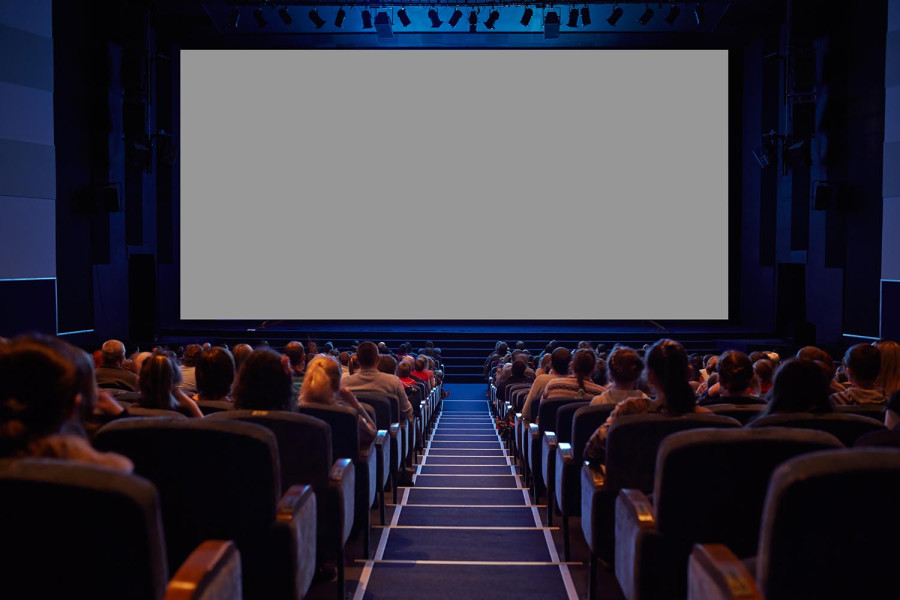
Most days, Aakriti Rana, the operations supervisor of One Cinema, walks through a theatre that accommodates far fewer audience than it was built for. Seats remain empty while the screens continue to project films that fail to draw in viewers.
While silence overshadows the multiplex cinema hall, Rana, like many others, believes that negligence in the making, advertising, and support of Nepali cinema continues to influence its viewership.
The commerciality of a film is also largely determined by its marketing strategies. To promote her horror film ‘Mummy’, Priyanka Karki dressed up as a ghost, frightening the public around Kathmandu’s streets. Screengrab Via YouTube
When a new Nepali film is released, she observes how the first week of its screening gets minimal audiences. “It is only after the first lot of viewers give their reviews that the rest come around to watch the movie,” she says.
These screenings are entirely determined by the films’ ability to invite viewers. If it can bring a commendable number, the theatre extends its screenings. And if it cannot, the shows are stopped.
“Stories remain predictable, haphazard TikTok reviews determine films’ favorability, and most audiences prefer anything but Kollywood,” she adds.
Producer Ankur Singh Thapa, also a frequent viewer of Nepali films, however, states a contradictory yet convincing perspective on Nepali citizens’ preferences for cinema. He believes that the audience from Kathmandu inclines towards urban storytelling. This reflects their growing interest in Westernised culture rather than in narratives that build upon the lifestyles of villages or rural areas. But these narratives, as he says, have their own appealing audiences beyond the Kathmandu valley.
“Most Nepali filmmakers come from these areas, and therefore it is evident for them to bring their stories through films such as ‘Prakash’, ‘Kabaddi’, ‘Dayarani’, ‘Gharjwai’, ‘Oonko Sweater’, ‘Paralko Aago’ (Remake),” says Thapa. “If we analyse these films’ viewership, people outside of the urban settings relate more with the film and inside, the halls remain empty.”
He adds how these audiences in Kathmandu can barely make time for cinema, and when they do, they are presented with multiple choices all at once.
“Films are a source of entertainment. But, if we look at the global consumption patterns, people are getting the same level of entertainment from other activities and videos such as micro dramas or social media,” he says. “Consequently, companies abroad have started investing accordingly. The source of entertainment has become just enough for the people, inside their own phones.”
However, the thrill of watching films on a large screen can very rarely be compensated for. The cinematic and, more importantly, communal experience built on collective laughter, shock, silence, and shared emotions gives a sense of immersion that solitary scrolling cannot fully replace.
The Nepali film industry does fall short in taking creative risks or experimenting with various cinematic forms, such as three-dimensional storytelling or scientific fiction. However, the efforts to push these conventional boundaries still persist.
“It is the Nepali audience itself who can promote Nepali cinema,” says Rana. “And it will not happen unless the viewers come and watch it.”




 13.8°C Kathmandu
.jpg)