Electric traps emerge as growing threat to rhino conservation in Nepal
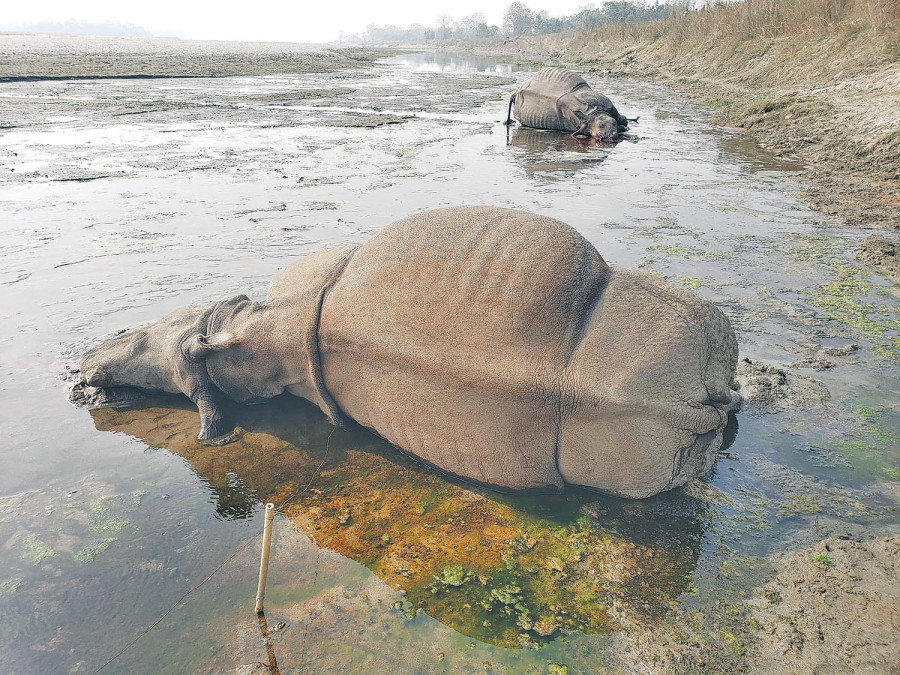
Chitwan National Park records show seven of the 204 rhinos that died between the fiscal years 2015-16 and 2022-23 were killed by electric current. Electrocution has become an increasingly common cause of rhino deaths in and around Chitwan National Park in recent years. File photo: Courtesy of Chitwan National Park
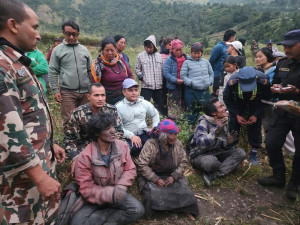
A one-horned rhinoceros found dead in a cornfield in Kawasoti Municipality of Nawalparasi East on Friday has once again drawn attention to a growing threat facing the country’s endangered wildlife—illegal electric traps set either by poachers or farmers trying to protect crops from wild animals.
The rhino carcass was discovered at Syaulitol in Kawasoti Municipality-1, around two kilometres north of the East-West Highway. The area falls under the jurisdiction of the Division Forest Office rather than the buffer zone of Chitwan National Park, but rhinos frequently move through the settlement from nearby forests.
Forest officials suspect the animal died after being electrocuted. During the investigation, authorities recovered wire hidden in a grassland near the Lokaha stream, about 200 metres south of where the rhino was found. A 13-metre-long wiring cable with a single-phase ring was also seized from a nearby house.
“The initial investigation suggests that the rhino may have died from electrocution based on the condition of the site and the materials recovered,” said Subash Adhikari, information officer at the Division Forest Office in Kawasoti.
According to the forest officials, it is still unclear whether the trap was set by poachers seeking rhino horn or by locals attempting to stop animals from entering farmland. Wild boars, deer and rhinos regularly stray into settlements bordering forests, often destroying crops.
Electrocution has become an increasingly common cause of rhino deaths in and around Chitwan National Park in recent years. According to the park records, seven of the 204 rhinos that died between the fiscal years 2015-16 and 2022-23 were killed by electric current.
Conservation officials say the trend has continued despite repeated awareness campaigns.
In August last year, a rhino died after getting caught in an electric fence set around a paddy field in Madi Municipality-2 of Chitwan. Farmer Hari Bhakta Shrestha was later arrested after investigators found he had channeled electricity through wires to protect his crop from wild animals.
A year earlier, another rhino was found dead in a maize field at Bhagadi in Bharatpur Metropolitan City-26 after reportedly getting trapped in an electric barrier intended for wild boars.
“We have continuously warned local residents about the dangers of using uncontrolled electricity in fences,” said Abinash Thapa Magar, information officer at Chitwan National Park. “Not only do animals die, but people involved also face legal action. We will intensify awareness campaigns through buffer zone user committees.”
Illegal electric fencing has also claimed human lives. On the same day a rhino was found dead in Madi last year, Lal Bahadur Moktan died after coming into contact with an electrified fence in a paddy field at Jogital in Makwanpur’s Manahari area.
Controlled electric fencing systems using solar power are legally used in many buffer zone settlements to deter animals with mild shocks. Conservation authorities say such systems are designed only to scare wildlife away without causing injury. However, illegally modified fences using direct electricity have become deadly for both humans and endangered animals.
Poachers have also used similar methods to kill rhinos for their horns. In January 2023, a rhino found dead near Bhutaha Post in Madhyabindu Municipality-2 under the Amaltari sector of Nawalparasi East was confirmed to have been electrocuted by poachers after its horn was missing.
The one-horned rhino is among the world’s rarest large mammals, and Nepal holds the second-largest population after India. According to the country’s latest rhino census conducted five years ago, Nepal had 752 rhinos, including 694 in Chitwan National Park and surrounding areas alone.
The country’s rhino population stood at 645 in its four protected areas in 2015. The number of rhinos fell sharply in the 1950s and 60s but started to rebound after the establishment of the Chitwan National Park, the country’s oldest national park, in 1973.
With the conservation success, the growing pressure from habitat encroachment and human-wildlife conflict around protected areas are on the rise. Local people living near to the national park complain that they are affected with the frequent movement of rhinoceros in the settlements which damage crops and attack people sometimes.
Locals say compensation for crop damage caused by wildlife remains inadequate and difficult to access. Many argue that improving relief payments and simplifying procedures could discourage farmers from resorting to dangerous electric traps.
“We have been urging people not to take measures that endanger both humans and wildlife,” said Shivaji Gayak, chairperson of the Chitwan National Park Buffer Zone Management Committee. “There is a legal provision for compensation when crops are damaged by wild animals.”
As per the existing conservation laws in Nepal, killing a rhino or smuggling its body parts can result in five to 15 years in prison or fines ranging from Rs500,000 to Rs1.5 million, or both.




 14.83°C Kathmandu
1.jpg)