Once common in Nepal’s plains, yellow-breasted bunting now fights for survival
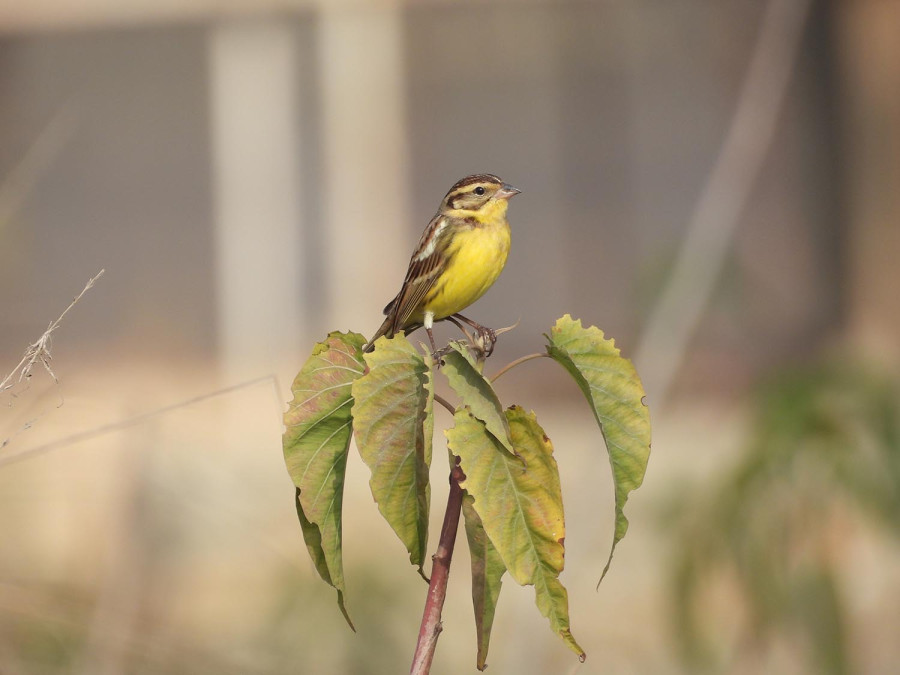
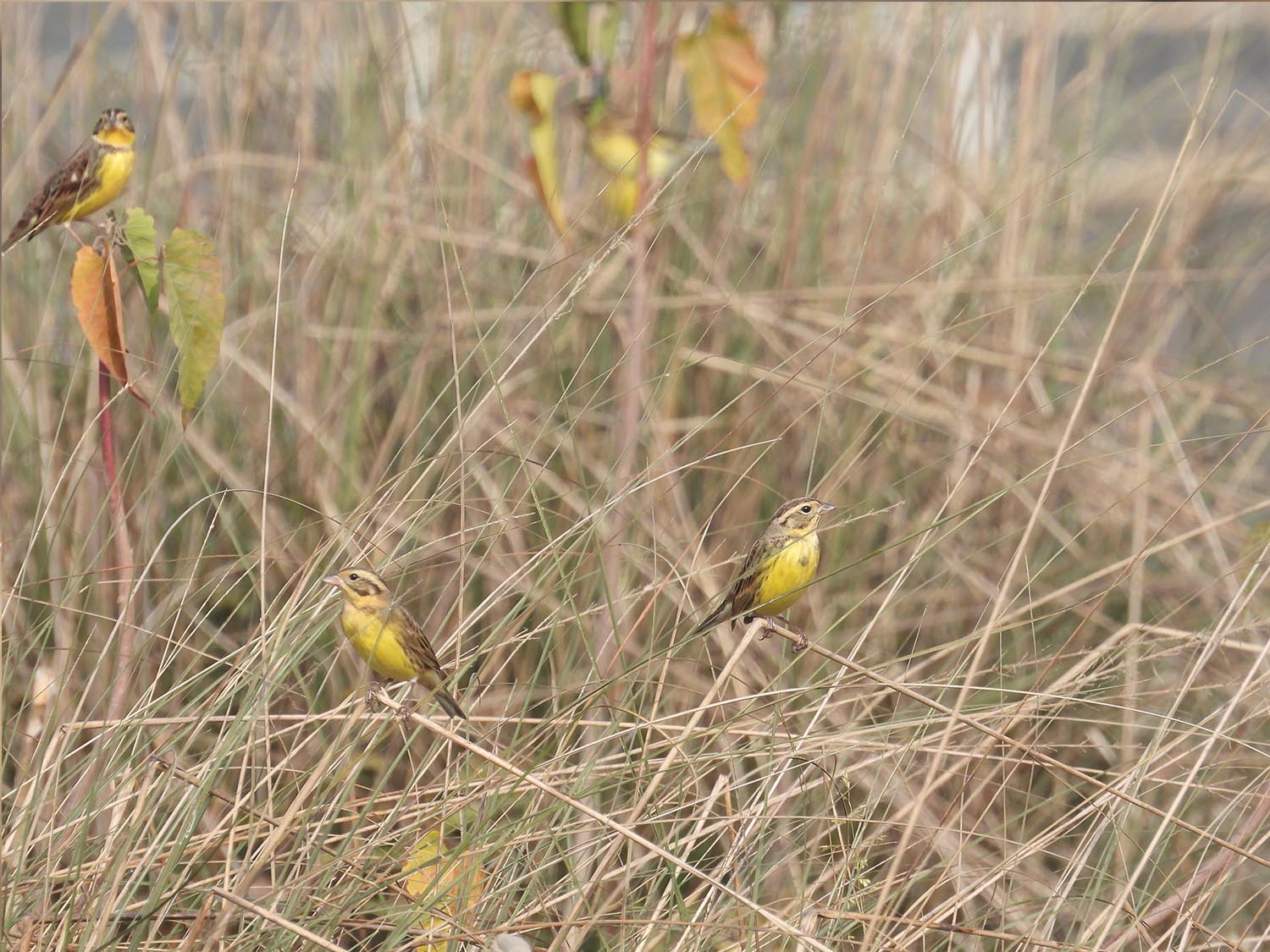
Nepal’s first nationwide count of the critically endangered migratory bird found just 2,530 individuals, highlighting the impact of hunting, pesticide use and shrinking wetland habitats. Photos: Courtesy of Mitra Pandey
Once seen moving in large flocks across Nepal’s plains, the yellow-breasted bunting earned its Nepali name “Bagale Bagedi” because of its abundance. Today, however, spotting the small migratory bird has become increasingly difficult as its population has crashed over the past decade, pushing it to the brink of extinction.
The bird, roughly sparrow-sized, has a distinctive yellow chest and brown wings streaked with white. Ornithologists in Nepal have now completed the country’s first nationwide count of the species, and the results underline how sharply its numbers have declined.
According to Krishna Prasad Bhusal, a researcher specialising in the yellow-breasted bunting, a total of 2,530 birds were recorded across 20 sites in 12 districts during the survey.
The census, coordinated by Bird Conservation Nepal, was conducted between February 11 and March 11, marking the first organised national survey of the species in Nepal.
The yellow-breasted bunting is a migratory bird that arrives in Nepal and other South and Southeast Asian countries during winter. For the rest of the year, it inhabits the northern Eurasian region, breeding across parts of Finland, Russia, Kazakhstan, Mongolia and northern China.
During winter, the species migrates in search of food and shelter to countries including Nepal, India, Myanmar, Thailand and Cambodia. Bhusal said winter population counts were carried out in several of these countries as part of broader conservation efforts.
Thailand recorded the largest number, with 126,076 birds counted across six survey sites, according to Bird Conservation Nepal. Myanmar reported 49,086 birds from three survey locations.
Combined surveys in Nepal, Thailand, Myanmar and Cambodia documented a total of 187,310 yellow-breasted buntings.
“Earlier, this bird was found in extremely large numbers, so people considered it common,” Bhusal said. “But now its population has declined by around 90 percent compared to the past.”
The dramatic decline led the International Union for Conservation of Nature to classify the species as critically endangered, meaning it faces an extremely high risk of extinction in the wild.
The bird typically inhabits wetlands, grasslands and sugarcane fields. In Nepal’s Tarai region, roasted birds were once commonly sold and consumed in roadside markets along highways.
Bhusal said that hunting for food was one of the main reasons behind the collapse in the species’ population.
“People used nets in sugarcane fields to trap them, and various other birds were also sold and eaten under the name”, he said. “Such hunting practices caused the numbers to decline sharply.”
He believes the population could recover if hunting stops.
The species feeds in farmlands and wetlands, eating grains and small insects. Because it consumes insects harmful to crops, Bhusal described the bird as “a friend of farmers”.
“Instead of protecting a useful species, people ended up killing and eating it,” he said.
He added that the growing use of chemical fertilisers and pesticides in agriculture has likely also affected the birds’ habitat and food sources.
Bhusal said conserving wetlands and reducing the use of chemical fertilisers and pesticides would not only benefit the yellow-breasted bunting but also improve the broader environment for humans and wildlife alike.
The largest numbers recorded in Nepal were in Dibyanagar of Chitwan and Mudhuwan in Sunsari district. Significant populations were also found in the grasslands of Bhagalpur in Saptari district.
Bhusal said the bird could also become an attraction for nature tourism.
“Birdwatchers are interested in seeing rare and threatened species,” he said. “This bird could become an important basis for tourism as well.”
He argued that killing the species for a small amount of meat and neglecting proper management of wetlands and agricultural land should no longer continue.
Bhusal said the survey confirmed Nepal as an important wintering ground for the bird.
“The nationwide survey has helped establish cooperation among researchers, conservation organisations and local communities,” said Kiran Gosai, senior research officer at Bird Conservation Nepal.
“To protect the remaining yellow-breasted buntings in the country, regular monitoring and community-based conservation campaigns are necessary,” he added.
Gosai said the survey had also laid the foundation for stronger cooperation among conservationists and organisations working to protect the species in Nepal, Thailand, Myanmar and Cambodia.
He said the first census had provided valuable lessons and could help build a stronger international conservation network for future research and protection of the species.




 25.12°C Kathmandu
1.jpg)