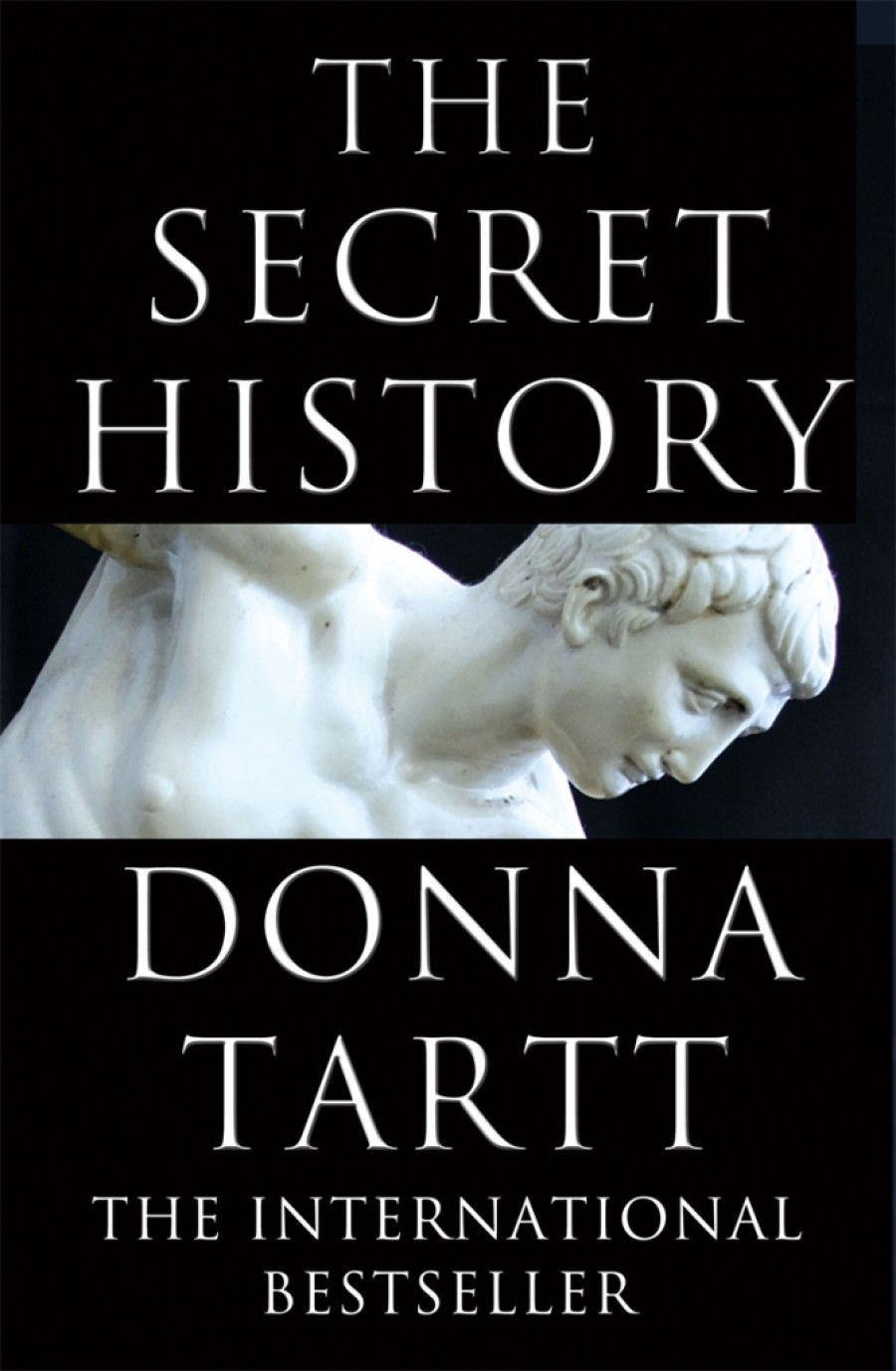
Donna Tartt’s ‘The Secret History’ is one of those rare novels that completely earns its cult status. It is marketed as a murder mystery, yet reducing it to that genre feels almost unfair. The murder is revealed within the opening pages, and from that moment onward, the novel becomes less concerned with who committed the crime and far more interested in why people commit evil in the first place.
This book could easily have been a conventional thriller, but Tartt turned it into an unsettling psychological study of obsession, morality, beauty, and intellectual arrogance.
The novel’s exceptional quality is its narration. Richard Papen is easily one of the most convincing unreliable narrators in modern fiction. He tells the story retrospectively, and it is clear that he is romanticising his friends and their elite academic world. But he does so while subtly exposing the ugliness beneath it.
Richard is so mesmerised by beauty, intelligence, and exclusivity (which, honestly, who wouldn’t be?) that he continuously excuses behaviour that should horrify him. When someone comes forward and confides in a secret murder they are planning, you gently guide the conversation towards therapy, and that is exactly the opposite of what Richard does. He joins them.
What is brilliant is that readers often fall into the same trap as he does. Tartt manipulates the audience into admiring these characters, praising their effortless charm and elegant beauty, before forcing them to confront the disturbing reality of what they truly are.
The characters themselves are deeply unlikeable, yet that is precisely why they feel so compelling. Tartt does not romanticise humanity at all. Instead, she portrays people as selfish, cruel, manipulative, and morally weak, which is more often than not the case. But despite all this, they remain so deeply human, and painfully so. Even in the situations that are so dire that we could never imagine ourselves in them, we still relate to the psychological trauma the group faces.
Henry Winter, for example, is one of the most fascinating literary characters. He exists simultaneously as both the intellectual centre of the group and its greatest threat, and the latter is induced by the former. He is cold, detached, and frighteningly calculating, but there is still something so magnetic about him that even the readers cannot attempt to dislike him.
Bunny, on the other hand, feels almost irritatingly real. He is obnoxious, invasive, and exhausting, not to mention a racist and a misogynist. But he also possesses moments of charm that make the group’s complicated relationship with him believable. All the characters are morally grey, and Tartt understands that terrible people are rarely terrible all the time. That nuance is what gives the novel its realism, almost disturbingly so.
The pacing of the novel is also admirable. The first half slowly builds toward Bunny’s murder with almost unbearable tension (I was literally skimming paragraphs in anticipation). The second half is comparatively slower, and it untangles the predictable psychological collapse that follows.
Some readers find the novel slow, but that criticism misses the point entirely. The story is not driven by plot twists or action at all. For a murder mystery, the mystery is solved on the first page. It is propelled by atmosphere and psychological deterioration. In fact, one of the boldest choices Tartt makes is refusing to sensationalise the murder itself. Bunny’s death is not presented as a dramatic spectacle, which is usually the most intense scene in any murder mystery. The true horror lies in the aftermath: the paranoia, the guilt, the emotional decay, and when you realise that these characters were doomed long before the murder ever happened.
Tartt’s prose is arguably the novel’s greatest achievement. Many people confuse this for a classic, and rightly so. Her writing has this almost timeless quality that makes the book feel closer to classical tragedy than contemporary crime fiction. If you are a fan of the Greek mythologies, this novel will feel even more immersive. It is filled with literary and mythological allusions, leading them all to a self-induced Dionysian madness. Tartt also subtly reinforces the sense that the characters are trapped in a fate they cannot escape.
At times, the psychological intensity even recalls Dostoyevsky. For about the first quarter of the book, I was almost certain it was an homage to the said writer. Still, what impressed me most was Tartt’s ability to create atmosphere. Even simple descriptions of winter in Hampden or something usually overlooked, like college interiors, feel vivid and dreamlike. It is as though every word has been meticulously selected to craft every sentence.
There are moments in the novel where almost nothing happens. For a dark academia novel, sometimes it is just a bunch of rich and pretentious kids daydrinking and wasting their time away. But even in those moments, the tension becomes unbearable simply because of the way Tartt writes.
In all honesty, the ending was a bit infuriating because you are being lied to the entire time. Even the text on the back cover is a lie. Yet still, you sit with an uncomfortable realisation of how easily people can justify cruelty when blinded by admiration, beauty, or a sense of belonging. The novel’s genius is how it implicates the reader in Richard’s flawed perspective. By the end, readers are forced to step back and recognise that they, too, had been seduced by the illusion these characters created around themselves.
‘The Secret History’ is traumatic in the best way possible. It is not interested in giving readers satisfaction or moral clarity. It is rather focused on exposing the ugliness hidden beneath intellectualism and aesthetic beauty. It is immersive, eerie, and psychologically exhausting in a tantalising manner. You cannot wait for the book to be over, to finally know how exactly you have been manipulated, but the minute you finish, you rush to start it all over again,
Even at nearly six hundred pages, it does not feel long because Tartt’s prose and characterisation are so hypnotic. Few novels manage to make readers feel both fascinated and deeply disturbed at the same time, but this one accomplishes exactly that. If you, like me, like torturing yourself with a beautifully written psychological thriller, look no more beyond ‘The Secret History’.




 23.24°C Kathmandu