Women across Nepal are transforming handicraft from household work to thriving businesses
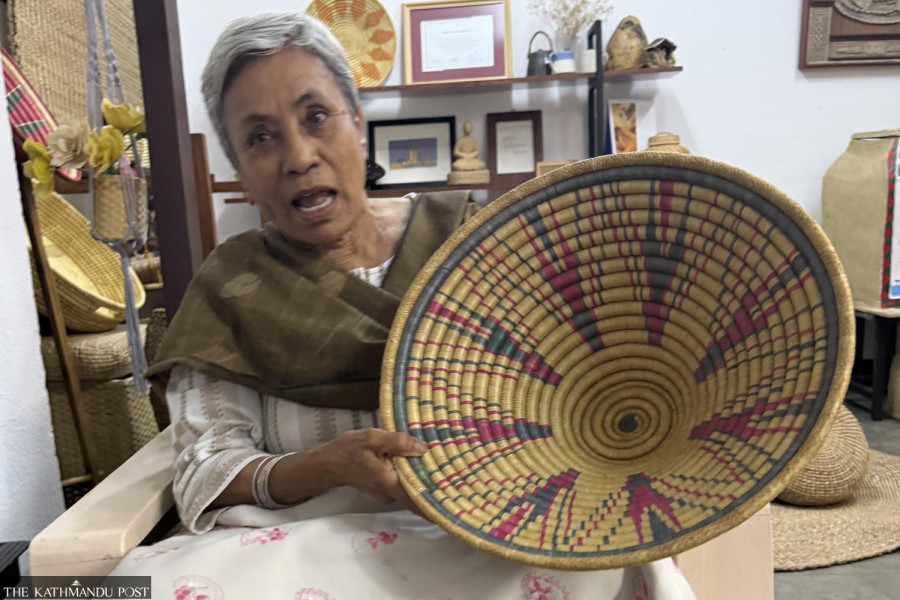
Once confined to homes and treated as unpaid labour, handicraft work is now helping women earn income and build businesses. When Shyam Baden Shrestha began making baskets in 1984 in her mother’s house, few women were doing the work professionally. Tara Prakash/TKP
In 2003, when Shyam Badan Shrestha bought a basket from a woman for Rs600, she learned it had taken the woman 10 days to weave it. “How can you earn a profit if it takes you 10 days and the price is Rs600?” Shrestha had asked.
The woman stared back at her, stunned. “We can earn?”
As the founder of Nepal Knotcraft Centre and a longtime artisan herself, Shrestha had already begun exploring the economic potential of handicraft work. But the woman who made the basket, though highly skilled, had never considered her craft a source of income.
“She had to hide her products,” Shrestha says. “Her family members didn’t allow her to weave.” Still, the woman continued to make baskets quietly for household and cultural use. Shrestha’s purchase was entirely unexpected.
At the time, many women across Nepal were creating artistic products in much the same way, with little awareness that their work could become a source of income. “Women in craftsmanship have existed for generations,” says Maya Rai, a fibre artist and weaver at Nepal Knotcraft Centre. “The relationship between women and craft is deep.” But for many women, that relationship remained private, an activity practised quietly and kept within the household.
In recent years, though, women have entered the handicraft sector, earning income and recognition. According to Rabindra Shakya, president of the Federation of Handicraft Associations of Nepal, women now make up 40 percent of the federation’s more than 4,500 members.
According to the federation, the increase in women is occurring primarily within the industrialist, or micro-entrepreneur, category, as more women launch businesses centred around handicraft work. The federation currently has 117 registered industrialists, craftworkers who have expanded their craft practice into formally registered businesses.
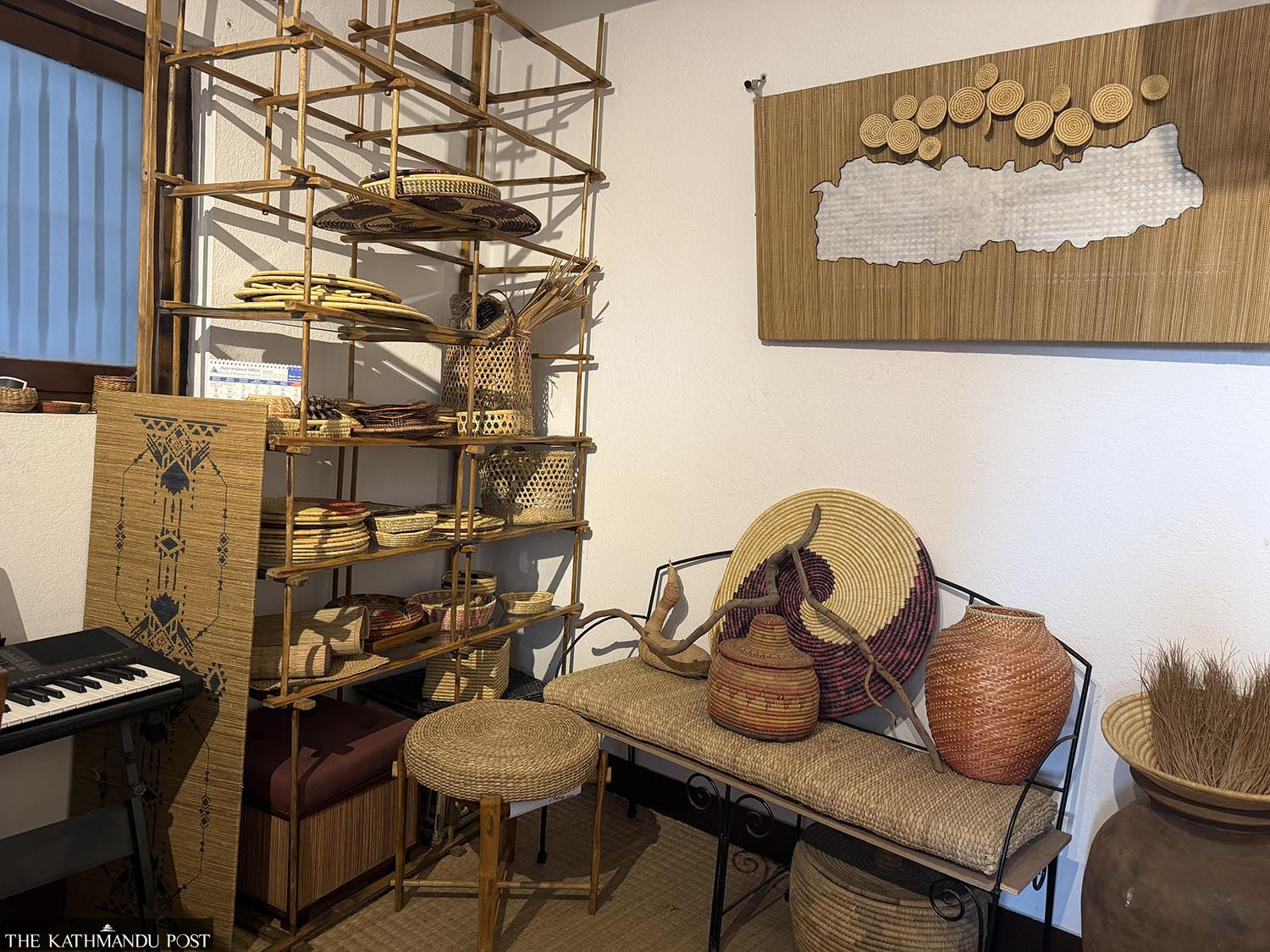
Nepal Knotcraft Centre in Patan.
Twenty years ago, women were identified solely as housewives. “They help their family members make art, but they were always hidden,” Shakya says. When women did want to join factories or training programs, they were assigned low-level tasks, such as cleaning the space, melting and collecting materials, and packaging goods.
“Craft was leisure time work,” Rai says. “Women would do the craft if they were interested, but they didn’t do it full-time or for income.”
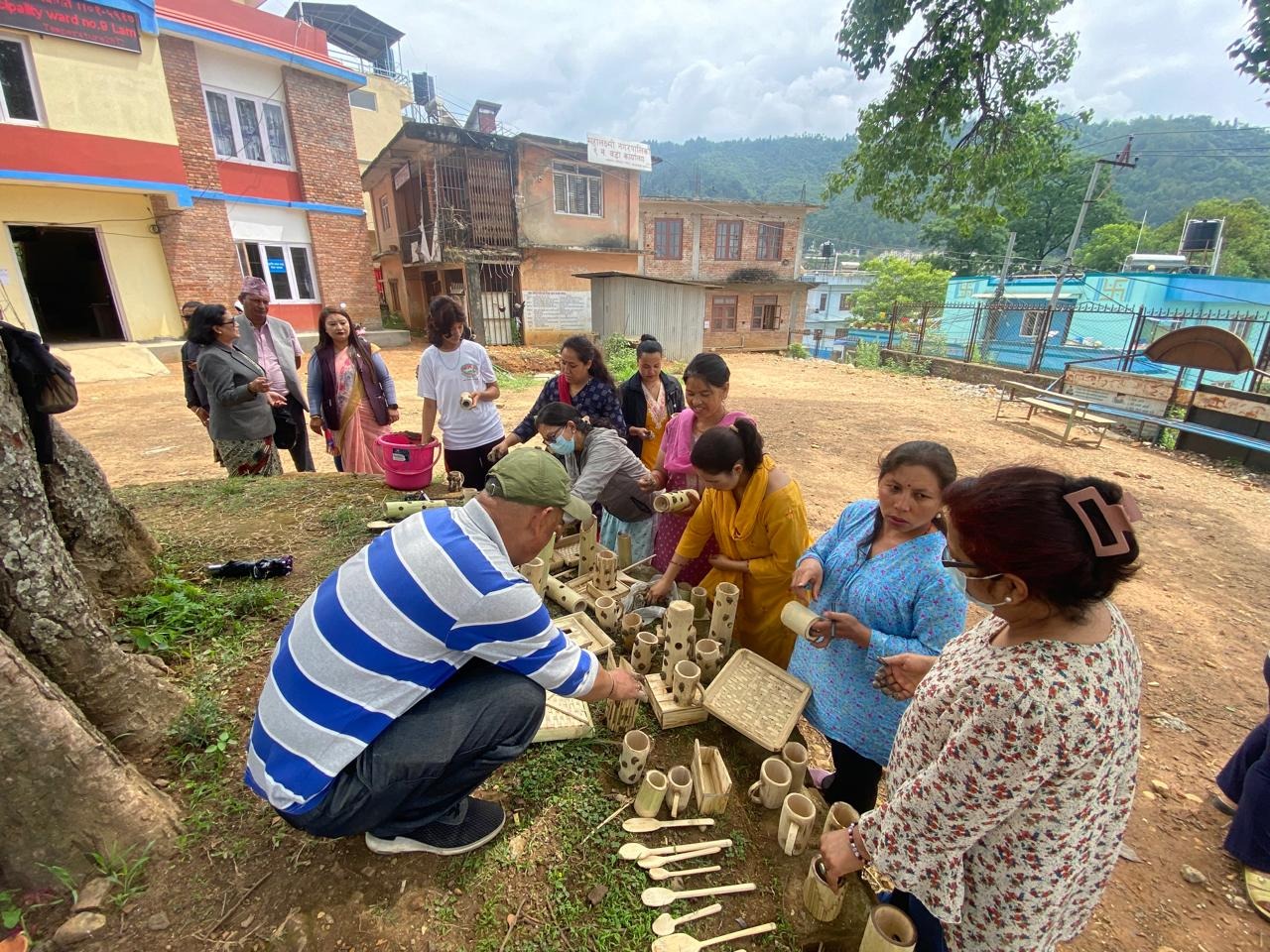
But now, Shakya has noticed a shift in mindsets as women take on greater responsibility in the handicraft field. He finds that consumers are increasingly drawn to products made by women artisans. Even in a physically taxing job like stonecraft or woodcraft, female artists are holding their own.
Mandira Bajracharya, a skilled stone craftswoman based in Chakupat, Lalitpur, began learning the craft in 2005 through self-training. Now, she is joined by many other female artisans.
When Shyam Baden Shrestha began making baskets in 1984 in her mother’s house, few women were doing the work professionally. With no one to learn from, she taught herself macramé from a book, exploring a craft she describes as “unheard and unseen.” After attending an early exhibition and seeing viewers’ strong interest in her work, Shrestha realised handicraft could become a source of income. The work eventually grew into the Nepal Knotcraft Centre in 1984. By 1990, it had grown to 50 women. Now, the centre works with more than 150 women all over Nepal.
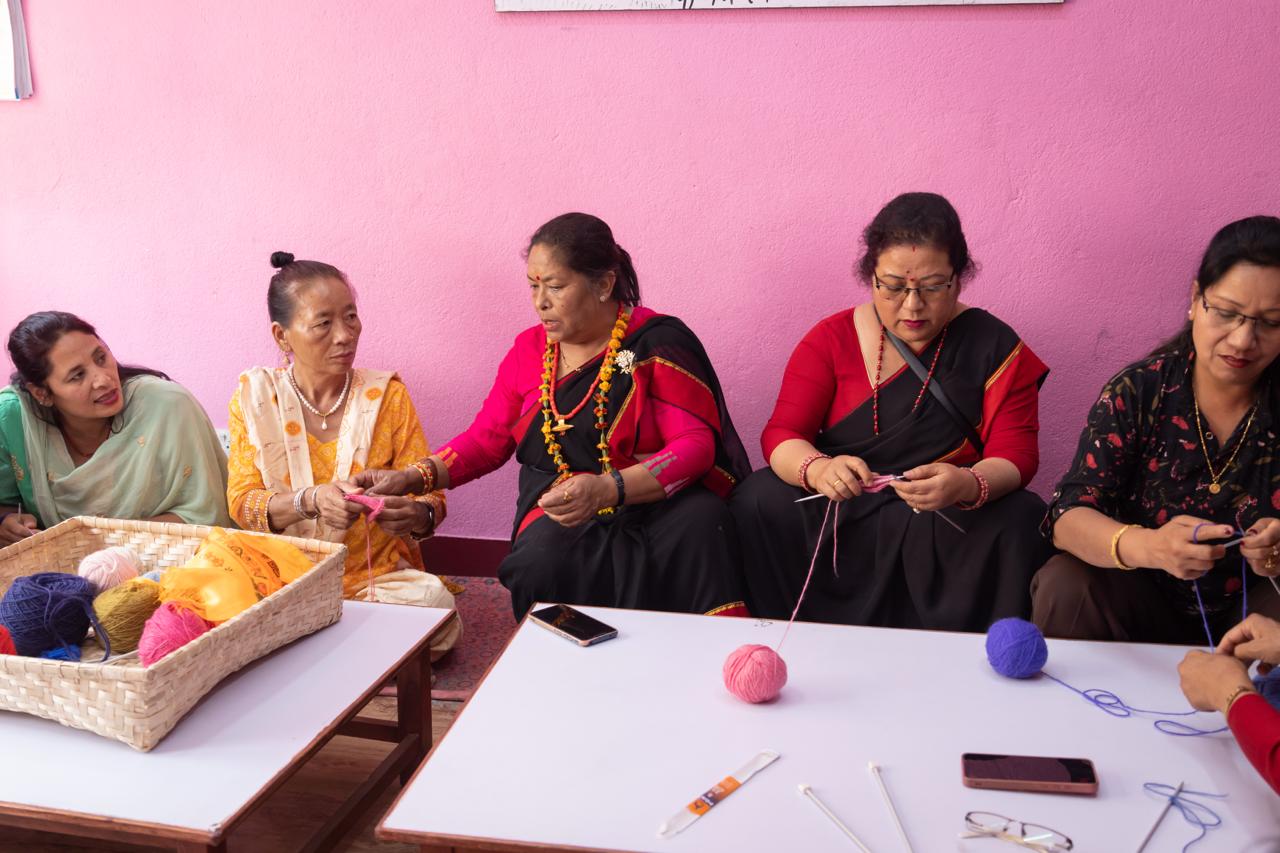
When Rukmani Devi Shrestha (centre) began knitting in 1993, it was just her, her yarn and needles. Today, more than 100 women are involved in her business. Provided to the Post
The turning point for Shrestha’s growing network of female artisans came in the late 1990s, with an unexpected order for 400 macramé owls. “I had to deliver all those owls in four months,” she says. It would be impossible to do herself. So she recruited several women, training them in the craft and providing them with tools and raw materials. They, in turn, taught women in their circles. “All they knew was they were earning money,” Shrestha says. In four months, the order was complete. But the women kept coming to her, asking for more work.
Until then, women had not considered making an income from handicrafts. That is when Shrestha realised earning a profit on handicraft was an entirely different skill from the handicraft itself. Because if a basket took four months to weave and was priced too high, no one would buy it. She spent six months developing an approach that would allow women to generate income more consistently.
Part of that meant rethinking the designs themselves. In her trainings, she taught women to create simpler, quicker patterns they could produce and sell more frequently. “If the initial basket takes 10 days, this new design takes one,” Shrestha says.
Empowering women economically through handicraft, Shrestha finds, is a game-changer. “A mother can decide ‘I want my daughter to be educated,’” she says. “Because when she starts earning, she controls where that income goes.”
One woman told Shrestha that before she started working in handicrafts, she would ask her husband if she could buy meat for dinner. Her husband would scoff at her: “You don’t earn money, and you want to eat meat?” Now, she goes to the market herself and buys as much meat as she would like for her family. The woman, who previously earned at most Rs90 per month, now earns Rs9,600 a month.
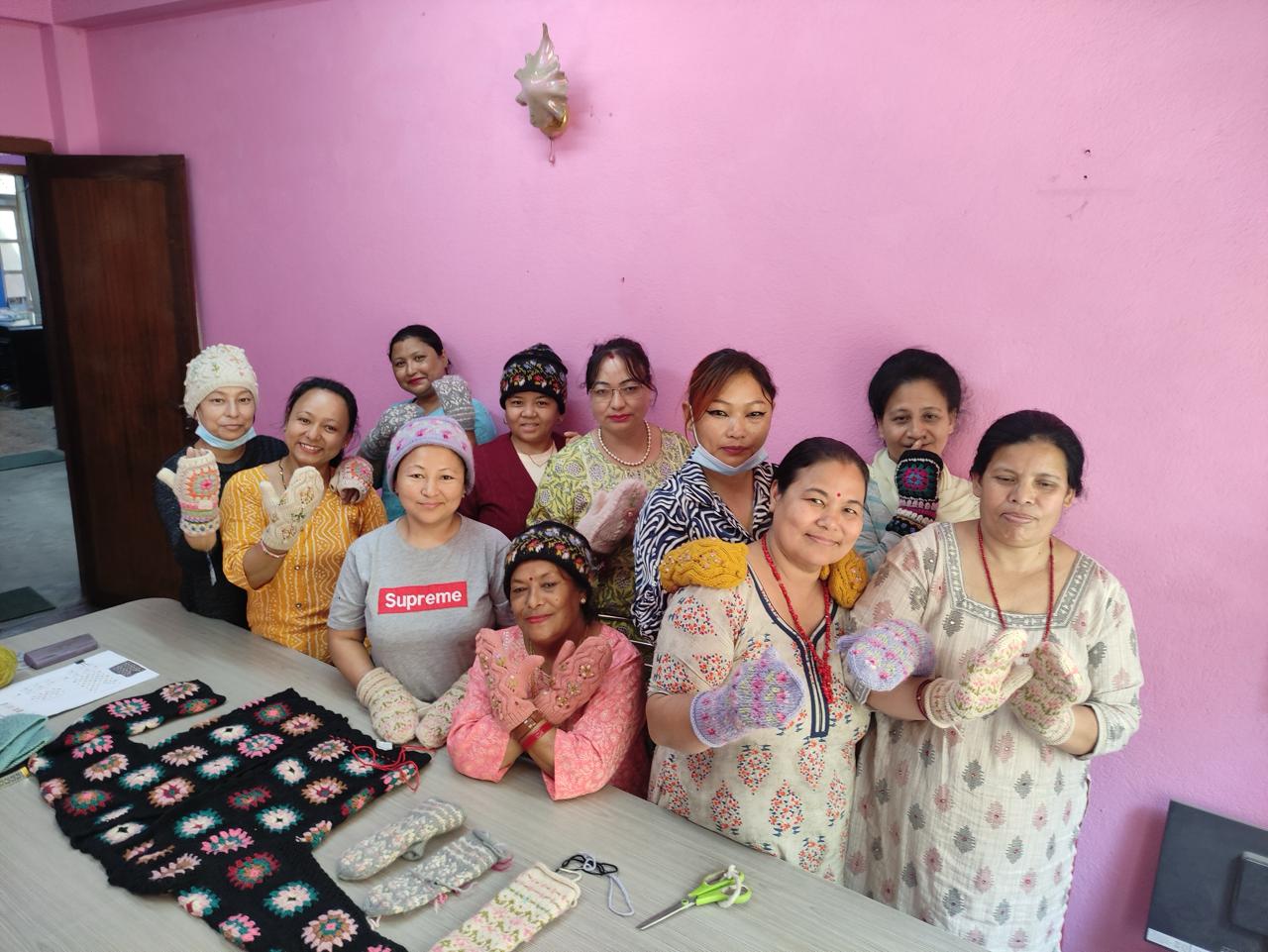
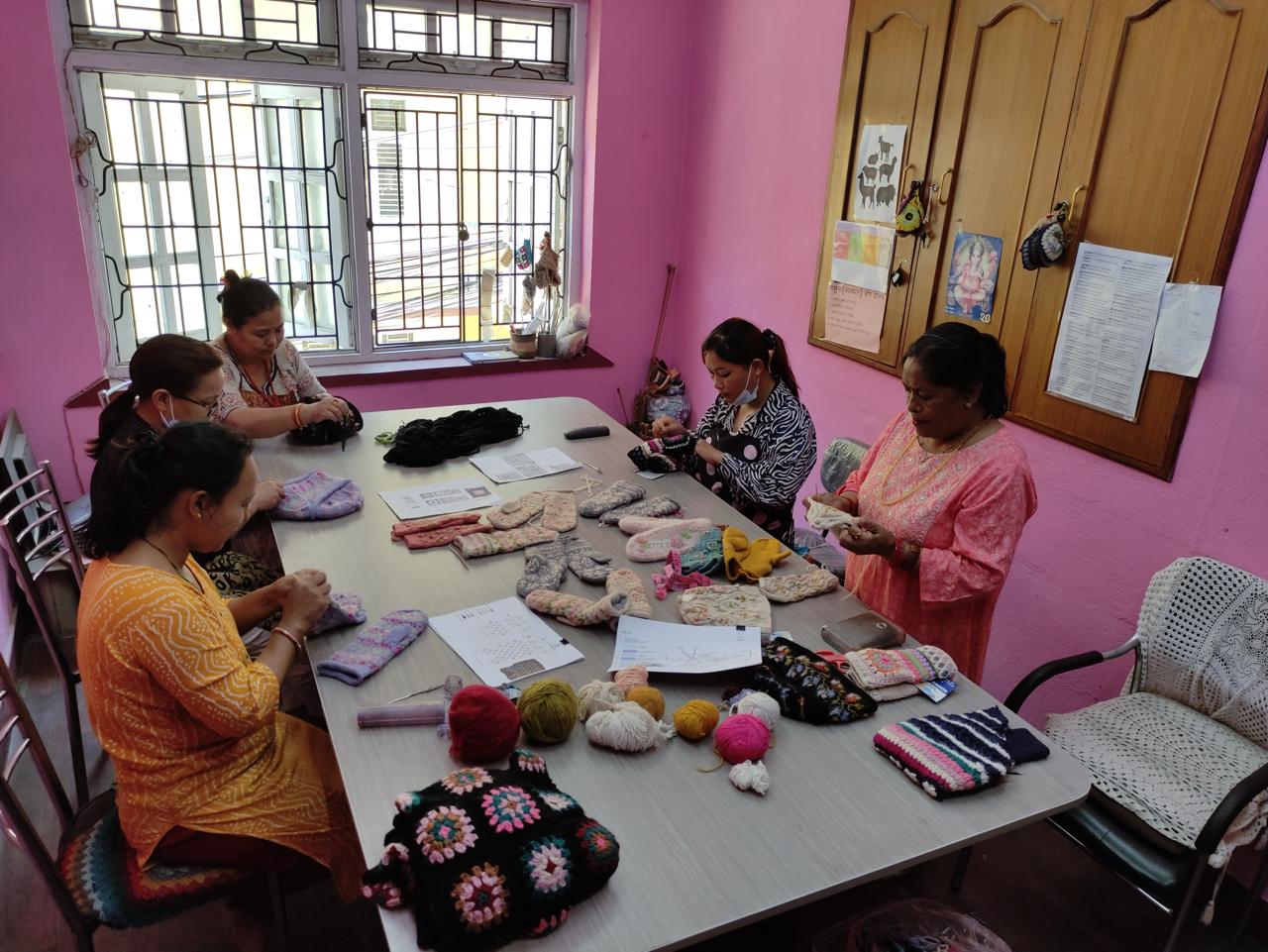
When Rukmani Devi Shrestha, based in Nayabazaar, Kathmandu, began knitting in 1993, it was just her, her yarn and needles. Today, more than 100 women are involved in her business.
Devi Shrestha highly encourages women who are “caught between work and household chores” to get involved in this sector. And even though Rai says craftwork can be “physically and mentally very intense,” Bajracharya says she loves it. “If you have an interest in the field, you’ll succeed, and I have a lot of interest,” she explains.
According to Rabindra Shakya, the government estimates that almost 300,000 women across Nepal are involved in artisanship. But the federation believes the number is much higher, likely around one million. Government data is mostly concentrated in urban areas, but Shakya says there are countless villages where people produce goods every day to support their livelihoods.
“It doesn’t count as craft, but it’s craft,” he says. “When you visit a mountain area, you’ll see a woman building her own buckets. That’s craftsmanship.”
However, there is room to grow. While Bajracharya has noticed more women entering the field, in her current stonecraft team, she is the only female employee. According to Shakya, many men still lack confidence in women’s art. “A woman will make a really good product, and a man will add the finishing touches and share it, and he becomes the best artist,” Shakya says. “If an award is given for the product, the man is in the front.”
Shakya’s federation is trying to address this imbalance by rewriting the policy and identifying women artists who remain hidden. For example, many awards initially required applicants to hold college degrees, automatically disqualifying women who had been unable to access higher education. Shakya and his team have since removed that barrier. “What does a degree have to do with being a good artist?” Shakya asks. “If you can make art well, you can make art well. The degree is irrelevant.”
As a result of these efforts, women’s work is now being recognised. One female weaver, Sunita Chaudhary, received a national award in basketry. Another woman, Maya Guru, earned a Rs50,000 monetary prize.
“Women’s voices are heard by society and by family members,” Shyam Badan says. “It’s definitely changing.”
But the work of elevating women begins long before awards are distributed. It starts with qualifications, certificates and forms of recognition that establish women as creators. “You must first identify them as artists,” Shakya says.




 14.1°C Kathmandu