What RSP might gain in Madhesh after merger with Balendra Shah
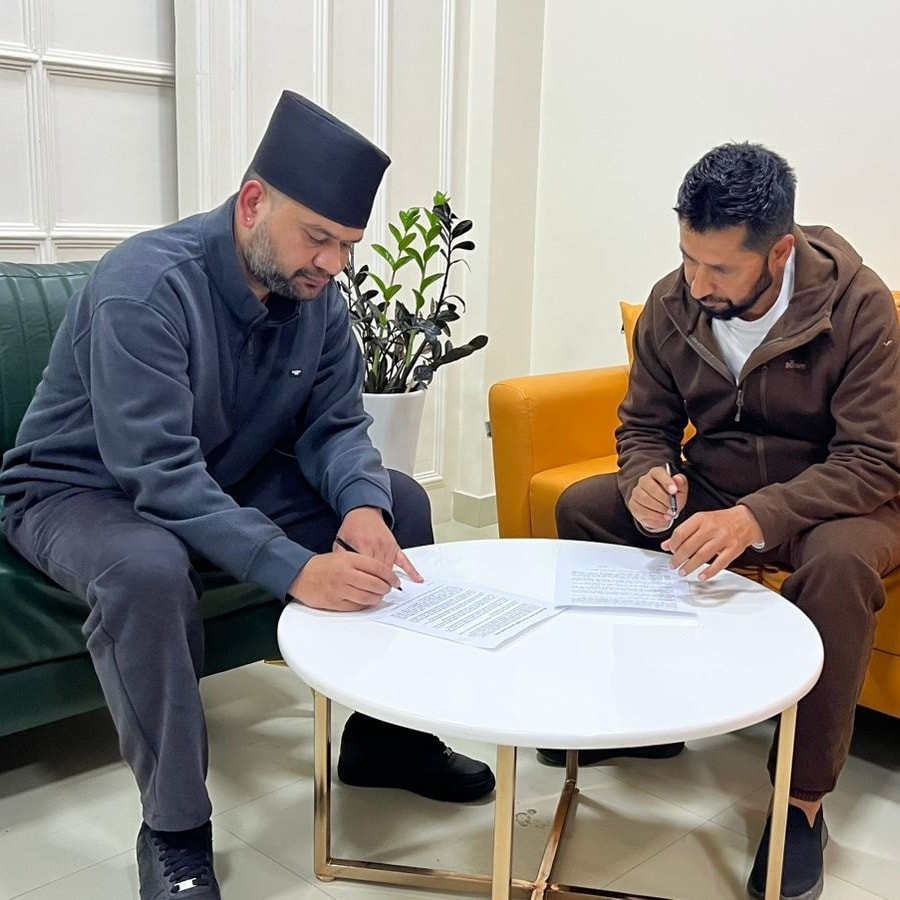
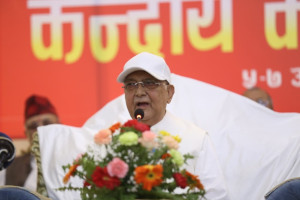
Analysts say while the new party did not fare well in the province in 2022 elections, its appeal might be growing this time. Balendra Shah and Rabi Lamichhane sign unity agreement on December 28. Photo: Balen/Facebook
Madhesh Province stands second only to Bagmati Province in the number of members to be elected to the House of Representatives under the first-past-the-post system.
Of the total 165 representatives under direct election, Bagmati Province sends 33, while Madhesh elects 32.
At 21 percent each, these two provinces have the biggest chunks of Nepal’s population. Therefore, these two provinces also naturally elect an equally higher number of lawmakers under Proportional Representation votes.
This is precisely why every party contesting the election is keen to have a strong foothold in Madhesh.
The Rastriya Swatantra Party (RSP) entered parliamentary politics in 2022 and emerged fourth largest in the House elections the same year. The party performed fairly strongly in urban constituencies, such as Kathmandu and Chitwan.
However, it failed to make a similar impact in Madhesh. That pattern continued in the Bara 2 by-election held in April 2023, where Janata Samajbadi Party chair Upendra Yadav, in an alliance of multiple parties, secured 25,000 more votes than RSP candidate Ramesh Kharel who concluded the race fourth.
For the March 5 election, however, the RSP plans to approach Madhesh differently. Party leaders say they have made significant gains in the province following their unification with Kathmandu mayor Balendra (Balen) Shah.
They believe the party can perform much better in Madhesh this time, not least because Shah roots in Mahottari of Madhesh. According to RSP leaders, projecting Shah as a key figure will help the party significantly improve its electoral performance in Madhesh.
The seven-point agreement reached between RSP and Mayor Shah on December 28 says the party will project Shah as a prime ministerial candidate as part of its campaign.
In an interview with the Post immediately after his party united with Mayor Shah, RSP leader Sishir Khanal said they have huge electoral prospects in Madhesh.
Shah can have a huge appeal among the urban educated population, Khanal said. “Another constituency where we are growing is Madhesh,” Khanal, a key negotiator during the merger process, said.
Whether Madhesh views the unity between the RSP and Mayor Shah as positively remains a question. Multiple political analysts from Madhesh spoke to the Post to share their views on how the alliance is perceived on the ground.
According to Chandrakishore, Madheshi communities have been watching the unification of the new political forces into a unified RSP with a mix of curiosity and awe.
Even so, the party has yet to gain any meaningful traction in the province; part of this surprise stems from the broader political context, Chandrakishore adds. One of the reasons why people of Madhesh are watching this unification with curiosity is that the long established parties that have dominated state institutions. Besides, several Madhesi parties appear unsettled by the emergence of these forces, Chandrakishore explained.
“How the unified RSP frames and prioritises the core issues of Madhesh will be crucial in shaping its electoral result,” Chandrakishore told the Post. “Without a clear and credible agenda that speaks directly to local concerns, translating national momentum into Madhesh support will remain a challenge.”
Another key factor is the role of Mayor Shah. Since being elected mayor of Kathmandu Metropolitan City, Shah has not publicly positioned himself as a Madheshi leader. Whether—and how—he chooses to engage with Madhesh-specific issues is something yet to be seen, said an observer in Madhesh.
At present, the RSP lacks a strong presence in Madhesh, even though it has managed to establish some foothold along the highway belt. Moreover, the party has so far failed to attract influential figures from other parties into its ranks, limiting its ability to expand its organisational base and political reach in the province, Chandrakishore said.
Another Madhesh-based political analyst, Tula Narayan Shah, broadly agrees with Chandrakishore on some points but holds a different view on the RSP and its electoral prospects in Madhesh. Analyst Shah argues that the entry of Mayor Shah and Energy Minister Kulman Ghising into the RSP has a positive impact on the party in the province.
Shah notes that while a handful of Madheshi leaders within the RSP may enjoy a degree of visibility and influence in Kathmandu, the party as a whole still lacks any real presence in Madhesh. In his view, this weakness is largely rooted in the differing political dynamics of Madhesh and the hills, which have limited the RSP’s ability to resonate with Madheshi voters.
He recalls that in the previous election, the RSP performed well in the hills largely because of the issues it championed—particularly its criticism of entrenched parties and widespread corruption and failure to deliver, while presenting itself as an alternative force. In Madhesh, however, voters face not only misgovernance but also long-standing discrimination.
On this latter issue, Shah argues, the RSP failed to articulate a strong and convincing position. By contrast, the Janamat Party led by CK Raut was able to challenge established Madheshi parties precisely because it spoke forcefully on both governance failures and discrimination, Shah says.
According to Shah, the political landscape has shifted since the September Gen Z uprising, and Mayor Shah’s popularity in Madhesh has grown. However, he stresses that this rise in popularity is not simply because the mayor is a Madheshi.
So why has Mayor Shah’s appeal increased in Madhesh?
Shah points to two main reasons. First is the common perception that he is personally incorruptible. Second is the scholarship programme introduced by the Kathmandu Metropolitan City, which has benefited students from a wide range of communities, ensuring that at least some students from almost every group have received support.
While many local, provincial and federal representatives are seen as securing budgets largely to benefit themselves and their inner circles, Mayor Shah’s approach has generated a sense of trust and goodwill among the public, analyst Shah said.
At the same time, there is visible curiosity among Madheshi voters about where Mayor Shah and the RSP stand on core Madheshi concerns, including federalism. Shah said that only once their positions on these issues are spelled out more clearly will it be possible to assess how their electoral politics in Madhesh might take shape.
The RSP leaders say they want to make some radical changes in the present three-tier federal system. They are particularly critical of the present form of the provinces.
Also, Mayor Shah’s decision not to cast his vote in the provincial election in the past is seen as his anti-province stance. However, Mayor Shah of late has said he is committed to the constitution and its provisions.
“However, if Madhesh were to support the RSP in this election, it would not be simply because Mayor Shah is a Madheshi; rather, any such support would stem from the image he has cultivated as someone who delivers and gets things done,” Shah said.




 20.85°C Kathmandu