



 13.68°C Kathmandu

Fri, Oct 23, 2026
Money
Banking sector on edge after Pandey’s arrest
Bankers say arrest over collateral sale under loan recovery process has raised concerns over regulatory clarity and investor confidence.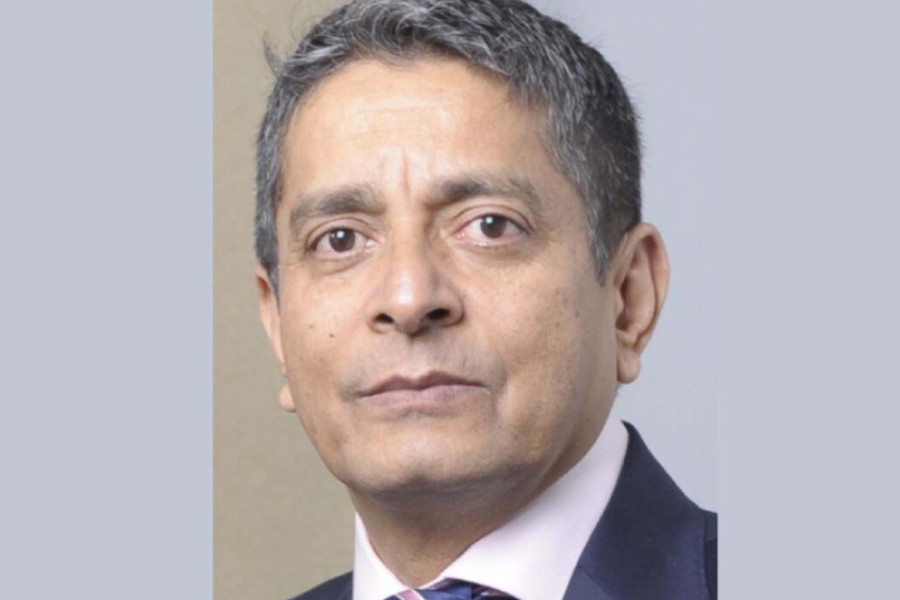
bookmark
Yagya Banjade
Published at : May 15, 2026
Updated at : May 15, 2026 10:05
Kathmandu
The banking sector has been left alarmed following the arrest of Jyoti Prakash Pandey, chief executive officer of Nepal Investment Mega Bank (NIMB), with bankers arguing that executives are being placed under police custody even when loan recovery actions are carried out in accordance with the law.
Banking representatives say the development has triggered concern, as CEOs are being detained despite banks selling mortgaged assets legally to recover outstanding loans. The issue has prompted multiple meetings and discussions among banking bodies, umbrella organisations, and the Nepali business community, including the Federation of Nepalese Chambers of Commerce and Industry, indicating the level of concern within the sector.
The Nepal Bankers’ Association held a meeting on Thursday morning and objected to Pandey’s detention. Shortly afterwards, the Nepal Bankers’ Association, Development Bankers Association Nepal, Nepal Financial Institutions Association and Nepal Microfinance Banker’s Association issued a joint statement expressing concern over the arrest by the Central Investigation Bureau of Nepal Police on Wednesday.
The statement said banks and financial institutions operate under the Banks and Financial Institutions Act, 2017, and directives issued by Nepal Rastra Bank, mobilising public deposits to support economic growth, employment generation and entrepreneurship through lending.
It further stated that Section 57 of the Act grants special authority for loan recovery when repayments are not made, including the sale of collateral, which forms part of standard banking procedure and the core responsibility of chief executive officers.
Banking associations argue that arresting a chief executive over actions taken during loan recovery could undermine public trust in banks and weaken institutional stability. Taking into account the credibility of the banking sector and the dignity attached to the position of chief executive, banking associations have urged that any necessary investigation be carried out without keeping CEO Pandey in custody, and that he be released from detention while the process continues.
The Confederation of Banks and Financial Institutions also criticised the arrest. Its chair, Prachanda Bahadur Shrestha, said during an interaction programme that detaining a CEO for selling collateral under legal provisions was inappropriate and could lower the morale of employees across the banking sector.
The Federation of Nepalese Chambers of Commerce and Industry also issued a statement expressing concern over recent arrests of industrialists, businesspeople, contractors and bankers in connection with various investigations. It said the growing practice of detaining ‘senior figures’ in the private sector has created fear and sent a negative signal to investors and the broader business community.
The federation added that such actions, if carried out without adequate preliminary investigation and accompanied by media trials, could damage reputations and create an adverse business environment.
It warned that arrests in cases related to loan recovery and other economic matters could affect lending decisions, contract business and investment flows, ultimately impacting the wider economy.
Yagya Banjade
Banjade covers government finance, banking, capital markets, and the economy for Kantipur Daily.





Most Read from Money

Nepal travel agents threaten to stop selling Thailand trips over visa rules

Why does an hour long flight to Dhangadhi cost more than a flight to New Delhi?
Malaysia rejects Nepal’s demand to open recruitment to all manpower agencies

No school, but a graduation cap for women dairy farmers
Nepal arrests four medical service providers as Malaysia recruitment row deepens
Editor's Picks




E-PAPER | October 23, 2026

×