



 14.81°C Kathmandu
Sat, Oct 24, 2026
Money
Two years on, Nepalis still unable to scan and pay in India
The bilateral agreement was supposed to make cross-border digital payments seamless. For Nepalis, it remains a promise on paper.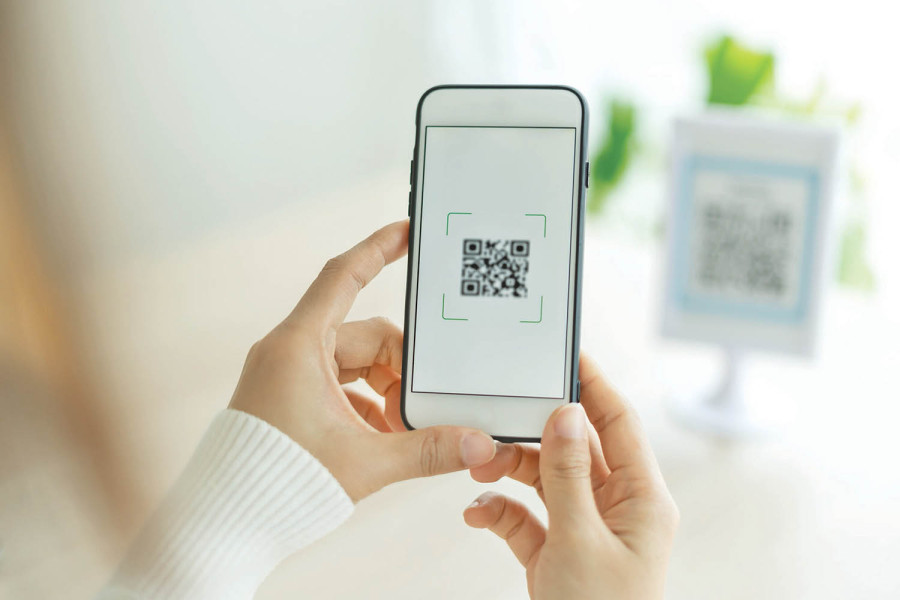
bookmark
Krishana Prasain
Published at : May 9, 2026
Updated at : May 10, 2026 10:25
Kathmandu
When India and Nepal launched a cross-border QR payment system in March 2024, it was celebrated as a milestone, a sign that the two neighbours were finally building seamless digital financial ties. Since then, Indian tourists, students, and patients travelling to Nepal can now scan and pay from their phones.
Nepalis travelling to India are still waiting for the same courtesy.
More than two years since the system went live, and despite repeated assurances from Nepali banks, payment operators and the central bank that their side is technically ready, the reciprocal service has not been launched. Deadlines have come and gone. December 2024 was one such target. It passed without explanation.
A primary reason for the delay, according to one official who spoke on condition of anonymity, is that there’s a desire for a high-level official announcement of the launch. Both countries, particularly India’s NPCI, prefer to launch this during a prime ministerial-level visit as a diplomatic gesture. But such visits haven’t taken place in a long time, and there are no immediate plans for it either.
But at the heart of the delay is a fundamental structural difference between the two countries’ payment systems. In Nepal, when an Indian traveller pays via QR code, merchants are charged between 1.3 and 2 percent per transaction. In India, UPI transactions have been free for both users and merchants since January 2020.
When Nepalis pay in India, it is unclear who would bear the processing cost—the Nepali issuing bank, the Indian acquiring bank, or the merchant. Fonepay officials said NPCI was working on changes on the platform to accommodate such fees before fully opening cross-border transactions.
According to officials at FonePay, recent meetings between the Nepal Rastra Bank and the Reserve Bank of India focused on facilitating payments and addressing remaining policy gaps.
As of May, a small number of banks have completed their certification, and both NPCI and Fonepay have agreed to a pilot rollout very soon. (Kantipur Media Group owner Sambhav Sirohiya has a financial stake in F1Soft, the parent company of FonePay.)
“Our ultimate goal is to achieve maximum coverage across all banks,” said Diwas Sapkota, CEO of Fonepay, Nepal’s largest payment network. “But full nationwide coverage in India for Nepali apps will remain an issue until every major bank completes its certification.”
The National Payments Corporation of India, which operates India’s retail payments infrastructure, offered little specificity in its response to the Post. Progress is being made, it said, with timelines “being aligned with required regulatory compliance, governance frameworks, and operational readiness.” Sapkota added that the NPCI is in the process of certifying banks and payment service providers on its end, which is taking time.
The Nepali side, by contrast, says it has done its homework. “We are technically ready. We have even conducted trial transactions in India,” said Niraj Sharma, chief marketing officer of Nabil Bank. Nepal Clearing House Limited, which manages the national payment switch, has completed all technical processes and run trials with eight or nine selected banks on each side.
“To open transactions completely for the public, we are waiting for the central bank announcement, since the cross-border digital payment agreement was done at the government-to-government level,” said Neelesh Man Singh Pradhan, NCHL’s CEO. Nepal Rastra Bank says it is ready to set transaction limits the moment India signals go-ahead.
The QR impasse is part of a broader pattern of stalled bilateral digital finance promises. When NCHL and NPCI International signed an MOU in New Delhi in June 2023, it covered not just QR payments but also cross-border digital remittance—a service that would allow Nepali workers in India and Indian workers in Nepal to send money home cheaply and instantly.
That too has not been launched. Currently, Nepalis in India can remit money home only through SBI, and the cost of sending money home remains steep. Nepal SBI Bank charges between INR75 and INR1,500 per transaction—structured as INR 1 per INR 1,000 transferred—though the true cost is higher when exchange rate margins are factored in. An NRB official said the effective burden on senders can reach around 4 percent of the total transfer. What the proposed digital remittance system would charge remains unknown. NRB spokesperson Guru Prasad Paudel said fees won’t be announced until the service is ready to go live.
Due to the open border and no passports required, there is no official record of Nepalis working in India. Paudel says that of the total remittance Nepal receives, around 15 percent is from India.
“Person-to-person transfers have become immensely important—for Indian workers in Nepal and Nepali workers in India alike,” said Sanjib Subba, a fintech and digital public infrastructure analyst. “This needs to be done as quickly as possible.”
The irony is visible in real-time data. Indians are now making an average of 8,500 QR transactions per day in Nepal, totalling roughly Rs30 million daily—up from 2,000 transactions a day when the service first launched. During the English New Year, that number hit a record 20,000 in a single day. They pay most at supermarkets like Bhat Bhateni, at hotels, and at travel businesses.
Overall, QR-based payments in Nepal have nearly doubled year-on-year: total transaction value hit Rs125.91 billion in mid-February to mid-March this year, up from Rs80.19 billion in the same period a year ago, with transaction volume growing from 27 million to 49 million. According to the Payment Systems Indicators report of NRB, Nepal received Rs550 million through cross-border QR acquiring in the month of mid-February to mid-March from 204,606 transactions.
Nepal has also quietly expanded QR access for visitors from more than eleven countries—including China, South Korea, Malaysia, Singapore, and several European nations—through integrations with Alipay, KakaoPay, GCash, and other wallets. Fonepay partnered with Ant International’s Alipay+ last August.
For now, Nepal remains an enthusiastic adopter that cannot fully participate in the systems it has helped build.Krishana Prasain
Krishana Prasain is a business reporter for The Kathmandu Post covering markets. Before joining The Kathmandu Post in 2018, she spent 3 years in New Business Age magazine covering business.




Most Read from Money

Why does an hour long flight to Dhangadhi cost more than a flight to New Delhi?
Nepal travel agents threaten to stop selling Thailand trips over visa rules
Malaysia rejects Nepal’s demand to open recruitment to all manpower agencies

No school, but a graduation cap for women dairy farmers
Nepal arrests four medical service providers as Malaysia recruitment row deepens
Editor's Picks




E-PAPER | October 24, 2026

×