



 13.58°C Kathmandu

Thu, Oct 22, 2026
Money
Inside the alleged plot against Nepal’s anti-graft chief
A chargesheet outlines allegations of bureaucratic power plays, intimidation networks, ritual-based coercion and cross-border money flows in a case centred on former civil aviation chief Pradeep Adhikari.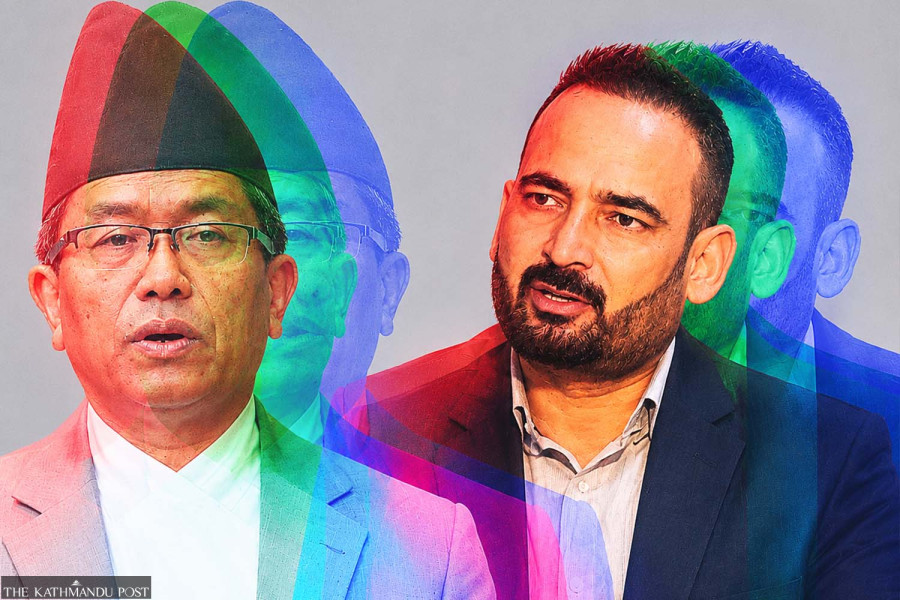
bookmark![]()
![]()
Screenshot of a WhatsApp conversation between Nabin Raj Basnet and tantric practitioner Saraya Kinnera. ![]()
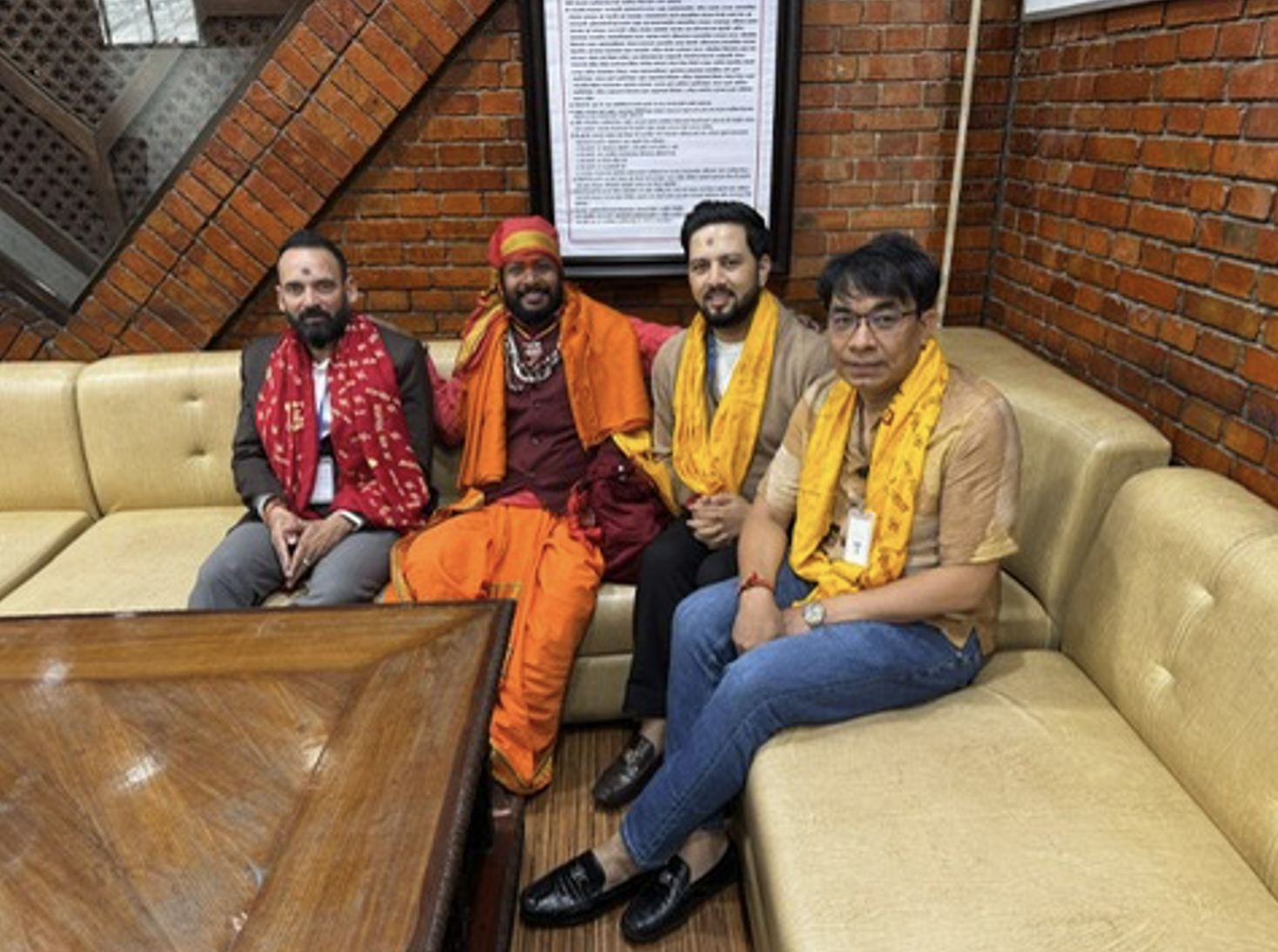
From left, Pradeep Adhikari, tantric Saraya Kinnera and contractors Nabin Raj Basnet and Subash Shrestha at Kathmandu airport.
Sangam Prasain & Gaurav Pokharel
Published at : May 29, 2026
Updated at : May 30, 2026 08:12
Kathmandu
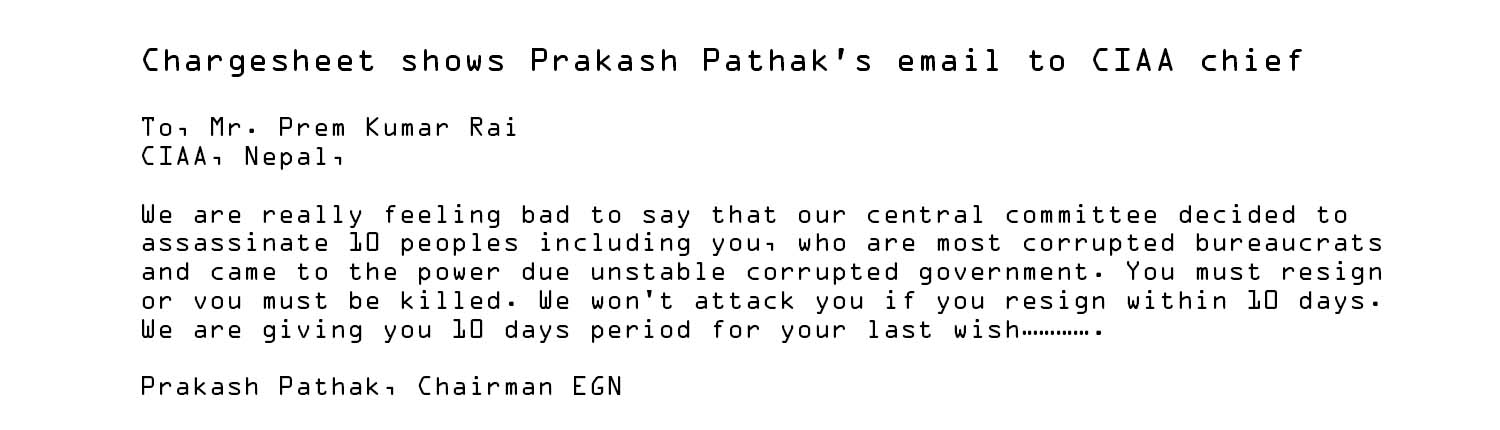
On October 22, 2025, an email arrived in the inbox of Prem Kumar Rai, chief commissioner of Nepal’s anti-corruption body, with a subject line that was not subtle. “We are giving you 10 days for your last wish,” it read. Ten officials at the Commission for the Investigation of Abuse of Authority would be assassinated unless they resigned within the deadline. The message was signed: “Prakash Pathak, chairman, EGN.”
Weeks later, a second message came, calling on escaped prisoners from the Gen Z protests, underground networks and hidden weapons holders to contact EGN for funding and coordination.
EGN, it turned out, stood for “Extremist Group Nepal” — a name its founder had chosen, investigators say, because an earlier version sounded too weak. But the more striking discovery was not the organisation’s name. It was where the investigation led.
After police traced email metadata, WhatsApp accounts and financial trails spanning Nepal, India, the UAE and the Philippines, they arrived at Pradeep Adhikari, former director general of the Civil Aviation Authority of Nepal and one of the country’s most durable bureaucratic power brokers. On May 12, prosecutors filed a fifth criminal case at the Kathmandu district court accusing Adhikari of involvement in organised crime, illegal hundi transactions and a conspiracy to force Rai’s resignation — or have him killed.
The Post reviewed the chargesheet in the case, examined video evidence submitted by investigators and spoke with Rai himself, two investigators, a senior police superintendent and lawyers for the accused. What the documents show and interviews describe go beyond a conventional assassination plot: a pressure campaign combining bureaucratic intimidation, manufactured propaganda, transnational money flows, and ritual-based occult warfare targeting a sitting anti-corruption official — all financed, in part, by contractors linked to one of Nepal’s largest Chinese-built infrastructure projects.
Adhikari, 46, has denied the allegations. Subash Acharya, Adhikari’s lawyer, told the Post he has been framed.
Adhikari spent more than a decade as one of Nepal’s most untouchable officials. Inside the aviation bureaucracy, colleagues privately called him “the permanent government.” Coalition governments formed and collapsed. Prime ministers rotated between KP Sharma Oli, Pushpa Kamal Dahal and Sher Bahadur Deuba. Adhikari endured each transition, adapting his positioning to whoever held power while maintaining control over billion-rupee infrastructure contracts, including all three of Nepal’s national pride airport projects.
“Political actors produce officials like Adhikari,” Khem Raj Regmi, a retired government secretary and former head of Transparency International Nepal, told the Post. “Politicians plant them, groom them, exploit them.”
That protection began eroding after the Gen Z protests of 2025. The political disruption fractured the patronage networks around him. The CIAA, emboldened, began reopening files tied to Pokhara International Airport and other projects — examining procurement records, inflated tenders, offshore transactions and subcontracting arrangements involving billions of rupees.
The axe fell first on December 3 last year, when investigators arrested Adhikari over irregularities in the construction of a helipad in Nalinchok, Bhaktapur. Days later, the CIAA filed a major corruption case over Pokhara International Airport, seeking billions in recovery from 56 defendants, Adhikari among them. More cases followed. Former tourism minister Sudan Kirati told the Post that Adhikari had once attempted to engineer his removal from the ministry. “I was told to work in tandem with Adhikari,” he said.
“Pressure began mounting from politicians and others, who insisted he was a good person,” Rai told the Post. “But after our investigators recorded a statement from one of his associates, we began receiving death threats.”
That is when Prakash Pathak, who’d signed the email to Rai, entered the story.
Pathak had studied dentistry but never became a dentist. He drifted through student politics, migration businesses, media ventures and failed entrepreneurial schemes, at various points operating visit-visa operations and travelling frequently through India and Southeast Asia. Police allege that while abroad he acquired Indian identity documents — Aadhaar and PAN cards — opened Indian bank accounts and conducted transactions through informal networks.
According to the chargesheet, Pathak initially approached Adhikari not as an ally but as a target. Having already been experimenting with EGN as an intimidation vehicle, investigators say he believed Adhikari — cornered by multiple corruption probes — might pay for “support.” Instead, investigators say, Adhikari redirected him. The target shifted from Adhikari himself to the CIAA commissioner investigating him.
According to the chargesheet, Adhikari promised Rs80 million to Rs100 million if the pressure campaign forced Rai to resign. Pathak escalated. He sent the threat emails to the CIAA. He circulated videos online. He was told, according to his own recorded statement, that certain individuals would publicly smear Rai in exchange for immediate payment of Rs20 million, with Rs80 to 100 million more to follow.
“Believing his statements, I sent two emails to the CIAA,” Pathak stated.
Senior Superintendent of Police Ramesh Thapa confirmed the investigators’ assessment of the financial scale in an interview with the Post. “Our investigation shows Adhikari had committed spending Rs100 million for that purpose,” he said.
As the investigation deepened, a second layer emerged.
According to the chargesheet, associates of Adhikari contacted tantric practitioners with connections to ritual networks in India. The Post reviewed video material included in the evidentiary record. In one clip, figures dressed in red and black surround an effigy resembling Rai inside a dimly lit room lit by oil lamps. The effigy is stabbed repeatedly with a ceremonial blade. Voices chant: Bhasam. Bhasam. Bhasam. A voice message sent afterwards says: “Work done. He will die.”
Police traced the sender to a self-styled tantric practitioner from the Kamakhya region of Guwahati.
At the centre of this layer was Nabin Raj Basnet, a construction entrepreneur from Bhaktapur who had previously worked on the taxiway and apron contract at Gautam Buddha International Airport in Bhairahawa, another national pride project overseen by Adhikari. A photograph obtained by the Post shows the tantric figure Jai Jagdambe being received at a Nepali airport by Adhikari and Basnet together.
According to investigators, Basnet sent a photograph of Rai to the tantric, claiming Rai was “harassing” Adhikari, and requested a ritual called “chamta” — described in the case file as intended to cause harm. Basnet’s recorded statement, police say, includes an admission that he facilitated contact with the tantric figure. He is currently absconding.
A WhatsApp message sent by Basnet to the tantric read, in rough translation: “The man wearing glasses is preparing to attack Pradeep next week. Guru, you must perform special prayers for Pradeep's protection.”
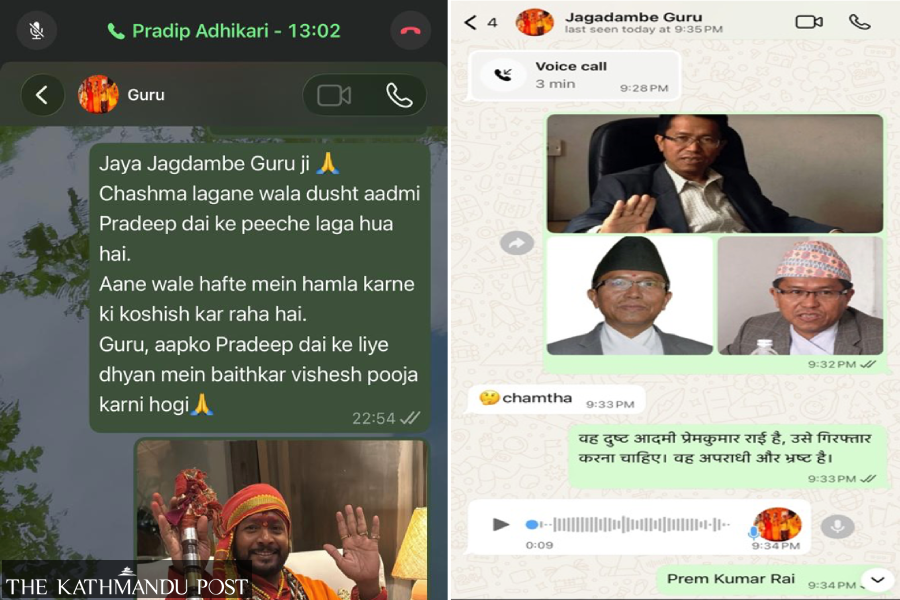
In his own statement, Adhikari denied that the rituals were intended to harm Rai. He said he had sent photographs — including those of two CIAA commissioners, a media entrepreneur and a former tourism minister — to the tantric for “protection” and “positive energy.” Investigators interpret the exchanges differently. “Whenever Adhikari became uncomfortable with certain individuals, he sent their photographs to the tantric to cause them harm,” one investigator said.
The tantric practitioner, identified in the case file as Saraya Kinnera, told investigators he had warned Adhikari that enemies surrounded him and predicted he would soon be arrested. Adhikari, he said, gave him gold to prepare protective amulets. Kinnera described his work without apology. “I earn money by doing tantric,” he said. “That's my job.”
The money, investigators say, moved across three countries.
According to Pathak’s recorded statement, funds tied to the operation flowed through informal hundi networks spanning Nepal, Dubai and the Philippines. On November 27, 2025, Pathak arrived at a Starbucks outlet in Bulacan carrying a handwritten code used for hundi settlement. At around 12:15pm, he approached a table of five Chinese nationals and handed over a paper marked “*123#.” In return, he claims, he received 8 million pesos, roughly Rs20 million, in cash.
Pathak alleges the men at the table were linked to contractors connected to Pokhara International Airport, including figures associated with China CAMC Engineering Co Ltd. He named company directors Liu Shengcheng and Wang Bo in his statement. The same company, along with Wang Bo and project manager Yang Zhigang, was named as a defendant in the CIAA’s December corruption case over Pokhara International Airport — a case in which the commission determined Rs8.36 billion to be recovered from each of the 56 defendants, among the largest financial penalties in Nepal's history. The company did not respond to the Post’s request for comment.
“Adhikari and the directors of China CAMC Engineering Co. Ltd. were jointly involved in sending me money through hundi channels,” Pathak alleged.
Pathak was arrested in the Philippines and returned to Nepal on February 11, 2026. A separate figure, banker Jenu Thapa, later emerged in the investigation as someone police believe may have helped manage or conceal suspicious financial assets. Another figure, Arjun Shahi — a 26-year-old who had publicly criticised Adhikari after the Gen Z protests and was seen alongside movement figures at Sheetal Niwas — later became subject of scrutiny after investigators discovered WhatsApp communication between him and Adhikari. Investigators are examining whether his public antagonism toward Adhikari was itself a cover.
What is unclear at this moment is whether prosecutors can prove the conspiracy in court. What is clear is what the chargesheet already establishes in its accumulation of WhatsApp trails, ritual footage, recorded admissions and transnational cash transfers: when power in Nepal begins to feel cornered, the boundary between influence, criminality, performance and paranoia has a way of dissolving.
Adhikari has remained in judicial custody at Dilli Bazaar Prison since December 3. His lawyer said no hearing date has been fixed as the statement-recording process continues. “Adhikari believes he has been framed,” he said. “He sees the cases against him as part of a state vendetta.”
Sangam Prasain
Sangam Prasain is Business Editor at The Kathmandu Post, covering tourism, agriculture, mountaineering, aviation, infrastructure and other economic affairs. He joined The Kathmandu Post in October 2009.
Gaurav Pokharel
Pokharel is a journalist at Kantipur Media Group covering national security, defence, and good governance.




Most Read from Money
Nepal travel agents threaten to stop selling Thailand trips over visa rules

Why does an hour long flight to Dhangadhi cost more than a flight to New Delhi?
Malaysia rejects Nepal’s demand to open recruitment to all manpower agencies

No school, but a graduation cap for women dairy farmers
Nepal arrests four medical service providers as Malaysia recruitment row deepens
Editor's Picks



E-PAPER | October 22, 2026

×