India’s protectionist policies squeeze Nepali markets and raise food security fears
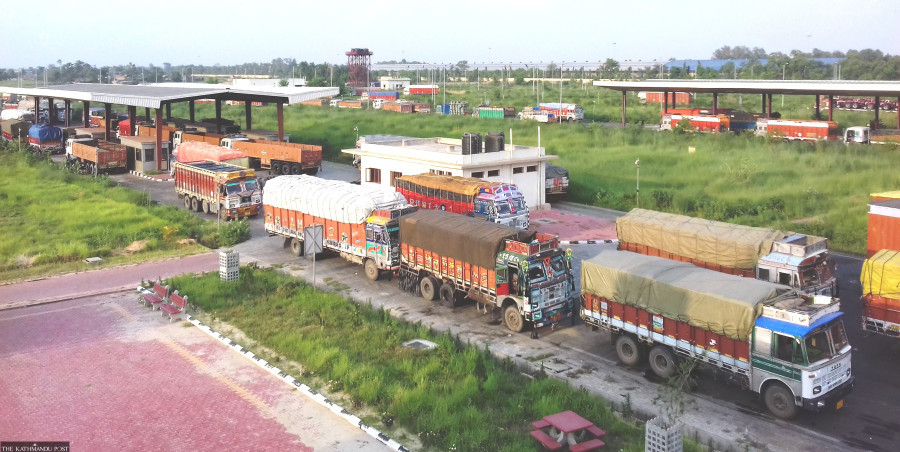
Repeated export curbs on sugar, rice and other essentials expose Nepal’s heavy dependence on India as officials and experts warn of inflation, shortages and rising pressure on foreign currency reserves.India is Nepal’s largest trade partner, accounting for over 60 percent of its total trade, with bilateral trade reaching over $8 billion in the fiscal year 2023-24. Post file photo
India on Wednesday again banned sugar exports, including to Nepal, with immediate effect, reviving concerns over how New Delhi’s growing protectionist policies are disrupting Nepali markets and threatening food security.
The ban, first imposed in 2023, had been partially lifted nearly a year and a half ago.
According to Indian media reports, the latest restriction is aimed at containing domestic prices amid fears that El Nino conditions could trigger drought, hurt agricultural production and reduce next season’s output.
El Nino, a warming of the central and eastern Pacific, alters atmospheric circulation and weakens monsoon winds over the Indian subcontinent. It also adds heat to a planet already warmed from burning fossil fuels. The last El Nino helped make 2023 and 2024 the top two hottest years on record.
India’s Directorate General of Foreign Trade under the Ministry of Commerce and Industry amended the export policy for sugar—including raw, white and refined varieties—from “restricted” to “prohibited”.
The prohibition, however, does not apply to sugar exports to the European Union and the United States under a specific quota arrangement.
According to the notification, the ban will remain in force until September 30, 2026, or until further notice.
India, the world’s second largest sugar exporter, had earlier allowed mills to export 1.59 million tonnes of sugar. Indian traders had already signed contracts for around 800,000 tonnes, of which more than 600,000 tonnes had been shipped.
Nepali officials say the decision is another reminder of the country’s vulnerability to India’s trade restrictions.
“We were just discussing new rules imposed by India on tea exports, and now the sugar ban has come,” said Netra Prasad Subedi, joint secretary at the Ministry of Industry, Commerce and Supplies.
“We will discuss the issue with the concerned stakeholders and clarify Nepal’s requirements.”
Officials say sugar, unlike rice, can still be sourced from alternative markets if necessary.
When India imposed a sugar export ban in 2023, Nepal even considered importing the sweetener from Pakistan to meet festive demand.
“If there are no alternatives, we can approach India through a government-to-government arrangement,” Subedi said.
Nepal has already requested India to supply 80,000 tonnes of chemical fertiliser through a government-to-government mechanism after global shortages emerged amid ongoing tensions in West Asia.
Traders and experts say India’s increasingly protectionist trade policies are having a direct impact on Nepal, despite the latter importing only a fraction of India’s total exports.
In September 2023, India halted sugar shipments to Nepal for the first time in seven years, citing lower sugarcane yields caused by insufficient rainfall. The restriction was later extended beyond October 31, coinciding with Nepal’s peak festive season when sugar prices soared.
Ahead of Dashain that year, sugar prices rose sharply. The commodity, which had been available for around Rs88 per kg a few weeks earlier, shot up to as high as Rs160 per kg in the black market amid shortages.
Nepal then sought to import 60,000 tonnes of sugar to meet anticipated festive demand, but India approved only 25,000 tonnes through the National Cooperative Exports Limited.
On January 20, 2025, India announced that it would allow sugar mills to export 1 million tonnes of sugar, partially easing earlier restrictions. The decision was intended to support domestic sugar prices, which had fallen below production costs.
India’s protectionist measures have not been limited to sugar.
On July 20, 2023, India imposed a ban on non-basmati white rice exports to ensure domestic food security amid concerns over El Nino-related disruptions. The move severely affected Nepal, one of the major importers of Indian rice, and triggered price spikes in the domestic market.
Later in 2023, India allowed quota-based exports of 95,000 tonnes of non-basmati rice to Nepal to ease shortages.
In 2024, rice prices in Nepal climbed to record levels, increasing by as much as Rs800 per 25-kg bag, according to a market analysis report by the National Consumer Forum.
The forum attributed the sharp rise largely to India’s export restrictions on non-basmati rice. It warned that food inflation in Nepal continued to rise mainly because of higher prices of rice and other essential commodities.
Before the ban, varieties such as pearl jeera masino rice sold for around Rs1,600 per 25-kg bag. Prices later jumped to Rs2,400, according to retailers.
India again tightened restrictions in August by imposing a 20 percent duty on parboiled rice exports.
Trade expert Rabi Shankar Sainju said any export restriction imposed by India—particularly on food products—immediately affects Nepal because of its heavy dependence on the southern neighbour.
“Importing food and goods from other countries is expensive because of high logistics costs. It also puts pressure on Nepal’s foreign currency reserves,” he said.
“That’s why Nepal needs to remain cautious and negotiate separately on issues related to food security.”
According to Sainju, India’s latest sugar ban may signal possible restrictions on other food exports in the coming months.
India is Nepal's largest trade partner, accounting for over 60 percent of its total trade, with bilateral trade reaching over $8 billion in the fiscal year 2023-24.
Most South Asian countries, including Nepal, are expected to witness below-normal monsoon rainfall this year after three consecutive years of above-average rain, according to a regional consensus among South Asian meteorologists. While El Nino is strongly linked to weaker monsoons, India has still seen average or above-average rains in at least five of 17 such events over the past seven decades, according to Reuters.
Analysts say that if dry conditions worsen, India may tighten exports of more agricultural commodities to secure domestic supplies.
Experts have already warned of a looming food security challenge in Nepal arising from weak monsoon rains, fertiliser shortages and rising fuel prices.
“The combination of low rainfall, shortages of chemical fertiliser and high fuel costs may spell disaster for the farming sector,” Devendra Gauchan, a leading agriculture and food systems expert in Nepal, said in a recent interview with the Post.
“We need an urgent coping mechanism. The government has to plan,” said Gauchan, who is also a member of the National Planning Commission.
Monsoon rainfall is critical for Nepal’s Rs6.6 trillion economy, supplying nearly 80 percent of the water required for agriculture and replenishing reservoirs and groundwater aquifers.
Kumar Rajbhandari, deputy chief executive officer of the state-owned Salt Trading Corporation, said the company currently has around 2,000 tonnes of sugar in stock.
According to the corporation, Nepal’s monthly sugar demand ranges between 20,000 and 25,000 tonnes, rising to around 30,000 tonnes during major festivals such as Dashain, Tihar and Chhath.
Annual demand stands at nearly 300,000 tonnes.
Rajbhandari said Nepal faces an annual sugar deficit of around 100,000 tonnes, which is met through imports.
As India has imposed a quota system, imports amounted to 17,185 tonnes worth Rs1.13 billion during the first nine months of the current fiscal year. In the last fiscal year, the country imported 25,862 tonnes of sugar worth Rs1.83 billion.
The Salt Trading Corporation had previously imported sugar under subsidised customs duty arrangements. However, after the government reduced subsidies, the corporation started purchasing sugar from domestic producers and selling it in the market, he said.
The corporation is currently selling sugar at Rs98 per kg in retail markets after purchasing it from private producers at Rs89 to Rs95 per kg.
Nepal used to produce around 155,000 tonnes of sugar annually until a few years ago. Production has since declined to around 120,000 tonnes as sugar mill owners failed to pay farmers on time, discouraging sugarcane cultivation.
Sangam Prasain is Business Editor at The Kathmandu Post, covering tourism, agriculture, mountaineering, aviation, infrastructure and other economic affairs. He joined The Kathmandu Post in October 2009.
Krishana Prasain is a business reporter for The Kathmandu Post covering markets. Before joining The Kathmandu Post in 2018, she spent 3 years in New Business Age magazine covering business.




 14.4°C Kathmandu