



 22.12°C Kathmandu

Thu, May 14, 2026
Money
All show and no go: Galaxy S7 Edge
Samsung’s flagship smartphone last year was a beautiful head-turner because of the company’s implementation of a never-before seen curved AMOLED display.
bookmark
Prajesh SJB Rana
Published at : April 19, 2016
Kathmandu
Samsung’s flagship smartphone last year was a beautiful head-turner because of the company’s implementation of a never-before seen curved AMOLED display. The phone featured a display technology that no other company had done before, few have even attempted it today, and that’s what made the Samsung Galaxy S6 one of the best phones to come out in 2015. In 2016, however, Samsung has introduced a new smartphone to the edge line in the form of the Samsung Galaxy S7 Edge; Samsung’s new flagship for the year.
So, how well does the Samsung Galaxy S7 perform? The S6 was a powerhouse when it initially came out, topping almost all benchmarking tests and easily taking on all Play Store apps (excluding games made for Nvidia’s Tegra Chips). The S6 changed the game for Samsung’s flagships, initially the S line, Samsung is now producing the Edge line as their latest and greatest icons. So, how does the S7 fare as the greatest from Samsung and how well will it perform against other flagship phones that should come out later in the year?
To put it simply, the greatest selling point of the S7 Edge is the aesthetical value of the phone, it looks good and that’s what people should expect to be paying for when buying it. The ordinary S7, without the curved display, has the exact same specifications as the S7 Edge and will be able to provide the exact same raw power that the S7 Edge can. So, if you’re looking for a beast of a phone without any gimmicky features, just go for the simple S7 and you will still get the best from Samsung, minus the looks and it’ll cost you a lot less too.
The S7 Edge is equipped with the best specifications to have come out till date. American users will be treated with a Snapdragon 820 SOC quad-core processor while regions outside the US will see the S7 Edge powered by Samsung’s latest in-house chipset, Exynos 8890 octa-core processor. Samsung has forced to go with the Snapdragon processor on US models because the Exynos processor does not support certain bands used by Verizon but apart from the difference in processors, everything else is the same. The phone comes in variations of 32 and 64 GB internal storage and features 4 GB of RAM and is powered by the Adreno 530 GPU on the Snapdragon processor while graphics on the Exynos is powered by the Mali-T880 MP12. In contrast to last year’s S6 Edge, the S7 Edge comes with a bigger screen at 5.5-inches and has a deeper screen curve on the sides as well (the S6 Edge had a 5.1-inch screen). The screen boats a massive resolution of 1440 x 2560 at a pixel density of 534ppi and is powered by a huge battery of 3600 mAh. One welcome feature that Samsung had been neglecting for a long-time has made it to the S7 Edge, the microSD expandability option. The phone is also IP68 certified which means that it’s water-resistant and can be dunked into bodies of water safely for around 30 minutes, an essential safety feature that had been missing from the S6 and considering the price you’ll be playing for the device, extra protection is always welcome.
Even though the S7 Edge is so well-powered, it comes with a lot of gimmicky features just crammed into the phone to attract customers. Some of these feature could be useful in certain conditions but most of them are just useless. Like the Always-On feature that the S7 Edge is flaunting. The feature is utterly useless and even annoying at times because there is no point in having you screen on all the time. The screen stays on even during the night and just displays clocks and other irrelevant information while important stuff like your notifications don’t show up at all on the screen. It also drains about 0.8 percent of your battery every hour, while not much, imagine the usage in a 24-hour time frame; that’s almost 20 percent of your battery-life. The features for the curved-display are also the same, while the display looks awesome and while the company has managed to improve its usability since the S6 Edge, it’s still a feature that many people will be wowed by but will easily forget about. It’s a feature that you’ll have to train yourself to use since it’s so radically different. One feature that is really useful, however, is the fast charging technology that should be common in the future. Samsung claims that the device can charge from 0 to 50 percent in under half an hour but that does not seem to be true in real-world testing. The phone jumped from 0 to 35-40 percent after half-an-hour of quick-charge, not as impressive as Samsung claims but pretty impressive nonetheless.
Coming to the hardware side of things, the S7 Edge has impressive improvements to the S6 Edge. One aspect being the water-resistance that I already mentioned before; apart from that aspect the overall build quality of the phone has also been improved and feels way more premium than the S6 Edge. Samsung uses a process called ‘3D Thermo Forming’ to create a seamless metal back that curves on the rear-side as well, blending extremely well with the curved-display in front. Both the front and the back have Gorilla Glass 4 to protect the screen as well as the back of the phone. Although this gives off the reminiscent feel of older iPhone models, the glass feels strong but is a massive fingerprint magnet. Why Samsung chose to go with a glass back when all other smartphone manufactures, including Apple, have abandoned the idea, is a mystery. Yet, the design is really good and feels premium and comfortable in hand.
Overall, the Samsung Galaxy S7 Edge is a beautiful phone backed up by equally impressive specifications but it’s not a phone to go gaga over, like the award-winning S6 Edge. The S6 Edge was an impressive phone because of the curved display but nowadays, curved displays are not as impressive and even the functional aspects of a curved display come into question. They’re aren’t as useful as initially thought and are implemented just as added aesthetic value. Samsung also added a lot of useless gimmicky features to make the S7 Edge stand-out and sell for a much higher price-point. If you have a pretty recent smartphone, I would not recommend upgrading to the S7 Edge; you would get better value with the regular S7. Even if you have an S6 Edge, consider not upgrading to the S7 Edge because the S6 Edge is quite capable on its own. I would only recommend the phone if you want a phone to show-off, the S7 Edge shines at that.
Prajesh SJB Rana
Rana is a Kathmandu-based tech writer who has been covering all things tech for the past decade.





Most Read from Money

Nepal turns to India for emergency fertiliser import as global prices surge

Everest drone ban, which supposedly exposed geopolitical fault lines, lifted after five days
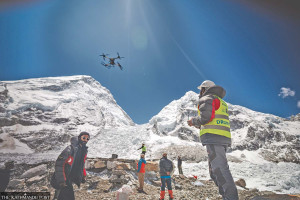
China leads, US follows—Everest emerges as frontier for high-altitude drone tech

Nepal has cooking gas, but no cylinders as half-fill keeps them at homes

Two years on, Nepalis still unable to scan and pay in India
Editor's Picks
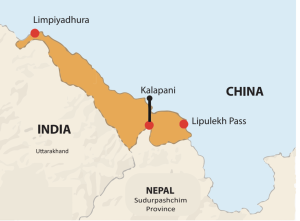
Nepal keeps protesting over Lipulekh. India and China keep ignoring it

Overexploited for years, the Chure hills are weakening, and water stress is rising across the Tarai

As machines listen, human conversations fade

Why Sanskrit is not dead after all

Lumbini master plan remains unfinished after 48 years
E-PAPER | May 14, 2026

×