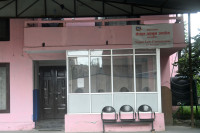
A 48-year-old man from Chandragiri recently succumbed to rabies infection after failing to secure a vaccine in his locality following a bite from a puppy. When he reached the Sukraraj Tropical and Infectious Disease Hospital (STIDH)—Nepal’s only public hospital dedicated exclusively to treating communicable, tropical and infectious diseases—the symptoms had manifested, and his fate was sealed. Medical science has rendered rabies entirely preventable through timely post-exposure prophylaxis. A death as such is an indictment of a state that has allowed a preventable disease to become a death sentence.
For months, the country has grappled with an acute shortage of anti-rabies vaccines, a crisis that has rippled from remote districts to the capital. The Ministry of Health and Food Safety remains mired in procurement hurdles while the human cost continues to mount. Over 500 people now reportedly flock to STIDH daily, many having travelled from remote districts as their local health facilities have run dry. This trend highlights a systemic collapse of the decentralised healthcare model. When patients are forced to pay out of pocket at private pharmacies or endure arduous journeys for a vaccine that the state is mandated to provide for free, the social contract is effectively broken.
The current scarcity is a predictable consequence of administrative inertia. Reports indicate that the vaccine crisis began as early as November last year, yet the Epidemiology and Disease Control Division only recently issued a new tender, with contractor selection expected to take at least another month. This lethargic approach to a 100 percent fatal disease is incomprehensible. The division’s admission that its previous attempts to purchase the vaccine failed suggests a fundamental flaw in the procurement process that must be rectified immediately. Relying on emergency stop-gap measures, such as requesting 4,500 doses from the World Health Organisation, is akin to fighting a forest fire with a watering can.
Perhaps most disturbing are the reports of a government ‘gag order’ on health workers. Officials are interrogated and warned against speaking to the media about vaccine shortages, signalling a preference for face-saving over life-saving. But silence does not cure rabies; vaccines do. Trying to hide a shortage only endangers the public further by depriving them of vital information about where—or if—treatment is available.
The government must pivot from crisis management to a robust, solution-oriented strategy. First, the procurement process for essential life-saving medicines must be streamlined and insulated from the typical delays of public tenders. A dedicated, fast-track mechanism for vaccines is essential to ensure that the supply chain remains uninterrupted. Furthermore, the authorities must address the rising incidence of dog bites, which the Health Ministry’s own data shows is increasing every year. Nepal’s ambitious goal to eliminate dog-mediated human rabies by 2030 will remain a hollow fantasy unless there is a sustained commitment to both canine vaccination and human prophylaxis.
A long-term solution lies in domestic self-reliance. Considering that Nepal requires hundreds of thousands of doses annually, the government should actively pursue the domestic manufacturing of anti-rabies vaccines. Local production would not only enhance national health security but also eliminate the volatility of depending on international markets and failed import tenders. Until such a reality is achieved, the state must ensure that every district hospital is equipped with a mandatory minimum stock of vaccines, preventing the centralisation of treatment that so often penalises the poor and the working class.
The burden of rabies falls disproportionately on those least able to bear it. For a labourer in a rural village, the lack of a free vaccine at a local health post is a financial catastrophe. The state’s failure to provide this basic service is an act of intolerable negligence. The ministry must act now to replenish stocks, end the culture of secrecy, and invest in a future where no man, woman, or child dies of a disease that we already know how to stop.




 28.31°C Kathmandu