



 28.31°C Kathmandu
Tue, Sep 29, 2026
Health
Rabies vaccine crisis hits districts. Sukraraj Hospital also critically low on doses
Epidemiology and Disease Control Division asks WHO for urgent doses.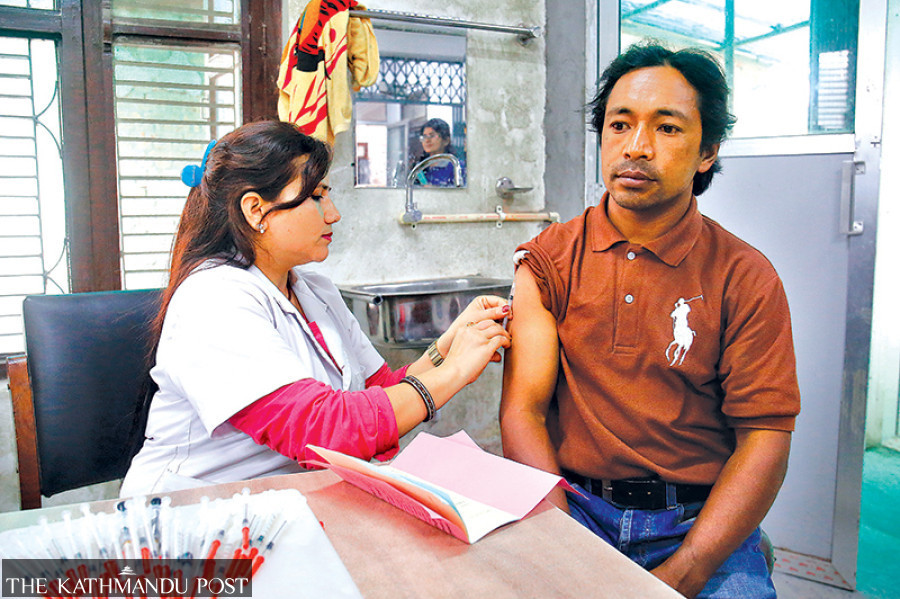
bookmark
Arjun Poudel
Published at : June 10, 2026
Updated at : June 10, 2026 20:49
Kathmandu
Gayatri Pandey, a resident of Nala in Kavrepalanchok district travelled to Kathmandu on Wednesday for a rabies shot after health facilities in her district ran out of vaccine doses. She first visited Scheer Memorial Hospital in Banepa and health facilities in Dhulikhel, but none had the vaccine in stock.
“I paid Rs1,000 in a private pharmacy for a shot,” complained the 55-year-old, who was bitten by a stray dog a week ago.
“For the second dose also, I had reached those health facilities, but they turned me away saying that they do not even know when vaccine supplies will arrive. I was compelled to come to Sukraraj Tropical and Infectious Hospital in Kathmandu for a vaccine.”
Rabies is preventable if the anti-rabies vaccine is administered on time, but if clinical symptoms start appearing, the disease is almost always fatal.
Like Pandey, over 500 people seek a rabies vaccination daily at the Sukraraj Hospital, as shortages in district hospitals have forced patients to travel to Kathmandu..
Doctors say patients from Sindhupalchok, Dhading, Kavrepalanchok, Nuwakot, Rasuwa and other districts have been travelling to Kathmandu for rabies shots.
“Patients either have to pay out of pocket at private pharmacies or come to our hospital for the vaccine,” said Shankar Pandey, a senior auxiliary health worker at Sukraraj Hospital. “We too are running low and have only a few hundred doses in stock, which will not last even a week.”
With the Ministry of Health and Food Safety failing to supply the vaccine doses for months, Sukraraj Hospital on Wednesday wrote to the Kathmandu Metropolitan City requesting urgent supply of vaccines. Earlier, the hospital had requested the Gandaki Provincial government for 1,000 doses.
“Bagmati Provincial Government provided us with 1,000 doses, which were used within two days,” said Pandey. “We also procured 2,000 doses through the hospital development committee, and all have already been used. Hundreds of dog bite victims will be deprived of rabies vaccine if supplies are not made immediately."
The hospital, which previously provided anti-rabies vaccines round-the-clock, has now stopped administering a second dose of vaccine from its emergency owing to the shortage. It now asks patients to receive the second dose during OPD hours.
The Bagmati provincial Health Logistic Management Center, which had bought 7,000 doses after the federal government failed to supply the vaccine, said that it is also running out of stock.
“We are critically low on the rabies vaccine,” Nelson Mahat, information officer at the center, told the Post over the phone from Hetauda. “Hospitals demand 1,000 doses, but we are supplying only 30, 40 or 70 doses. We get dozens of phone calls from hospitals daily, but we have neither vaccine nor answer about when supply will resume.”
The Epidemiology and Disease Control Division, responsible for supplying anti-rabies vaccines to health facilities across the country, said that it has requested provincial health agencies and local governments to purchase vaccines on their own, as its attempt to purchase the vaccine failed.
“We have also requested the World Health Organisation’s Nepal office for immediate supply of rabies vaccine and we are informed that the UN health body will supply us 4,500 doses of vaccine,” an official at the division said. But officials say this will last just around three days.
Officials admit that the vaccine crisis, which started in November last year, is unlikely to resolve soon, as a new tender is only being issued on Thursday and contractor selection will take at least a month.
Doctors say delays in vaccination could lead to increased rabies deaths, especially among working-class people who are most exposed to stray dog bites and least able to afford treatment at private health facilities. The rabies vaccine normally requires a four-dose course.
“Death from rabies will increase if vaccines are not provided free of cost,” said Dr Sher Bahadur Pun, chief of Clinical Research Unit at Sukraraj Hospital.
Rabies is a deadly viral disease that spreads through the saliva of infected animals, especially dogs and jackals. Dog bites are responsible for almost all rabies deaths in Nepal.
Nepal aims to eliminate dog-transmitted rabies by 2030, a target the World Health Organisation set. However, Health ministry’s data show that dogbite cases have been rising every year. Over 60,000 people receive rabies vaccinations at state-run health facilities every year, while thousands more seek treatment at private centres.
Officials estimate that over 100 people die of rabies every year throughout the country.
Rabies, according to the World Health Organisation, kills 59,000 people globally every year—one person every nine minutes—mostly children and the poor.
Arjun Poudel
Arjun Poudel is a health reporter for The Kathmandu Post. Before joining the Post, he worked for Sagarmatha Television, Naya Patrika, Republica and The Himalayan Times.
Most Read from Health
JE is killing more adults in Nepal as vaccination only covers children
Flood survivors face water shortages, disease risk in crowded holding centres
24 days after flood, hunger grips three Rasuwa wards
Four die in three weeks as scrub typhus spreads in Salyan
Seven die of scrub typhus in one month in Salyan
Editor's Picks
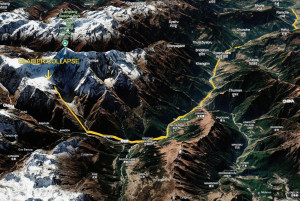
What triggered the Rasuwa flood? Scientists piece together a complex chain of events
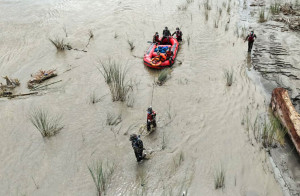
The floods keep coming. Nepal keeps starting over
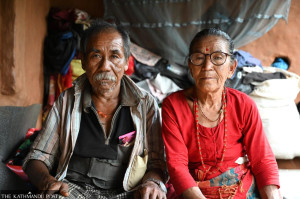
In a settlement destroyed by the Bhotekoshi flood, a disabled couple offer strangers the little they have
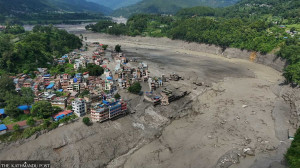
Nepal working on detailed assessment as Bhotekoshi flood reconstruction could cost up to $5 billion

Rabindra Dhant gave Nepal a reason to smile. Now his camp wants real action behind the praise
E-PAPER | September 29, 2026

×