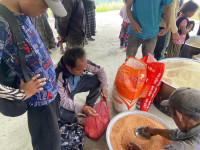
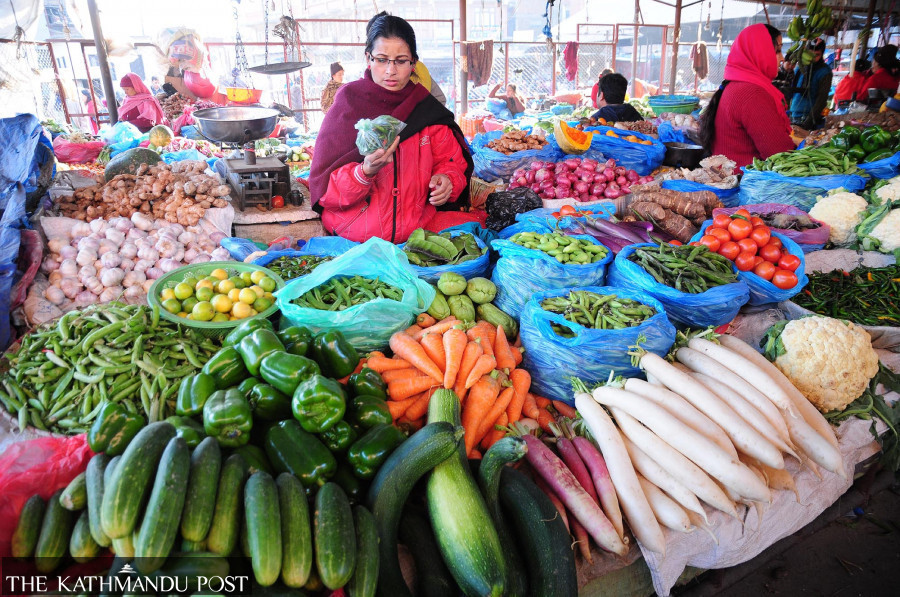
The cost of daily essentials has risen again, making life more expensive for Nepali households. For instance, just three months ago, you could buy a bag of Jira Masino rice for Rs2,100, but the same strain now costs about Rs2,500. The price of leafy vegetables has skyrocketed in Kathmandu. Cooking oil and dairy products account for the largest share of people’s expenditure, while fruits, once a daily purchase for many households, have become less frequent. Commuting to and from office, schools and universities has also become costly. Kathmanduites are grappling with the artificial shortage of cooking gas in the market. As a result, families are compromising on how they eat, spend and save, with the burden falling disproportionately on low- and middle-income families.
When people complain about a pricey market, traders have their answers ready: higher import costs, an increase in the price of crude oil in the international market, seasonal supply shortages, a natural rise in demand before major festivals and rising transport expenses. These reasons are undeniable. But the Nepali market is also filled with unscrupulous traders and middlemen who artificially raise prices, leaving consumers suffering. Every year, authorities promise to keep markets under control, assuring consumers that unscrupulous traders will be held accountable and that black marketing and artificial shortages will be curtailed by deploying more market monitoring teams. Yet every year, the same story repeats, indicating that authorities are not doing enough to protect people from the excessive impact of market anomalies.
Consumer rights advocates find no solid economic reason for the ongoing rise in prices of daily essentials—and rightly so. Price hikes during tensions in West Asia were understandable, but those tensions have since eased. International supply chains are also showing signs of improvement. Even after the Department of Transport Management announced a 2 percent reduction in inter-provincial public transport fares effective from early last month, passengers are still paying the inflated price. Thanks to weak market regulation and ineffective monitoring, the public continues to bear the brunt of price hikes.
The government should not leave people to fight surging prices of daily essentials alone; it must take visible actions and come up with long-term solutions to alleviate the public woe. To begin with, it can withdraw its revenue-collecting policies such as 5 percent VAT on household electricity consumption above 50 units and 13 percent VAT on non-household use. Such policies are detrimental and will only erode trust in the government. Additionally, regular monitoring activities alone will play a big role in curbing the artificial surge in prices in the market. As the festival season approaches, the need for stronger market oversight should be dealt with urgency. Activities like spreading exaggerated predictions of food and gas shortages must be contained.
A resilient agricultural system, which is the backbone of our economy, is another essential, sustainable component for managing price hikes and reducing Nepal’s dependence on imported food and agricultural inputs. For this, investment in irrigation, storage facilities, rural roads and cold-chain infrastructure is necessary. By addressing these needs, the state can instil hope among citizens that it is committed to protecting their well-being.




 19.56°C Kathmandu