Prioritise economic recovery and job accessibility for flood-affected communities
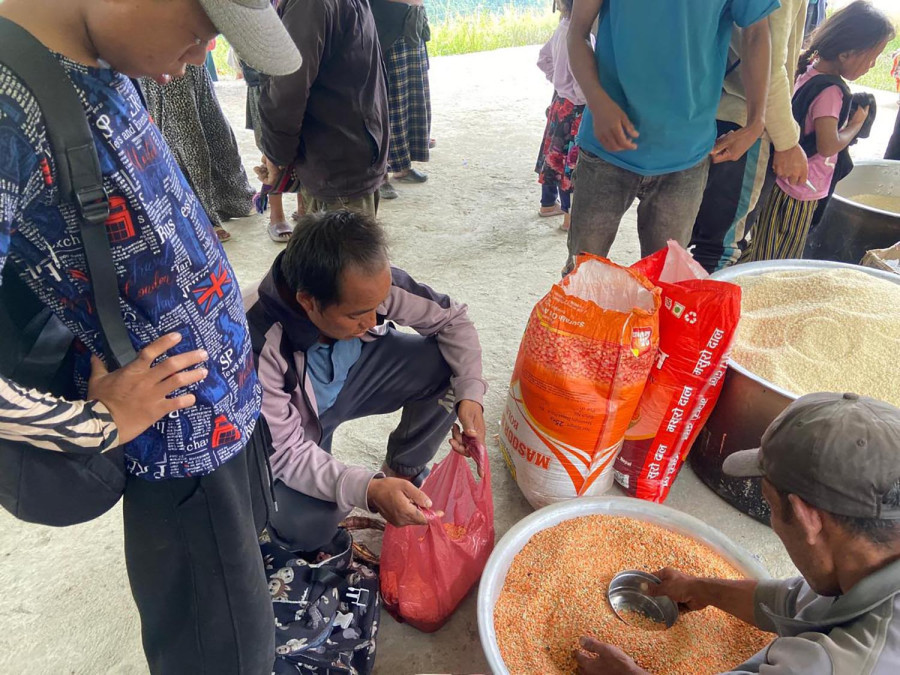
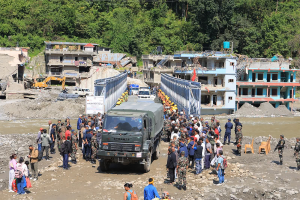
While disasters require immediate rescue and relief, enabling flood survivors to access income opportunities is equally vital.Relief pulses being rationed in Tarsa of Gosaikunda Ward 1, Rasuwa in this recent photo. Courtesy of Ward Chair Urken Chhiring Tamang
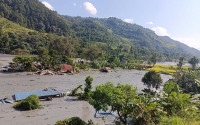
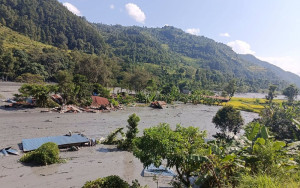
The Bhotekoshi flash floods caused not only loss of life, missing persons and infrastructure and property damage, but also affected employment and livelihoods. A preliminary assessment by the International Labour Organisation estimates that around 21,400 people living within four kilometres of the flood-affected area along the Bhotekoshi–Trishuli corridor have experienced disruptions. It also notes that the destruction of homes, workplaces, roads, bridges and energy infrastructure not only disrupted economic activity but also hindered people’s access to jobs, markets and essential services. Unfortunately, the disruption could be felt beyond flood-hit areas. This assessment should serve as a wake-up call for the government, and it must act swiftly to restore affected people’s livelihoods.
The flood has particularly impacted an already vulnerable labour market. Daily-wage workers along the Nepal-China trade route, informal workers, own-account workers and people running micro and home-based businesses have faced an unfathomable economic shock. Tourism workers, guides, porters and hotels who rely on tourists have lost their source of income. Women entrepreneurs have lost financial autonomy and must now shoulder the burden of unpaid care work. Transport operators, agricultural workers and small entrepreneurs are all facing disruption. Because the flood also disrupted a major trade corridor and hydropower infrastructure, it is unclear when they will be rebuilt and when workers can return to their previous jobs.
While the aftermath of disasters warrants immediate rescue, relief and rehabilitation, ensuring survivors can participate in job markets is just as vital—it helps people withstand shocks and recover from the flood’s traumatic impact. The government has announced relief measures for flood-hit businesses, including tax and customs concessions, loan restructuring and cheaper credit. Such support is welcome. But the real test is whether it will reach informal, small-scale workers and unregistered businesses that need more support to save their livelihoods.
Nepal should therefore prioritise livelihood restoration in its reconstruction plans. Roads and bridges must be rebuilt quickly not only because they enable mobility but also because they connect people to jobs, farmers to markets and businesses to customers. Tourism destinations—Langtang, Gosaikunda and Kailash Mansarovar—should be restored with greater safety and resilient systems because local tea shops, hotels, guides and porters depend on tourists along these routes. Taking a cue from the ILO’s rapid assessment, the government should immediately invest in decent employment, employment-intensive reconstruction, job matching, priority for local and displaced workers in local employment opportunities, worker safety, social protection and skills development.
Furthermore, those who are willing to rebuild their businesses, for instance, women entrepreneurs in the flood-hit areas, must be encouraged by creating favourable conditions. Their businesses may appear small individually, but collectively they form the foundation of local economies. Additionally, their determination to rebuild their businesses may encourage others seeking a way to earn a living again, providing the government with sufficient grounds to create better conditions for people to return to work. People whose livelihoods depend on cross-border trade corridors, transport and logistics jobs, hydropower plants and tourism cannot afford to wait in limbo. Swift, targeted action to protect them is therefore non-negotiable in Nepal’s post-disaster recovery.




 24.73°C Kathmandu