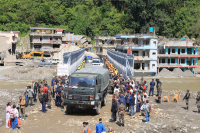
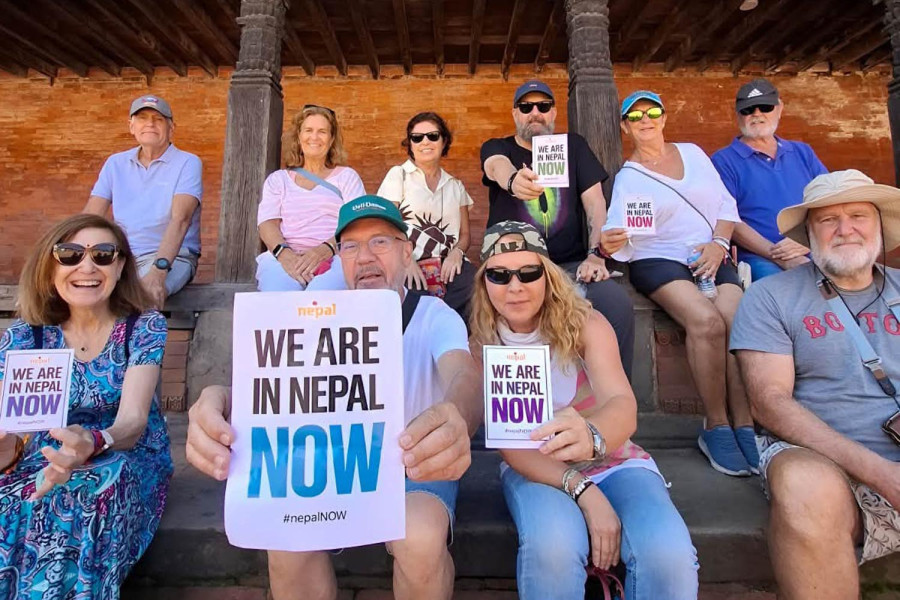
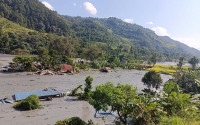
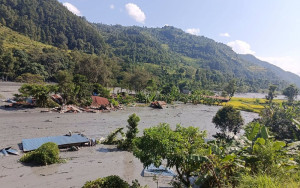
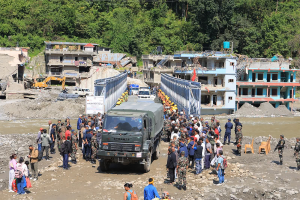
It’s nearly October. This month marks the end of the monsoon season in Nepal. The skies clear, and snow-capped mountains welcome tourists. But things are different this year. The Bhotekoshi flash flood that struck the Rasuwa and Nuwakot districts last month has sent shockwaves globally. More than 1,500 people died, and over 5,000 remain missing, including as many as 795 tourists (607 of whom were foreigners). As a result, major tourist destinations across Nepal that would otherwise have bustled with visitors have remained largely quiet.
The tourism industry accounts for nearly 6.7 percent of Nepal’s gross output, directly and indirectly, and creates job opportunities for more than 1 million people. Disruptions in tourist arrivals have threatened the livelihoods of guides, porters, restaurant workers, transport operators and countless others who rely on tourists. Once again, we are reminded that the country needs a resilient tourism system to withstand major shocks.
Nepal has seen shocks in the tourism industry even before. The 2015 earthquake damaged heritage sites, trekking routes and tourism infrastructure. Come 2020, the Covid-19 pandemic shut down the whole industry. Consequently, the country that welcomed nearly 1.9 million tourists in 2019 saw only 230,000 in 2020. Last year’s Gen Z uprising initially disrupted tourist numbers, but they later exceeded 1.15 million.
Despite immediate disruptions, Nepal’s tourism industry has recovered remarkably from the previous crises. Tourists have returned, and businesses have reopened, suggesting the industry is recovering. But this has also led authorities to be content without considering the deeper impacts on the ground. Individual workers who rely on tourists for their livelihood lose their income source and have no option but to seek work abroad following major shocks. Women entrepreneurs lose their economic independence. Small businesses in mountain communities depend on how long tourists stay and how much they spend; missing peak tourist seasons leaves them with little financial cushion to sustain their livelihoods.
The government therefore cannot afford to remain complacent by watching the cycle of recovery after disaster and political unrest. Because the country is vulnerable to natural disasters, and climate-related risks are intensifying year after year, we should design tourism infrastructure, trekking routes, roads, communication systems and emergency response mechanisms with our reality in mind. Following the Bhotekoshi flash flood, the government sent a message to the world that other regions and tourist destinations in Nepal are open. While this helped to some extent, we cannot open the country to the world without enough preparedness to protect visitors and build their confidence to choose Nepal as their travel destination.
Equally important is diversifying tourism destinations and seasons. After the recent flood, images and videos of floods, landslides, destroyed roads, collapsed bridges, and people’s suffering circulated via social media and news portals. International tourists may not know exactly where the disaster struck, but they may still see the whole country as unsafe to visit. This is where the government needs to intervene. If one trekking region or tourist destination is affected, it shouldn’t paralyse tourism activities across the country. A stronger year-round tourism model, focused on cultural, religious, spiritual, adventure and even domestic tourism, should be built.
It is also vital to boost the confidence of tourism entrepreneurs in the Rasuwa and Langtang Valley regions. For instance, this could be done by leveraging alternative routes into the Valley, while also supporting the livelihoods of hundreds of individual workers and hotels along the trekking route. It also means expediting road and bridge construction to connect the region with tourists. Overall, the only way to truly revive Nepal’s tourism industry is by ensuring that it is strong enough, diversified enough and prepared enough to withstand the next crisis.




 13.57°C Kathmandu