



 18.15°C Kathmandu
Thu, Nov 5, 2026
Editorial
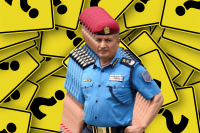
Too unfit to run the police, yet fit to advise the PM?
Karki faces no charges and no disciplinary action. The government’s answer was to create a job for him next door. The logic does not hold.
bookmark
Published at : November 5, 2026
Updated at : November 5, 2026 19:58
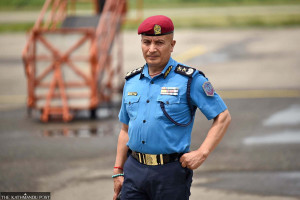
Having removed Inspector General of Nepal Police Dan Bahadur Karki through an emergency Cabinet meeting on Wednesday, the Balendra Shah-led government is yet to give a reason that would satisfy an ordinary citizen. No charge has been brought and no disciplinary action taken, which implies, in principle, that Karki did nothing wrong. Government spokesperson Sasmit Pokharel said the new post of security adviser has been created so Karki can offer the prime minister necessary counsel on security. An administration that finds a man unfit to command a force, then creates a job for him next door, has produced a contradiction, not a justification. Reporting by the Post points to friction with the prime minister’s office instead.
Karki has petitioned the Supreme Court, so the legal questions will be settled there. The damage to a force with a long legacy will not. Left unexplained, the decision invites more meddling, more drift and more abuse of executive power. What the public should expect from the police, what that requires, and how far the executive may reach into the ranks deserve to be weighed together.
The police are central to the idea of a modern state. They enforce the law and keep citizens safe. Doing so takes resources, analysts who can gather and read intelligence, a lean organisation, leadership with moral weight, and a collective confidence that lets officers act without waiting to be told. Nepal Police has lacked these for decades, and Wednesday’s reshuffle is the sharpest symptom of further unravelling of the force. Without a credible reason, the government stands accused of bad faith, and the new chief, Manoj KC, begins his tenure under a cloud. Resentment may further stir inside the ranks. Public doubt above and grumbling below will, sooner or later, hurt the work itself.
A government is entitled to prefer a police chief it trusts, but it must also answer for that choice. An organisation built on a chain of command cannot have its head swapped overnight without a whiff of caprice. Executive decisions must be lawful, transparent and credible, and ministers should ask what habits they are planting. Here the message is not reform or efficiency. It is that the politicisation of the police, a long-running complaint, has been stoked further. Rather than flexing power, the government could have been lifting morale, supplying resources and keeping its hands off investigations. The core job has been forgotten.
Nepal has been here before. Nearly three decades ago, the sitting police chief, Achyut Krishna Kharel, was shunted to the National Investigation Department and Dhruba Bahadur Pradhan was handed his job. The government collapsed in months, and the new one overturned the move, yet politicisation only deepened, leaving the force weaker and more timid. Karki’s removal revives that old distortion. However this dispute ends, a bad precedent now sits in this government’s name.
When a security agency changes hands in the dark, it loses its balance. An agency off balance cannot hold up the security system, and when internal security frays, lawlessness spreads. That road leads toward a failed state. No single decision gets a country there, but this is the road. Karki’s case, then, extends beyond one man’s grievance, and becomes a test of what the state tolerates.
The remedies are not complicated. The government should publish its reasons for removing Karki and say what the adviser’s post is meant to do. Parliament should write a fixed tenure for the police chief into law, with narrow, stated grounds for early removal and an independent body in the selection process. The courts should be left to rule without pressure. And the Home Ministry should commit, in public, to staying out of investigations.
The government also owes itself one question: If every future government behaved this way, would rules, procedure and good governance grow stronger or crumble?
Most Read from Editorial
Editor's Picks


E-PAPER | November 05, 2026

×