Who is responsible for Kathmandu’s evicted squatters?
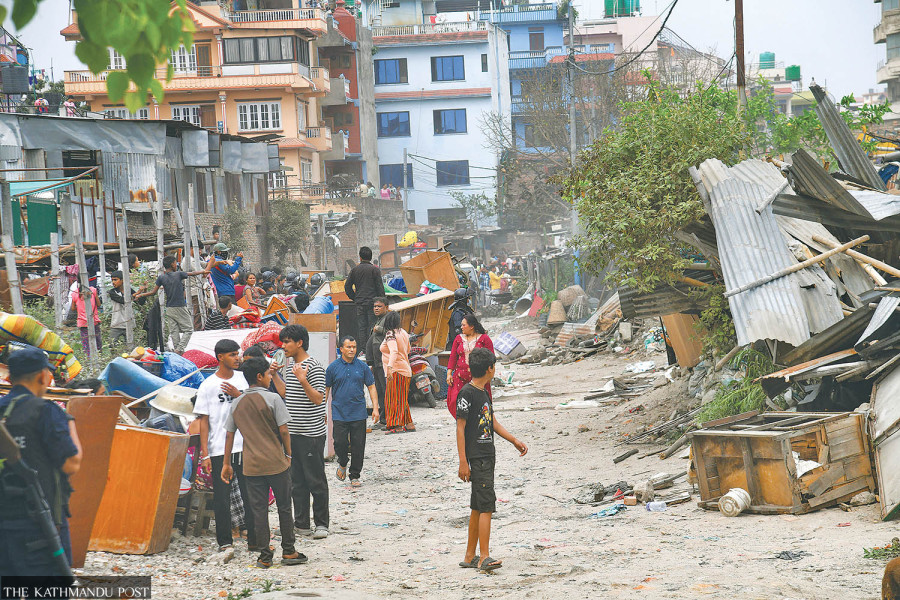
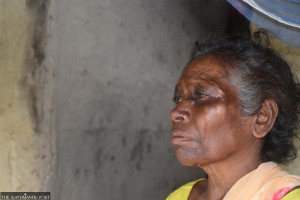
Seven months after the bulldozers, the state has found time for eviction notices but not for dialysis, decent meals or land certificates. Post File Photo
As many as 96 families are still in state-run holding centres in Ichangu Narayan, Kharipati and Bode, seven months after theApril 25 demolitions of squatter settlements in Thapathali, Manohara and Sinamangal. Residents say the government promised alternative arrangements within 15 days. No land ownership certificates or permanent homes have followed. What has followed is a string of transfers, from Kirtipur to Kharipati, to small hotels in Balaju and Gongabu, and on to Ichangu Narayan, disrupting treatment, schooling and efforts to secure documents. A notice at the Bode centre now orders families out by 2pm on November 27 (today).
Clearing unauthorised settlements falls within the state’s powers. Leaving the evicted without adequate food, healthcare or shelter does not, and the constitution, which guarantees health, housing and education, says as much.
Conditions in the centres fall short of that guarantee. At Ichangu Narayan, residents describe black tea at 7:30am, meals at 9am and 6pm, and a menu of stale lentils and poor-quality vegetables. Many of them are older people, people with disabilities, or patients with kidney disease, cancer and diabetes, for whom food is part of treatment. Meat reached plates at four meals during Dashain, 200 grams a serving, and at two during Tihar. At Kharipati, residents say meals are often stale, and a 14-year-old boy reports that some smell foul. Medical care is thinner still.
The paper trail is no kinder. A Cabinet decision on May 19 promisedfinancial assistance to families arranging their own housing: Rs25,000 once and Rs15,000 a month, with extra for households above five members. Some residents say they have yet to see the money. Those unable to fend for themselves were to be housed in holding centres, with schooling and healthcare arranged alongside local governments. Residents say the pledges never left the page.
Ask who is responsible and the answers circle. The High Powered Committee for Integrated Development of Bagmati Civilisation says it has overseen the centres and kept the records, and that the rest belongs to the women’s and land management ministries. The women’s ministry says its role ends at supplies. The land ministry says it only coordinates. The Land Issue Resolving Committee says district data is with local governments for verification. Four bodies, no ownership. The numbers raise another question. Of 2,608 registered households, a digital survey reached 2,082, and the committee is now in contact with 388. Officials owe an account of the rest.
Verifying who is genuinely landless is a legitimate task, and it will take time. People cannot be left without necessities while files travel from district offices to local governments. The Cabinet should name a single agency with a budget and a deadline, fix food and transport to hospitals this week, suspend the Bode notice until housing is in hand, and publish what has become of the households no longer in contact. A notice to vacate is easy to print. Housing, a decent meal and a ride to dialysis take work, and the state has had seven months to begin.




 8.12°C Kathmandu