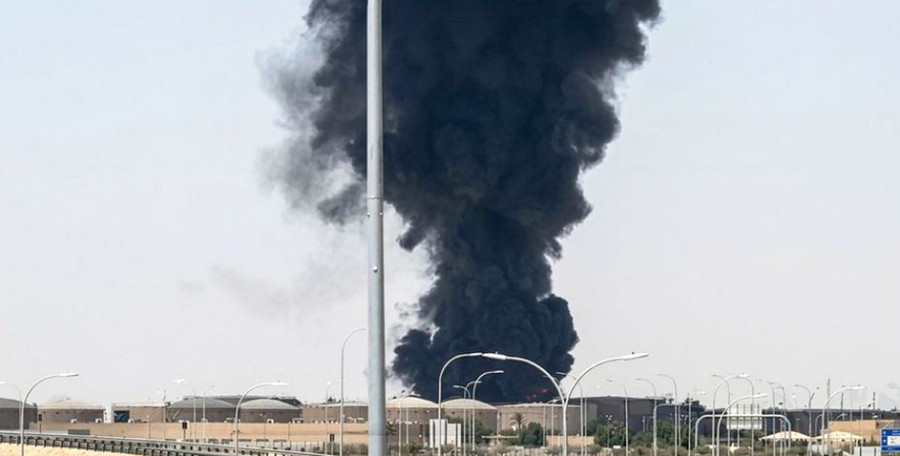
Houthi drones have killed a Nepali worker. Diplomacy must protect the rest and bring the stranded home. King Fahd International Airport in Saudi Arabia, targeted in a Houthi attack. Reuters
For many Nepalis, working abroad is less a choice than a compulsion, imposed by a job market at home that offers too little. They go to the old destinations and, increasingly, to new ones. Remittances have propped up the economy, lifted households and bought families a better life. The costs are plain, too: young talent squandered, homes strained by absence. And there is a harsher hazard. When a host country’s internal tensions and geopolitical quarrels flare, migrant workers, who have no stake in them, pay first. The latest case is Saudi Arabia, where attacks by the Houthis, a Yemen-based group backed by Iran, have killed and unsettled Nepalis. Nepal cannot fix other countries’ wars. But it can, and must, make the safety of its citizens there a first concern.
On October 21, a drone attack on a Saudi Aramco project at theShaybah oilfield in the Eastern Province killed a Nepali worker. Citizens of other countries are dying, too. The Houthis have intensified theirstrikes on Saudi airports, ports and energy infrastructure, and the casualty lists keep growing. Saudi air defences intercept many of the drones, but the falling debris still wounds and kills. With some400,000 Nepalis employed in the kingdom, one of the country’s main destinations, the danger is no abstraction. It has two parts: the safety of those who stay, and the passage home of those who wish to leave.
Not everyone will return, however grave the events. To expect otherwise is unrealistic. For those who remain, protection rests chiefly with the workers themselves, the Nepali embassy and employers. Workers must follow the safety rules issued by the Saudi government to the letter, obey their employers’ instructions and keep the embassy informed of their whereabouts. The embassy should urge them to do so and compile a detailed record of Nepalis in the country. Information exchanged in calm times is what makes a plan workable in a crisis. Such attacks cannot be predicted: when they will intensify, where they will land, when they will kill in numbers. Safety rules must therefore stop being optional and become habit before the worst arrives.
The second problem is that of the stranded. The attacks have closed major Saudi airports and cancelled flights, leaving even those with tickets stuck. Workers whose contracts have ended and who were packing to leave are under the most strain. The government should count them without delay. Where flights from Saudi Arabia are not running, Nepalis can be brought home via Bahrain, Kuwait or Qatar, but that demands diplomatic effort. Workers who travel through a third country may run into visa trouble. Those governments could be asked to grant on-arrival visas for the sole purpose of onward travel to Nepal. Such an arrangement may lie beyond the embassy’s reach, so the foreign minister must lead, talking directly to Riyadh and the three capitals.
Nepali workers have long been caught in the crossfire of conflicts that are not theirs. As long as foreign employment remains a compulsion, fear will travel with it. The compulsion must end, and that means jobs at home. The state should court domestic and foreign investment and guarantee investors’ security, pour money into infrastructure and favour projects that create capital and work. New fields of enterprise are emerging, and technology lets Nepalis serve institutions around the world without leaving the country. If legal, policy and political commitment smooth the way, faith in traditional sectors and enthusiasm for new ones will grow. In time, that would end forced migration and reduce the toll of tragedies abroad.




 22.42°C Kathmandu