



 13.27°C Kathmandu
Wed, Oct 28, 2026
Editorial
Budhigandaki needs commitment, not another new plan
Repeated shifts in financing and implementation have delayed Nepal’s largest reservoir project.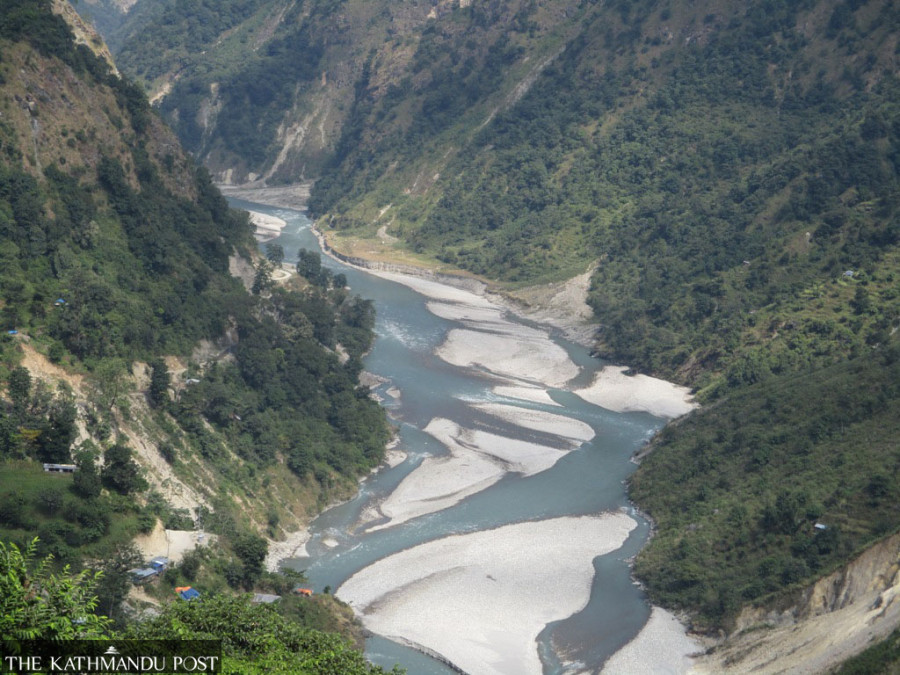
bookmark
Published at : October 27, 2026
Updated at : October 28, 2026 00:45
Nepal’s largest reservoir-based hydropower project, the 1,200-megawatt Budhigandaki, has become a case study in how policy inconsistency across successive governments can undermine national development. Declared a national pride project in fiscal year 2012-13, it was originally expected to be completed by 2026-27. More than a decade on, construction has not begun, and the estimated cost has climbed steeply.
The record is one of reversals with no durable framework behind them. In May 2017, the Pushpa Kamal Dahal government awarded the project to China Gezhouba Group Corporation without competitive bidding. Six months later, the Sher Bahadur Deuba government cancelled the award. In September 2018, the KP Sharma Oli government gave it to the same company again. When that produced no construction, the government decided in 2022 to build the project itself. Even then, the approach kept shifting.
The latest changes concern financing and institutional structure. The previous fiscal year’s budget proposed a public-private partnership model; this year, Finance Minister Swarnim Wagle announced that an empowered authority would develop the project instead. Switching models from one budget to the next breeds uncertainty over financing, accountability and execution. After Cabinet decisions in January and February, the government in March directed Budhigandaki Jalbidhyut Company Limited to proceed. What the project needs now is not another change of course but a firm commitment to an agreed framework.
Prolonged indecision is expensive. The base cost estimate has reached Rs374 billion, and with interest during construction, the total is expected to approach Rs406 billion. Meanwhile, Nepal badly needs storage. Apart from Kulekhani, the country depends on run-of-the-river plants, whose output peaks in the monsoon and drops in the dry months, precisely when electricity demand stays high. As a result, Nepal has to rely on imports from India to meet electricity demands during winter. A reservoir can regulate releases, sustain dry-season generation and make domestic supply more reliable. Budhigandaki could therefore strengthen energy security, reduce seasonal imports and make fuller use of the country’s hydropower potential.
But the project cannot move forward at the expense of those who will bear its social costs. More than 8,000 households are expected to be affected, including 3,560 whose houses will be submerged and 4,557 that will be partially affected. The Rs42.65 billion already paid in compensation for land, structures, trees and crops shows the scale of public money at stake. Resettlement, fair compensation and livelihood restoration must be handled transparently and in consultation with affected communities.
Budhigandaki needs a national goal that rises above party politics. The government must settle the financing and implementation arrangements, publish a realistic construction schedule and put cost and progress under independent monitoring. Parliament and the public should be able to see whether milestones are being met and, if not, why. Policy continuity does not mean a government can never revise a decision. It means revisions must be evidence-based, transparent and justified by the public interest.
Nepal cannot keep restarting a project of this importance. The task now is to build consensus on a workable model, resolve the outstanding issues and begin construction without further delay.

Most Read from Editorial

Editor's Picks
What to know about the US trial over Mamta Kafle’s disappearance
NPL returns with bigger ambitions and global recognition
What’s new in the Nepal Premier League’s third season?
After Nepal’s recent disaster, it wants to test whether COP31 can deliver climate justice
Why does an hour long flight to Dhangadhi cost more than a flight to New Delhi?
E-PAPER | October 28, 2026

×