



 13.5°C Kathmandu

Thu, Nov 5, 2026
Editorial
Is this government governing, or just putting on a show?
Distracted citizens are not satisfied citizens. The government should remember that hope, too, has a shelf life.
bookmark
Published at : November 5, 2026
Updated at : November 5, 2026 07:35
The current government owes its existence to the Gen Z movement, which grew out of public despair. Before it, the country lived in perpetual ‘political spectacle’: governments rose and fell routinely, accusation and defence consumed political energy, and slogans of good governance stayed slogans. Unemployment, rising prices and insecurity fed discontent until it exploded. The government born of that upheaval now seems absorbed in dispensing its own spectacle. That may distract citizens for a while, but it offers no lasting remedy and risks deepening despair among the young. Before the next such eruption, the government must strengthen the institutions that solve citizens’ specific problems.
Nepali youth are tormented by unemployment. Jobs need investment; investment needs encouraged investors and a favourable legal and political climate; and the state must raise capital expenditure on projects that build capital, create jobs and yield quick returns. With a vast number of young people entering the labour market every year, this should come first. Yet seven months in, it has not.
Prices of many goods have risen in recent months, cooking gas is hard to come by, kitchens have grown costlier, and aspirations have shrunk. There is no sense of firm action, nor any plain explanation of what caused the rises or shortages. Education and healthcare continue to swallow much of many families’ incomes. Domestic strife born of hardship has pushed middle-class families into crisis, while the government seems unable to reach them.
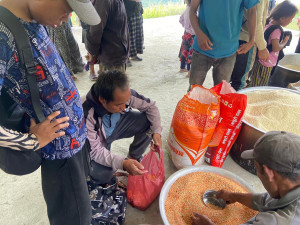
The government has also failed to resolve problems of its own making. Six months ago, the government used abrupt force to evict squatter settlements and bulldozer terror followed. Families’ foundations crumbled, children’s schooling was disrupted, and the squatters were never properly resettled. That is not to say they should have stayed on riverbanks, but their lives did not improve: they were belittled, humiliated, harassed and finally abandoned. Two months after the Bhotekoshi flood, the state’s role in rehabilitation, funeral costs, housing and livelihoods looks feeble. Those who needed the state beside them are enduring its neglect.
A parliamentary session the government itself had summoned has ended, and an ordinance removed some 1,600 people from office, though some are reappointed. A former chief justice was taken into custody at midnight, ostensibly ‘for his protection’. Anti-graft commissioners are threatened at the Prime Minister’s Office into deciding as the government pleases. Industrialists’ homes are searched for hours, and the owners arrested and humiliated. Journalists are arrested for their reporting, with no word on who held them or why. Controversial appointments outdo those of previous governments. After the arrest of the middleman Inam Sapkota, the aim seems to be daily thrills, not impartial investigation, action against those involved in irregularities and ‘setting’, and a cleansing of state structures. On Wednesday, Inspector General of Police Dan Bahadur Karki was removed from his post.
A stirred-up politics is good in theory: it draws ordinary people into important debates and roots democracy. But the stirring must match society’s core needs, and Nepal is living through precisely that contradiction. The debates now should be about accessible, quality education and health, inflation, aspirations swelled by globalisation, investment, jobs and public services. Almost everyone is in crisis, yet the fault lies not with individuals but with failing institutions. Resolving that demands broad, issue-focused debate.
The spectacle conjured every few days blocks meaningful debate and scatters attention. People forget their own problems and join the show, which suits a government not being held to account. If this continues, Nepali society may slip into another cycle of discontent and despair before escaping the present one. The grievances that gave the Gen Z movement its meaning remain unaddressed, and no message of serious effort has taken hold. Having rejected past governing styles, the society may still hope for institutional reform, but the government must remember that hope, too, has a shelf life.

Most Read from Editorial
Editor's Picks

The police chief who objects, delays—and ultimately complies

How Inam Sapkota tested the state
Kathmandu Film Festival puts Nepali cinema’s past, present and future in focus
How Deepak Bhatta became Nepal’s most influential power broker
What to know about Nepal Premier League’s big-money, star-studded rise
E-PAPER | November 05, 2026

×