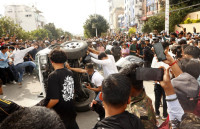
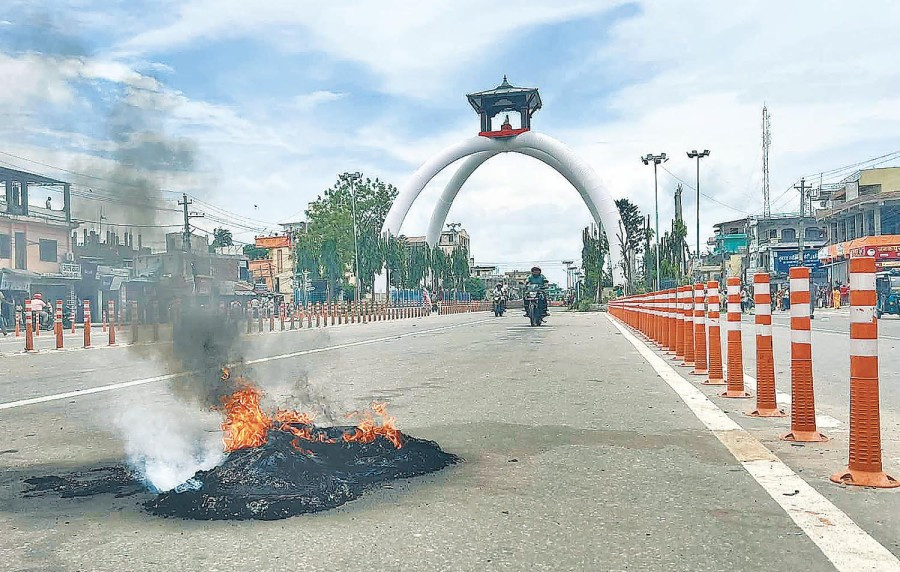
The recent unrest in Tarai-Madhesh, triggered by a communal clash in Devanganj, Sunsari, on July 26, has reminded Nepal of its vulnerability to religious friction. The Nepali state has historically relied upon coercive force to maintain fragile peace. Such reactive measures are insufficient to address the undercurrents currently threatening the nation’s social fabric. It is now a matter of national urgency that the government initiates a rigorous and transparent investigation into the burgeoning influence and tactical operations of extremist religious outfits whose activities are increasingly linked to the propagation of religious hate in Nepal.
Nepal’s modern political identity was built upon a foundation of secular mobilisation, which has long existed in a state of tension with a historically Hinduised state structure. This friction has been exacerbated over the last decade, as political actors began instrumentalising religion for mobilisation. The rise of a religion-centric power structure in neighbouring states has further catalysed the shift in Nepal, empowering the religious organisations to mobilise resources across the border and expand their networks.
The methodology of this expansion warrants intense scrutiny. Alarmingly, current trends indicate the adoption of fluid organisational structures as a deliberate strategy to evade accountability. Rather than operating through identifiable entities, various groups are rapidly formed under innocuous banners only to be dissolved or rebranded once their immediate objectives of spreading religious rhetoric are achieved. This tactic, likely imported from contemporary practices in neighbouring states, makes it nearly impossible for journalists, researchers, or auditors to track funding sources and institutional affiliations. The state, therefore, seems to be the only mechanism capable of tracing the external influence on such organisations.
The reported involvement of retired high-ranking security officials, including former generals, with these religious-political organisations is another concern for national security. The recruitment of such individuals provides radical networks with tactical knowledge required to manipulate community-level violence. Meanwhile, the security apparatus remains characterised by an institutionalised insensitivity and a command mentality that prioritises punishment over dialogue. When the state relies on the indiscriminate use of force, coupled with former high-level security officials joining radical networks, it enables radical networks to use violence to rattle the social fabric.
The current administration’s failure to address the underlying causes of communal triggers is no longer tenable. The state’s historical amnesia regarding the roots of communal violence allows radical groups like the Hindu Samrat Sena to benefit from a fragmented landscape while maintaining links to extremist ideologies.
A meaningful response to this crisis requires more than traditional nationalist rhetoric, temporary curfews, or solidarity rallies. The authorities must empower the civil society of regional hubs, such as Biratnagar and Janakpur, to conduct autonomous investigations into communal incidents rather than waiting for orders from a centralised and often distracted leadership in Kathmandu. There must also be a concerted effort to foster an informed and critical citizenship capable of engaging in dialogue before tensions spiral into violence. Concurrently, the security forces need to be trained extensively in conflict de-escalation.
The preservation of Nepal’s secular identity demands that the state confront the opaque funding and fluid tactics of the organisations linked to extremist religious outfits. Failure to investigate these networks will only signal to the public—and to the international community—that the rule of law has been surrendered to the interests of imported religious radicalism.




 15.26°C Kathmandu