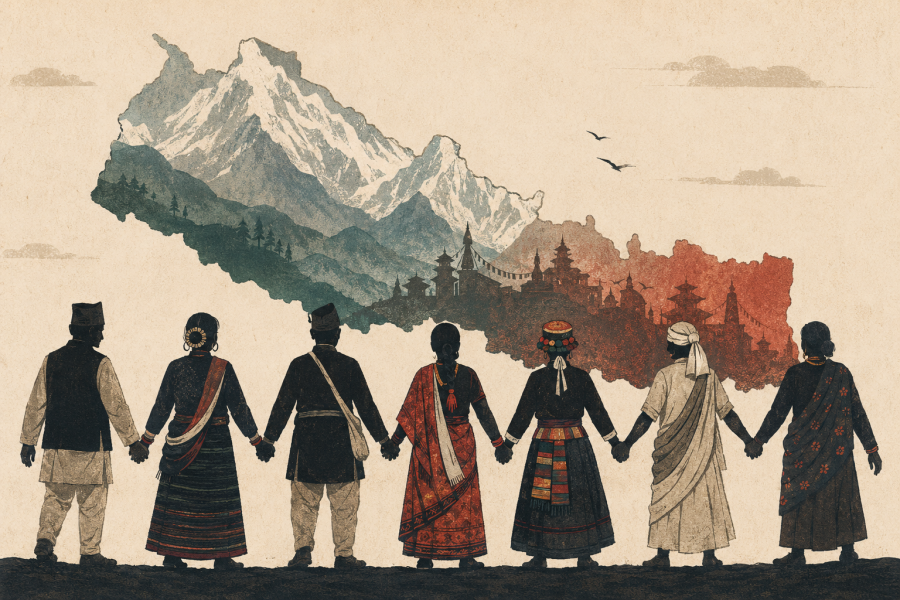
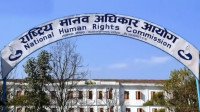
The 2015 Constitution of Nepal was touted as a transformative socio-economic document designed to rectify centuries of historical injustice against marginalised communities. A decade later, the seven inclusion commissions established through Part 27 of the Constitution to safeguard the rights of the marginalised stand as gaunt reminders of a promise unfulfilled. These institutions, born from the sweat and blood of the People’s Movement and the Tharuhat, Madhesh and Dalit struggles, have been reduced to ornamental fixtures within the state apparatus. As their ten-year review—mandated by Article 265 of the Constitution—looms, the state faces a difficult choice: Empower these commissions or admit that the inclusive project was merely an exercise in political window-dressing.
These commissions’ current state of ruin is a result of deliberate institutional starvation. The financial records of these bodies reveal a grotesque imbalance between administrative survival and community impact. In FY 2023-24, the Tharu Commission expended a total of Rs38.78 million, yet a pathetic Rs900,000 was allocated to programmes directly benefiting the community. Similarly, the Indigenous Nationalities Commission received Rs35.66 million for the FY 2024-25, with a mere Rs1.1 million designated for capital expenditure. When salaries and office rent consume 99 percent of each commission’s budget, they cease to be vehicles for social justice. Instead, they morph into taxpayer-funded waiting rooms for political appointees.
The powerlessness of these commissions is further calcified by a vacuum of legal authority and a wall of government indifference. Recommendations from these bodies are routinely treated as mere suggestions that the executive feels entitled to ignore. Of the 95 recommendations submitted by the Indigenous Nationalities Commission since its inception, only six have been implemented. The National Dalit Commission reports a similar trend, with less than 5 percent of its advice acted upon during a five-year tenure. While the Constitution explicitly defines the powers of the Women and Dalit commissions, it leaves the mandates of the Madhesi, Tharu and Muslim commissions to be determined by federal law, creating a hierarchy of rights that mocks the very principle of equality.
Over the years, the very integrity of these commissions has been eroded by political cronyism. Rather than appointing experts with proven records in research or advocacy, successive governments have used these constitutional seats as consolation prizes for loyalists who failed to secure election tickets. This degradation of meritocracy ensures that the commissions lack the teeth to challenge the status quo. Furthermore, the lack of permanent leadership—with the Tharu, Muslim and National Inclusion commissions currently languishing under acting officials—indicates a lack of state commitment to their success.
To argue that these bodies are redundant or burdensome would be to ignore the reality that electoral democracy alone cannot undo generations of systemic exclusion. A ministry focused on policy implementation will not independently audit its own failures. Constitutional commissions are essential. They serve as independent guarantors that protect rights on paper until they become rights in practice. Dissolving or merging these bodies into a single, diluted entity would be a retreat from the state’s obligation to provide specific institutional responses to distinct forms of historical discrimination.
The upcoming ten-year review must not be viewed as a constitutional death sentence but as an opportunity for institutional strengthening. Nepal requires a framework where commission recommendations carry legal weight, and the government is mandated to respond within a fixed timeframe. Financial autonomy of the commissions must be guaranteed to prevent the executive from using the budget as a leash to pull these bodies into submission. Ultimately, the credibility of Nepal’s democratic project rests on whether it views the marginalised as pillars of stability or as political inconveniences. True inclusion requires institutions with the resources, authority and independence to turn those words into practice.




 15.26°C Kathmandu