The Liquefied Petroleum Gas (LPG) market in Nepal currently faces a paradox where consumers experience shortages despite government officials claiming that imports from India remain steady. This recurring crisis has resurfaced less than two weeks after the Nepal Oil Corporation (NOC) restored the sale of full-sized, 14.2 kg cylinders. The statistics maintained by the NOC tell an interesting story. During the initial stages of the West Asian conflict in February-March, the corporation supplied 51,192 tonnes of gas. LPG supply has remained steady, hovering around 40,000 tonnes per month till June-July. This trend indicates that the volume of fuel entering the country is not the primary driver of the current scarcity.
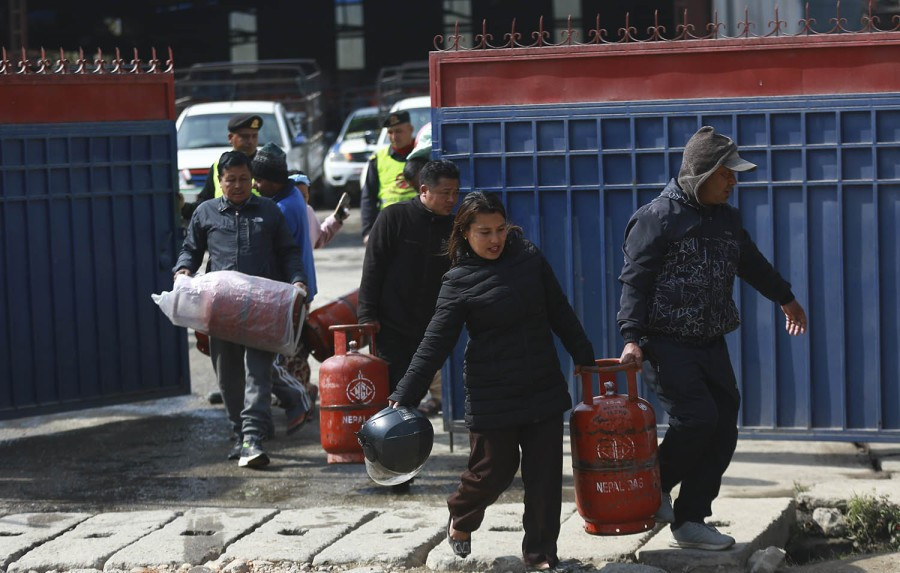
The roots of the present instability lie in reactive management of gas distribution. Following the escalation of conflict in West Asia in February, the government implemented a rationing system, limiting sales to half-filled, 7.1 kg cylinders to preserve national stocks. This measure successfully managed demand for several months, but the transition back to full-cylinder sales created a sudden, overwhelming surge in domestic gas trade. As the NOC director has acknowledged in a report published in this news outlet, the announcement that full cylinders were once again available caused all previously sidelined empty cylinders to return to the market simultaneously, placing an unbearable strain on the existing distribution infrastructure. This surge was exacerbated by a lack of consumer confidence, leading to panic-driven stockpiling by households and commercial entities.
This market volatility is exacerbated by institutional weaknesses surrounding the regulation of cylinder stocks. It is estimated that there are now approximately 17.5 million LPG cylinders in circulation across Nepal, a substantial increase from the 14.4 million units verified by a 2021 exercise. Despite this massive volume of hardware, there is no comprehensive policy governing how many cylinders a single household or a commercial establishment is permitted to possess. Furthermore, no system exists to determine how many new cylinders should be released into the market annually, rendering the system cluttered and unmanageable. This regulatory vacuum enables those with the means to hoard to do so whenever a perceived shortage occurs, while citizens who possess only a single cylinder are left without any recourse.
The government and the NOC must pursue a series of robust, long-term management strategies to address this crisis. Discussions are underway to consolidate the industry, reducing the number of bottling plants from 58 to fewer than 30. Additionally, the NOC is attempting to implement more dynamic distribution monitoring by identifying specific high-demand areas and redirecting supplies on a daily basis to prevent localised shortages. These logistical improvements must be paired with clear legal limits on cylinder ownership to prevent hoarding.
While improving the LPG supply chain is necessary for immediate stability, the most sustainable solution lies in a shift towards energy sovereignty. Given that Nepal is exceptionally rich in hydropower generation, it is strategically unwise to remain heavily dependent on imported fossil fuels. In addition, the recent discovery of natural gas in Dailekh offers another cooking fuel alternative. The government must aggressively promote the adoption of induction stoves and other electric cooking technologies as a primary alternative to cooking gas. By incentivising and subsidising the use of hydroelectricity in households, the state can reduce its import bill, protect citizens from the recurring gas paradox, and leverage its natural resources to ensure a more stable and self-reliant future for every Nepali kitchen.




 14.71°C Kathmandu