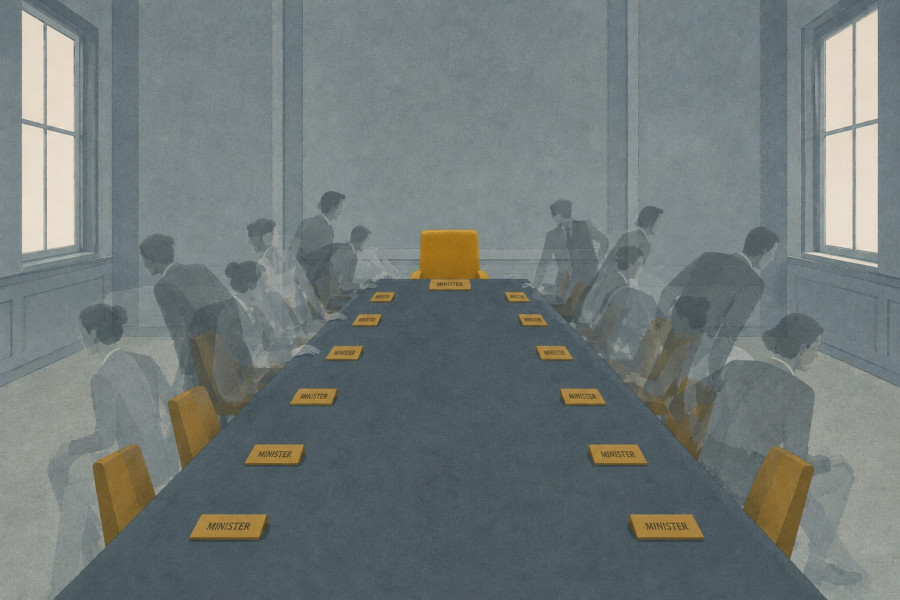
Since the current provincial assemblies convened in January 2023, 301 of Nepal’s 550 provincial lawmakers—about 55 percent—have served as a provincial minister or state minister, and some provinces have seen up to five chief ministers. In Sudurpaschim, it is nearly everyone: 41 of 53 members have held office, and of the 12 who have not, three are the speaker, the deputy speaker and a member who has left. The provinces have essentially become factories, and their chief product is the minister.
This is not what the provinces were for. Nepal’s federalism carries the memory of a people’s struggle, the promise that diverse identities would be represented and the confidence that communities could govern themselves. Of its three tiers, the province bears its truest meaning: it gives diverse communities a stake in the state and the means to bind growth to social cohesion. Instead, citizens meet it as a distant spectacle—alliances forged and broken, cabinets enlarged, reshuffled and enlarged again—whose only dependable outcome is another oath of office. A tier conceived to shorten the distance between state and citizen has in actuality lengthened it.
Federalism is not without merit. Pandemics and disasters have deepened citizens’ ownership of their local governments, while the federal government remains, as ever, the centre of national politics. It is the provincial tier that has gone missing in between—so much so that its own leadership seems unsure what it is for. Part of the blame lies in Kathmandu. Federalism has been written into the constitution but not into the parties, which still decide from the capital who becomes minister, whom to ally with and whom to abandon. As the federal government goes, so go the provinces, and every new arrangement presents its bill in cabinet seats. Chief ministers, obliged to build and save coalitions, swell their cabinets until a minister is simply a nameplate.
Citizens pay the bill in ways no coalition agreement records. In Bajura, citizens are told at the district hospital to buy state-mandated free medicine in the market. Sudurpaschim has been on budget holiday since mid-July, for the second year running, and free medicines have run out. In Lumbini, this year’s budget dropped some 700 unfinished projects and added nearly 1,000 new ones.
We have been here before. In the mid-to-late 1990s, parliamentary politics was disgraced by governments toppled within months, lawmakers whisked abroad or locked in hotels, and political principle was forgotten in the scramble for alliances. Faith in the parliamentary system, and then in the constitution itself, curdled, and upheaval followed. The provinces are replaying a similar fiasco.
None of this is inevitable. The Gen Z protests of September 2025, born of anger at a ruling class rotating among itself, toppled a government in Kathmandu, and the snap election in March punished the old parties for it. The provinces, where those same parties still hold sway, appear not to have got the message. They must now.
Chief ministers lament having neither purse nor gun, and they have a point. But only a province that governs well earns the standing to demand both. Provincial governments can begin with the basics: form stable coalitions distant from Kathmandu’s political climate, present budgets on time, and ensure that hospitals are stocked and salaries paid when coalitions wobble. They should keep cabinets lean, and treat a portfolio as a duty rather than an entitlement awaiting its turn. The parties that choreograph everything from Kathmandu must let provincial leaderships decide according to their own mandate, for federalism has yet to reach the parties themselves. The federal government, for its part, owes the provinces the laws, budgets and police they lack.
A minister is not just the holder of a title. Nepal’s provinces have ministers in abundance. What they lack is government.




 15.38°C Kathmandu