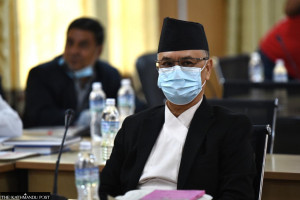
Of late, the police have increasingly been eyeing the mobile phones of people they arrest. Whether in the case of former chief justice Cholendra Shumsher Rana, where the authorities are yet to provide a clear explanation for his arrest, or in cases involving people arrested on other serious charges, their particular interest in phones has not gone unnoticed. If the claims of businessman and political activist Durga Prasai are anything to go by, police seized 20 to 25 mobile phones belonging to him, his wife and his assistants in one such arrest.
Phones are not merely devices used to talk or take photographs. They are personal record books containing vast amounts of information about individuals’ lives. Accessing them means potentially gaining access to whom they communicate with, what they read and search for, what they photograph, buy, receive, store or discuss.
A phone may also contain private conversations, photographs, financial records, location information, emails, search histories, professional correspondence and other deeply personal information. Much of it may have nothing to do with the offence for which a person has been arrested. Devices may also contain information belonging to people who have no connection with the case, as appears to be the concern in Prasai’s case.
The state has a tendency to overreach, but it is not without restraint. Laws and the judiciary exist to place limits on executive power. The Constitution protects the privacy of a person’s body, residence, property, documents, data, correspondence and matters relating to their character. Article 28 says these matters are inviolable except in accordance with law.
The Privacy Act, 2018, further provides more specific protection for personal information, documents, correspondence and electronically held data. It prohibits unauthorised access to such information and protects electronic communications from being read, viewed, made available to others, published or broadcast without authorisation. The law does provide exceptions for criminal investigations when the person consents or an authorised official acts under prevailing law. But this does not give the police an unlimited licence to seize digital devices or access everything stored on them.
The case of journalist and editor of Jana Aastha weekly Kishor Shrestha raises an even more serious concern. After failing to find the phone he regularly used, police reportedly seized computers, laptops and other digital devices belonging to his family members and the media organisation he owns. Such action raises serious questions under the constitutional protection of freedom of communication.
Article 19(2) of the Constitution specifically protects online, digital and electronic equipment, the press and other means of communication from closure or seizure merely because of the publication, broadcasting or printing of material.
The growing practice of targeting mobile phones and other electronic devices in the name of investigation needs immediate scrutiny. The executive cannot turn its power to investigate into a licence to rummage through people’s digital lives. There is already a Supreme Court precedent for caution. When police in 2012 obtained a large volume of telephone records and SMS messages during the investigation into the killing of then Supreme Court Justice Rana Bahadur Bam, the court intervened, saying that access to such private information required a clear legal basis.
A similar intervention is necessary now. In serious criminal investigations where access to mobile communications is genuinely necessary, there must be clear justification and a court order where necessary. The need for an investigation cannot become a justification for arbitrary intrusion into the private lives of suspects, their families or others who may have no connection with the offence under investigation.




 19.16°C Kathmandu