



 26.87°C Kathmandu
Tue, Oct 27, 2026
Editorial
No impunity for September 8 killings, September 9 violence
The Regmi panel rightly says cases against those involved in serious crimes cannot be withdrawn.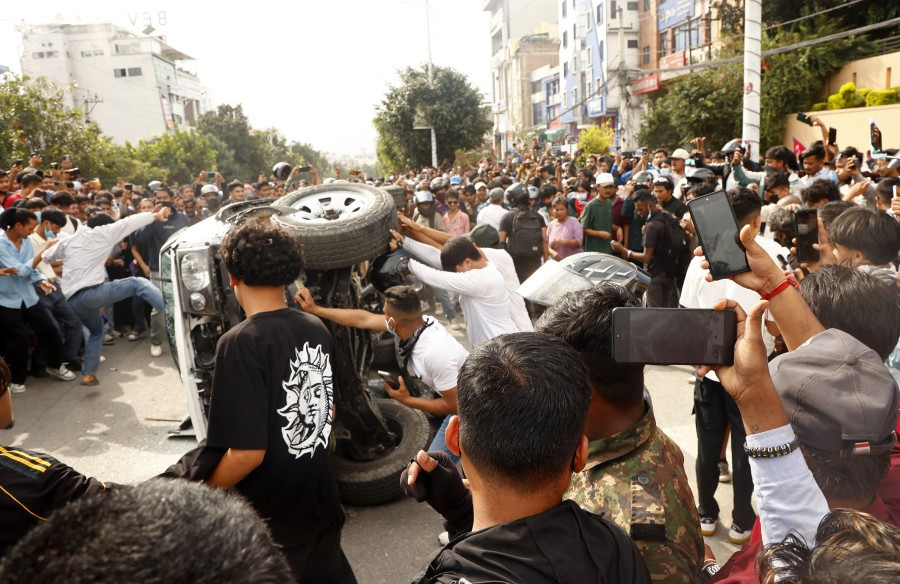
bookmark
Published at : October 6, 2026
Updated at : October 6, 2026 22:29
The then-ruling parties are reluctant to take responsibility for the tragic deaths of 19 youths on the first day of the Gen Z protests on September 8 last year. Meanwhile, the incumbent Rastriya Swatantra Party appears to have little interest in acknowledging that acts of killing, arson, looting and vandalism took place on September 9 and continued into the following day.
As a result, the government has been making every effort to release most of those arrested in connection with the criminal acts during the protests, except those accused of murder. Home Minister Sudan Gurung personally asked the committee formed to study the charges against those arrested during the Gen Z movement, led by former High Court judge Baburam Regmi, to recommend withdrawal of the cases.
The Regmi panel, however, resisted such pressure. It advised that charges could not be withdrawn against the majority of the 1,778 individuals implicated in 445 cases. Only cases against around 300 people could potentially be withdrawn, as they may have been prosecuted merely for participating in the protests. For the rest, the panel found that cases could not be withdrawn under existing laws because they involved allegations of serious offences, including murder, attempted murder, arson and looting.
No one should be prosecuted simply for participating in a protest. But those who used the protests as an opportunity to loot, commit arson and vandalise cannot be spared. They must be investigated and, where evidence is sufficient, prosecuted under the prevailing law. The Regmi panel’s recommendation, therefore, is a welcome move.
Since the Tinkune protest last March, one thing has become increasingly common: arson. Private properties, homes, public buildings and government offices have been set on fire. In many cases, those responsible have escaped accountability. One factor behind the mass arson in September last year was the impunity that followed the violence in March. If there is no prosecution for such acts committed during the September unrest, there is a real risk that arson and vandalism will become normalised in political protests. There were worrying indications of this in the communal violence in the Tarai-Madhesh in July, where both private and public properties were targeted.
It is important to bring those responsible for the deaths of the 19 people during the crackdown on the peaceful protest on September 8 under the ambit of justice. So must also be done to those responsible for lynching, vandalism, arson and other criminal acts on September 9. The Gauri Bahadur Karki commission has recommended action against several political actors, bureaucrats and security officials in connection with the September 8 crackdown. With a broader scope, the National Human Rights Commission, which conducted a separate investigation, has also recommended action against political and security officials over human rights violations during the September 8-9 protests.
The constitutional human rights watchdog has also called for criminal investigations into the violence surrounding the protests. Additionally, the Regmi committee has made another important recommendation: Cases should not be withdrawn simply to accommodate political interests when existing law does not permit such withdrawals. Those exercising executive authority must create an environment in which the law takes its course, irrespective of political affiliation or the identity of those involved.
The government must take into account the recommendations of the Karki Commission, the National Human Rights Commission and the Regmi Committee and ensure that everyone responsible for criminal acts during the Gen Z movement is held responsible through due process. This is essential not only to deliver justice for the victims but also to prevent a recurrence of violence, whether through excessive use of force by the state or through protesters taking the law into their own hands and using demonstrations as an opportunity for looting and vandalism. Democracy cannot flourish in a country where impunity prevails.


Most Read from Editorial

Editor's Picks

What to know about the US trial over Mamta Kafle’s disappearance
NPL returns with bigger ambitions and global recognition
What’s new in the Nepal Premier League’s third season?
After Nepal’s recent disaster, it wants to test whether COP31 can deliver climate justice

Why does an hour long flight to Dhangadhi cost more than a flight to New Delhi?
E-PAPER | October 27, 2026

×