On a sunny day, as you fly from Lhasa to Kathmandu, crossing the world’s highest range of snow-capped mountains, the vast alpine world of jagged rocky peaks and endless snow-covered highlands falls away in mere minutes, plunging like a vertical wall into lush green hills, cascading terraced farms, and winding narrow river valleys. By the time the plane approaches Kathmandu, you have traversed one of the planet’s most breathtaking transitions, which has long shaped two starkly contrasting worlds: the highlands of the cold, arid Tibetan Plateau to the north, and the warm, fertile Gangetic plains to the south, each nurturing its own civilisation within the constraints of its natural environment.
The southern flank receives roughly two metres of the monsoon’s rainfall annually, sustaining agriculture, replenishing groundwater, and feeding the Ganges’ major tributaries. The north, by contrast, relies on winter snow—especially the deep deposits of the alpine zone—as a natural reservoir that releases meltwater during the dry season, augmenting river flows on both sides of the divide. But this delicate balance that supported life, livelihoods, and entire civilisations in the region for millennia is now shifting in an unforgiving way.
The monsoon is growing increasingly erratic and unpredictable while shifting northward, and winter rains—a major source of snowpack—have largely faded across much of the central and eastern Himalayas. The past four winters have been almost completely dry. These changes, expected to accelerate in the years ahead, have already intensified floods, erosion and landslides, exacting a heavy toll on lives and property during the summer, only to give way to prolonged drought through the remaining months.
Flood that gripped the world
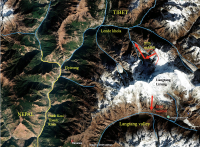
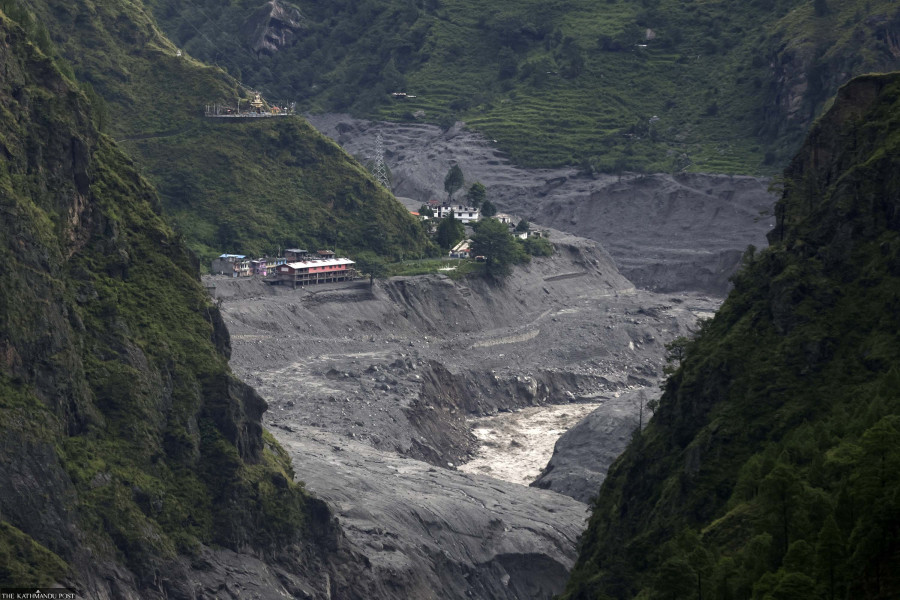
Climate scientists had long warned that we hadn’t seen the worst yet. Unfortunately, that warning became reality on 26 August at the Nepal–China (Tibet) border. The collapse of rock and ice at roughly 5,200 metres on the northern face of the Langtang mountain triggered cataclysmic flash floods down the Bhotekoshi River, killing at least 1,410 people so far, leaving over 5,000 still missing, and costing the state about a third of its revenue through loss of property and infrastructure. The world witnessed the full force of a climate-driven ‘worst is yet to come’ event.
Floods are far from uncommon in Nepal. The catastrophic flood of 1954, still vivid in the memories of survivors, dramatically reshaped landscapes across parts of central Nepal. It destroyed villages and farmland beyond recovery and forced the resettlement of survivors in Chitwan. The economic loss was estimated at roughly half of the country’s total revenue at the time. In 1993, a cloudburst killed 1,336 people, again primarily in central Nepal. It severely damaged the Kulekhani hydropower plant, cutting off about 40 percent of the power the station supplied to the national grid, and swept away three major bridges on the Prithvi Highway, severing critical supply routes to the capital. The 2002 floods affected 44 districts and claimed 441 lives. In 2017, an unusual simultaneous surge stretching from Jhapa to Bardiya in the Tarai damaged crops and infrastructure worth more than Rs60 billion.
Our knowledge, expertise and preparedness—including early-warning systems (EWSs)—regarding flood disasters have grown around rainfall. They have proven effective on several occasions in the past: In 2017, the warning arrived three days in advance, and the human toll remained relatively low; in 2025, timely alerts allowed highways to be closed to nighttime travellers, saving lives. The Bhotekoshi flood, however, though it struck precisely during the monsoon season, was triggered not by rainfall, and not even by glacial lake outburst floods (GLOFs), but by a rock-and-ice avalanche, leaving virtually no time or means for any effective warning or preparation.
The scale of the Bhotekoshi flood went far beyond GLOFs that climate scientists have long flagged as an imminent threat. And it will not be the last such event. The flood has starkly illustrated how a warming planet poses a far greater, tangible threat than abstract risks to vulnerable, low-income economies.
Spiral of suffering
In every flood, the real hardship for survivors begins once the initial rescue and relief efforts fade. Animal carcasses start to rot. Clean water becomes scarce wherever sources have been damaged. With livelihoods lost and farmland destroyed, food shortages quickly set in. Meanwhile, the rest of the country is absorbed in the festive mood of the upcoming Dashain and Tihar celebrations. By the time any rehabilitation or resettlement plans are finally drawn up, the next monsoon will already be approaching, renewing its concomitant risks somewhere else. Let’s hope it will be different this time because the flash flood has inflicted far more than physical destruction and loss of life.
The Bhotekoshi flood tore thriving communities, each proud of its rich history and culture, from their very foundations. It is unlikely that what once existed can ever be fully restored. Harder still is the question of whether the vast numbers of devastated families, orphans, widows, the elderly and the disabled will ever be properly rehabilitated and resettled, or whether they will once again be left to fend for themselves, as has so often happened in the past. By the sheer scale of those needing help, the Bhotekoshi flood will test our resilience, commitment and resolve.
The paradox of transition
With this flooding event, we are also watching the terrifying impact of global warming in one of its most destructive forms, making the call for climate justice undeniable. But the same warming that caused these roaring floods has been quietly setting the stage for a much wider, deeper, and lasting catastrophe by fundamentally changing the hydrological dynamics across the country. While this may not seem an immediate priority amid the current flash-flood tragedy, the problem is worsening and is likely to foment further with the approaching Super El Niño.
Myriad data points show that shifting precipitation patterns, rising flash droughts, the northward drift of the monsoon, and waning winter precipitation have undermined our water security. Dwindling snowpack in the high mountains, drying springs and rivulets in the mid-hills, more frequent short-duration, high-intensity, localised monsoon rains, and falling groundwater table in the Tarai are clear warning signs. These shifts are weaving an ever more complex web of challenges for people across the country as they struggle to meet their daily water needs and grow food.
The Bhotekoshi crisis must be recognised as a clear signal that we have entered a new era in our rapidly warming world. The scale of destruction that future floods and climate-driven disasters are likely to unleash, combined with increasingly intensifying water stress, will present challenges of ever-greater complexity, unfolding far more severely than currently projected. We must move beyond merely reacting to crises and instead commit to building genuine, lasting resilience against the threats of flash floods and drying aquifers. Our demand for climate justice must expand to include long-term water security; else we will survive the floods only to confront the far more destructive systemic fallout of widespread water and food shortages.




 20.39°C Kathmandu

.PNG&w=200&height=120)