



 13.72°C Kathmandu


Wed, Nov 4, 2026
Columns
Improving disaster communication
Early warning begins with understanding hazards and assessing risks, and continues through clear communication, interpretation of alerts, risk perceptions and decisive actions.
bookmark
Anustha Shrestha
Published at : November 4, 2026
Updated at : November 4, 2026 06:42
The headmaster of Tribhuvan Trishuli Secondary School in Bidur, Nuwakot, had only 14 minutes to save his students and staff before the flood destroyed the school. After receiving the Rasuwa-Bhotekoshi flood warning on August 26, he immediately stopped classes, rang the bell, redirected buses, and evacuated more than 900 students and staff to higher ground. Eventually, the flood swept away the school building, but the students and staff were safe. This incident provides a significant lesson for Nepal. Early warning can save lives when people understand what it means and know what to do next.
Nepal is still dealing with the consequences of the devastating flood. According to the Situation Report published on September 21 by the National Disaster Risk Reduction and Management Authority (NDRRMA), 1,451 people have been reported dead, while 5,745 people remain missing. About 8,317 households have been affected, and total disaster impacts are estimated at $2.695 billion, comprising both physical damage and economic losses.
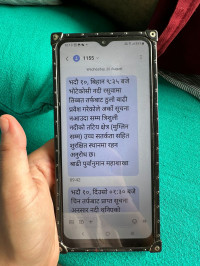
After the flood, the Flood Forecasting Division disseminated 679,295 early-warning SMS messages to downstream risk areas through telecommunication service providers, Nepal Telecom and Ncell.
These numbers, however, do not tell us what happened after the warning reached people and communities. Did people read the message? Were they able to understand the message and the severity of the situation? Were they able to identify the safe locations and routes and immediately move? These are important questions, particularly since Nepal has been working on preparedness for some time and has established early warning infrastructure at various locations.
The Department of Hydrology and Meteorology tracks weather patterns and river movements and continuously monitors whether the river is rising or falling. Based on the water level, warnings are issued through public announcements (mostly using a mic), emergency sirens, social media, apps, and SMS. Flood information can also be accessed through the toll-free number 1155. The issue here is how the warning is interpreted once it reaches the public.
During the Bhotekoshi flood, people living downstream, including Trishuli and other parts of Nuwakot, did receive flood warnings via SMS. Security personnel informed people to stay far away from the river and move to safe locations. Yet, receiving warnings does not always mean that people know what to do or where to evacuate. This is clearly a gap.
We often receive SMS messages informing us that a river has crossed its danger level and asking us to stay alert. Technically, it’s correct, but what does it mean? Should a person stay inside the house and move upstairs, or should they relocate their valuables? Does it mean to leave home and evacuate, but where should they go? Which road or bridge do they need to avoid? Is the water level still rising or falling? What if a person receives an alert while still asleep?
These are some of the questions that are not adequately discussed and require more attention. Sending warnings and communicating risks are two different things. An early warning system can detect risk and send alerts. Yet, it may fail to protect people if information is not communicated on time, not understood, and appropriate actions are not taken. Conversely, effective communication and a sound understanding of risk can influence life-saving decisions. The experience of Tribhuvan Trishuli Secondary School is an excellent example. A short warning, if it is timely, understood by the recipient, and followed by a clear course of action, can save lives.
Meanwhile, some videos circulated on social media showed people watching and filming the flood from the bridge and road even though security personnel were asking them to move to safer locations. This raises questions about risk perception. Why did people not immediately act after receiving the warning? What was missing between the warning and the decision to act? A person who had witnessed multiple flood events without severe consequences may interpret a warning differently from someone who had experienced severe flooding. Disaster communication thus needs to address risk perception and information delivery.
These gaps require us to rethink disaster communication. Early warning is not just the transmission of information from a monitoring body to the public. It needs to be communicated in a way that helps people understand the urgency and severity and take actions to reach safety. Warnings need to provide clearly defined actions, information on evacuation areas and routes, and the roles of local authorities, offices, schools, hospitals, hotels and communities. As part of preparedness, evacuation centres and safe routes should be identified in advance and communicated to residents. SMS alerts need to be complemented by cell broadcast and location-based notifications as well as public warning channels such as sirens, radio, television, social media, apps, police and municipal loudspeakers, and community networks. Early warning does not end when alerts reach the mobile phone. It begins with understanding of hazards and assessing risks, and continues through clear communication, interpretation of alerts, risk perceptions, and decisive actions.
Early warnings become even more complicated for people who are not familiar with the area, such as migrant workers, tourists, students and travellers. They may have limited knowledge of geography, river movement, flood-prone areas, safe routes and potential shelters. The warning system needs to address the needs of local people as well as the people who are temporarily in the area. They also need to be informed about the disaster risks, safe locations and appropriate actions.
Languages and their accessibility matter greatly in disaster communication. A warning delivered only in Nepali may not be suitable, especially for tourists, workers, and students from abroad, and also for locals who do not speak Nepali. Disaster information needs to be communicated in English and local languages as well, while considering the needs of people who cannot read, people with hearing, vision, cognitive and mobility-related disabilities, older people, children, and those who lack access to smartphones, the internet, and reliable electricity. Hence, multiple media should be used when communicating disaster warnings.
Nepal needs to move from early warnings to early actions to improve people’s safety. Although disaster communication receives less attention than other aspects in disaster reduction and management, it needs to be addressed more seriously for the well-being of the community. Nepal needs not only better warnings but warnings that people can understand and act upon.
Anustha Shrestha
Shrestha is the Deputy Executive Director of the Institute for Social and Environmental Transition-Nepal (ISET-Nepal).



Most Read from Columns


Editor's Picks

How Deepak Bhatta became Nepal’s most influential power broker

The police chief who objects, delays—and ultimately complies

Who is Inam Sapkota, the man linked to Cholendra Rana and top police officials?

What Balendra Shah can learn from Zohran Mamdani
What to know about Nepal Premier League’s big-money, star-studded rise
E-PAPER | November 04, 2026

×