



 8.12°C Kathmandu
Tue, Nov 24, 2026
Columns
When America sneezes, small economies catch a cold
Nepal is struggling to improve its trade performance as competition intensifies and global markets remain volatile.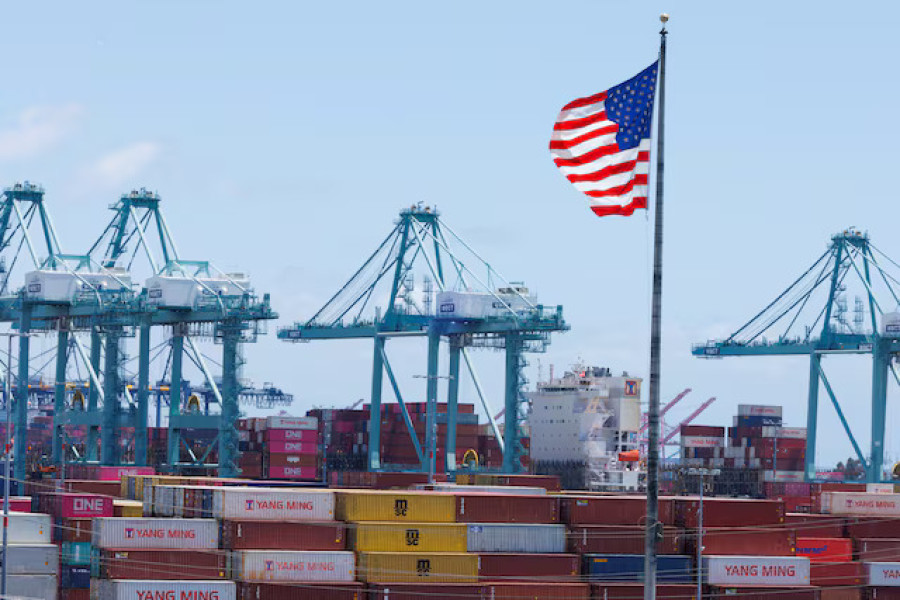
bookmark
Purushottam Ojha
Published at : November 23, 2026
Updated at : November 24, 2026 07:28
The international trading system has faced headwinds since Donald Trump took office in 2016. The edifice developed with the formation of the General Agreement on Tariffs and Trade (GATT) in 1947 is being whittled away by the US administration through obstructing the appointment of appellate judges in the dispute settlement process, the arbitrary imposition of tariffs, ignoring the provisions of most-favoured-nation treatment, and denouncing special and differential treatment, as well as trade-related capacity enhancement programmes in favour of least developed countries, among other actions.
Trade frictions with major trading economies were initiated during the first term of the President and have intensified during his second term. Tariffs imposed by the US government are being met with retaliatory tariffs from its larger trading partners, escalating the discord, commonly referred to as a trade war. The United States’ posture over the last decade shows the administration’s reluctance to adhere to the principles of the Washington Consensus that it espoused in 1989. Global trade rules under the World Trade Organisation system are being derailed over time. Countries are thus resorting to regional and bilateral processes, moving away from multilateral trading regimes.
Tighter immigration controls are restraining trade in services. The US withdrawal from the World Health Organization and backing off from the environmental agenda are taking a toll on human welfare. Global supply chains are disrupted due to the Russia-Ukraine conflict and the Iran war, with the US supplying arms and ammunition to one party in the former case and being directly involved in initiating the conflict in the latter.
The global economy is facing a downturn in light of these recent events. Supply chains for essential goods, such as food, fuel and fertilisers, are disrupted. Disturbances in air, surface and maritime transport systems are affecting the prices of goods and services, resulting in a high cost of living. This has triggered political unrest in many countries in both the Global North and South. In particular, least developed and developing countries with low resource bases and production capacity are disproportionately affected by these upheavals.
Setback of the policy
The result of the mid-term elections held for the US House of Representatives and Senate in the first week of November this year shows that a majority of the Americans rejected President Trump’s policy of staging wars, isolating the nation from expanding global trade, ignoring human rights protections and withdrawing US support for promoting health and welfare-related activities worldwide.
Now, the world is watching: to what extent the newly formed US Congress can check the proliferation of the President’s illiberal policies and reverse the situation. However, the US Constitution bestows immense power on the President, including the ability to veto bills passed by the legislature. Therefore, the global community is curious whether the US Congress will be instrumental in reshaping the government’s ongoing trade policy.
Lessons for small economies
Events in recent years show that big and powerful countries can upend and frame the global strategic and economic order to their liking. This holds particularly true as it is often said that if America sneezes, the rest of the world catches a cold. The US has remained the largest consumer market due to its population size, income level and growing demand for quality goods. Textiles and garments from South and Southeast Asia, fruits and vegetables from the Caribbean, and cars, electric and electronic equipment, and transport vehicles from Europe, Japan, Canada and Mexico all find markets in the US. China remains the leading exporter to the US, exporting a wide range of goods, including food grains, fast-moving consumer goods, electrical and electronic equipment, rare earth minerals, toys and garments.
As the dominant currency in the global financial market, countries compete to accumulate US dollars to maintain their balance of payments. Changes in US trade policy send ripple effects through the global economy and often wreak havoc in marketplaces. Thus, governments need to take a cautious approach and develop strategies to cope with any untoward policy shifts by their trade partners.
First, it should be recognised that high dependency on a single market can lead to putting all eggs in one basket, increasing risks and vulnerabilities to sudden changes in the trade policy of the partner country. Second, shorter supply chains should be preferred over dependence on distant markets for both imports and exports. This may require intensifying trade and economic engagement and infusing the crucial elements of the multilateral trading system. Such elements, particularly measures of trade facilitation, investment, protection of intellectual property rights, addressing sanitary and phytosanitary issues, and technical barriers, as well as trade-related technical assistance, are important. Third, countries may explore the potential for creating value chain linkages by sharing the production and sale of goods and services. Fourth, countries may adopt digitalisation and utilise modern information technology-based work processes to enhance efficiency in production and the overall supply chain.
Nepal as a landlocked and least developed country is struggling to improve its trade performance amid increasing competition and volatile global markets. Dependency on neighbouring countries’ markets, particularly the Indian market, is growing, as exports to third-country markets have been challenged by multiple factors. Furthermore, there are untapped opportunities to increase exports to other South Asian countries, including India, as well as to Southeast Asian nations. Despite sharing a border of almost 1,400 km in the north, Nepal’s export trade with China remains disappointingly low.
To navigate the complexities emerging in the global trading system, Nepal needs to follow a two-pronged strategy: first, joining the movement to revive and protect the multilateral trading system, and second, making sincere efforts to harness the market potential within the region and its neighbourhood.
Purushottam Ojha
Ojha served as commerce secretary for the government of Nepal.





Most Read from Columns

Are Nepal’s celebrated technocrats serving the country or global capital?

International recognition is no proof of serving global capital
Can Nepal cook dal bhat on its own electricity?

Who is the real prime minister?

How Mamta Kafle case shows why digital records matter when a Nepali disappears abroad
Editor's Picks

NPL’s third season was a spectacle. It was also a reality check.

Why a viral TikTok about ‘baddies’ has struck such a nerve in Nepal
Old differences continue to weigh on Nepal-India ties

What happens to passengers’ belongings after a road accident?
Nepal and India have revived stalled air route talks. Here’s what you need to know
E-PAPER | November 24, 2026

×