There’s a saying that some books find us at just the right time and help us make sense of what we’re feeling.
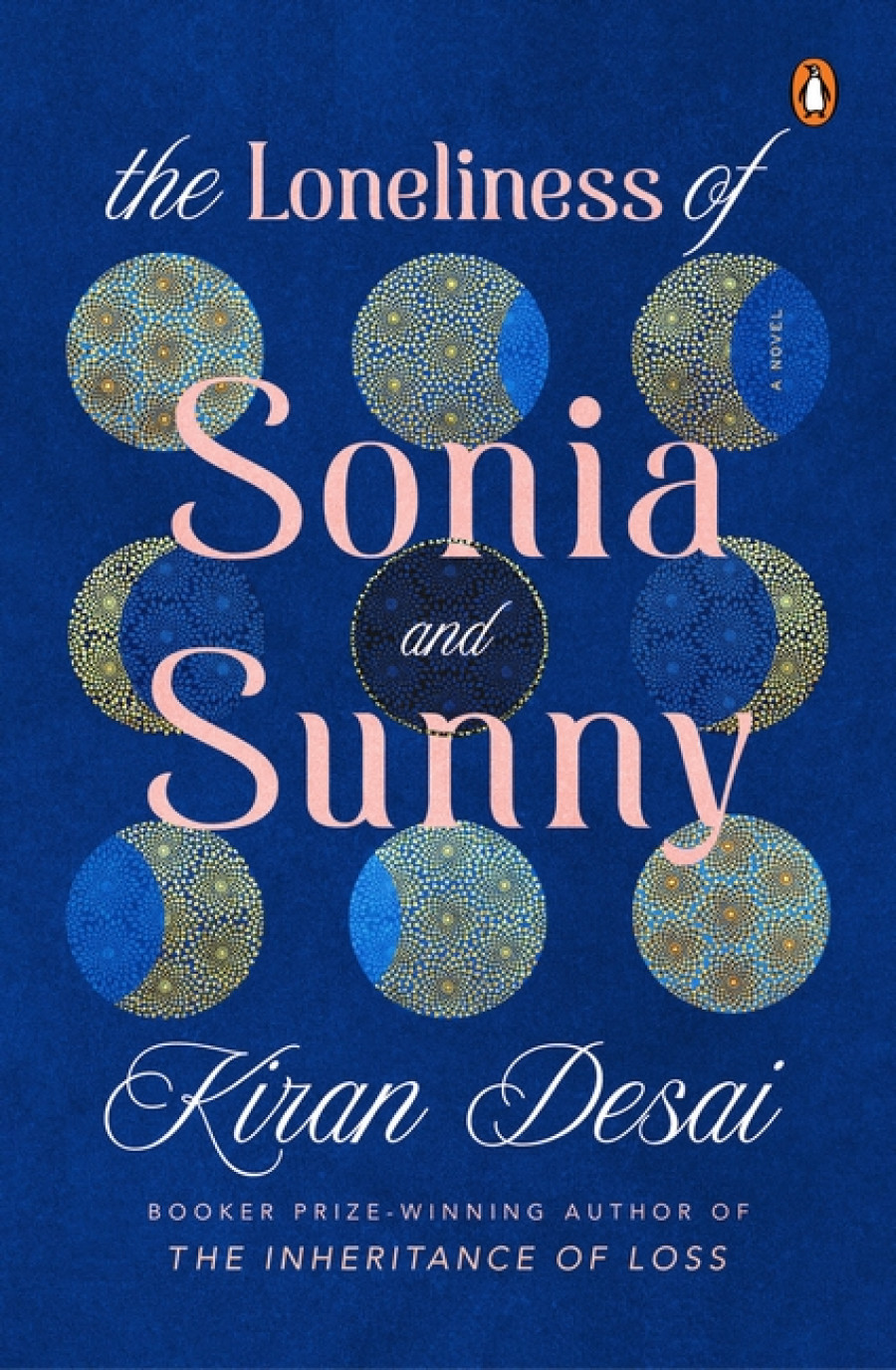
Troubled by my own loneliness, a regular stroll to my favourite bookstore in Thamel led me to pick up Kiran Desai’s ‘The Loneliness of Sonia and Sunny’. And this book did exactly that.
Shortlisted for the prestigious 2025 Booker Prize, the book is set in different locations across India and the US. It explores themes of patriarchy, marriage structures, class divides, postcolonial identity and the hypocrisies of everyday life.
Desai offers fresh insight into the story. It opens up in a scene in an Indian household, where a major discussion centres on the menu for one of the characters’ birthdays. The way Desai focuses on detailed, practical aspects of Indian life enables the reader to feel immersed in the cities of Allahabad (now Prayagraj) and Delhi.
Though the book’s title centralises Sunny and Sonia as the main characters, the 688-page novel casts equal limelight on other characters. These characters serve as an exposé of the contradictory lives many lead in society, exposing the gap between their learned values and actions.
Both Sunny and Sonia are immigrant students in the US, each grappling with their own life struggles. Sonia, alienated by American individualism, gets into a relationship with a predatory artist, Ilan. Sunny, a copy editor at the Associated Press in New York, is seeking independence from his overbearing family in Delhi. He keeps going back and forth in acknowledging his birth and American identity.
The comical yet notorious business between the families of Sunny and Sonia brings them together through matchmaking. Babita, Sunny’s mother, is a wealthy, state-conscious widow who views Sonia as a threat. The author humorously portrays her as a type of ‘Mother India’—one who turns a blind eye to her son’s wayward behaviour.
Another striking character in the book is Seher, Sonia’s mother. The book’s theme revolves around patriarchy; however, the powerful character truly fighting patriarchy is Seher. She discards motherhood in a way that even the most passionate activists might find uncomfortable. For instance, when Sonia’s father falls ill, and Seher has already moved out of the house, it doesn’t feel like an obligation for her to return and care for him.
Equally interesting is the way Desai explores performative feminism. Through her bold storytelling, she reveals how when ‘isms’ are stripped of layers such as class, caste and geography, they risk becoming performative. The wealthy and educated women in the novel face patriarchy; however, they also wield caste and class capital. The novel illustrates this well when it states, “I watch women who are certain of their security, and therefore of themselves, lecturing the room on the subject of feminism”.
Similarly, a pertinent question one encounters as one progresses through the book is: Why do people often avoid associating with others from the same nation while abroad? Sunny’s envy of his American girlfriend, Ulla, stems from his resentment toward her because, unlike Ulla, he has to work harder to be perceived as “Western”. Similarly, Babita’s avoidance of Indians during her travel to the UK is her attempt to distance herself from a reality she prefers to believe no longer exists.
Later in the story, while writing an article about her aunt, Sonia writes that Mina Foi eats pears rather than pink guavas. By choosing to write pear over the pink guavas, Sonia is making a conscious ‘anti-orientalist’ choice. Because pink guava is deemed to be an exotic, tropical, vibrant food, exactly what Western readers expect from an Eastern setting, whereas the pear is universal and slightly out of place, which humanises Mina Foi rather than exoticising her. In this way, Sonia defies Orientalism and examines how the West views Asians through its orientalising lens, objectifying them as exotic.
In this vein, through Sunny’s life, Desai critiques Western media and the dominant narrative it creates to serve its interests. This touches on the fact that Western media depend on major events to sustain themselves. It is illustrated in one of the passages of the book, “There’s a fundamental flaw in a brown person going to the brown world to tell the white world about the brown world, as if he were a white person believing in the centrality of the white world.”
A journalist like Sunny, writing for a Western gaze, translates reality in ways that fit Western expectations, losing his own perspective in the process. This contributes to a different form of colonisation, as described in the book, “Then the brown world starts seeing itself through that distorted lens.”
While the author makes significant efforts to advance the decolonisation narrative, her stereotyping of Nepali characters as blue- and grey-collar workers brings her back to square one and often prompts the reader to question whether she is being performative. Although the beginning of the book set a promising narrative, it seems that Desai has attempted to brew many things in a single pot. In attempting to address all these issues, the storyline largely falls apart.




 25.58°C Kathmandu