Nepal’s March 5 snap parliamentary election, held in the wake of September’s Gen Z uprising, has brought a decisive shift in the country’s leadership and turned long-standing debates about generational change into a real transfer of power to younger leaders.
The September uprising, which saw thousands of young people take to the streets, demanded greater political accountability, governance reform, and more space for younger leadership in national politics.
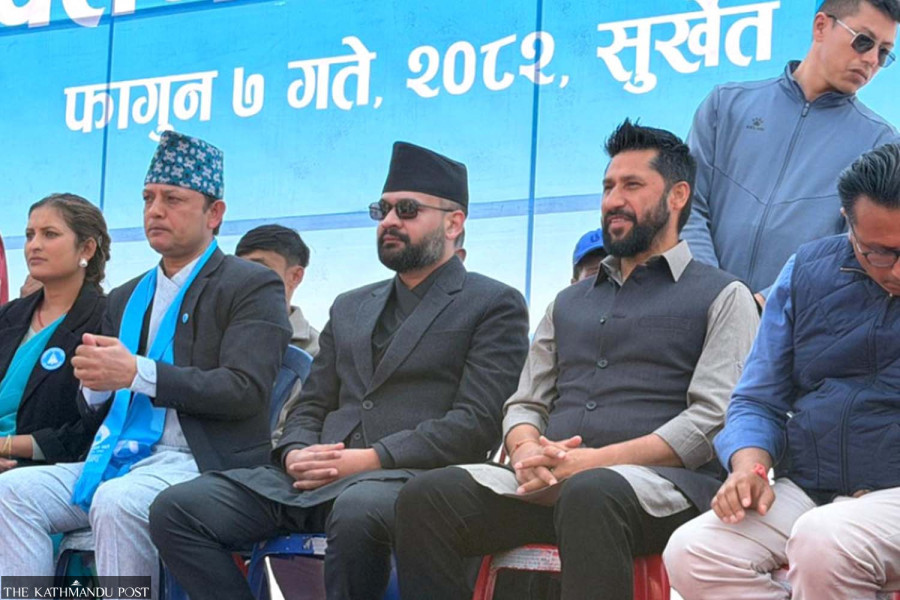
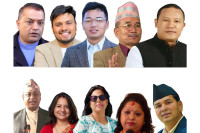
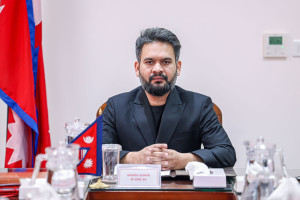
The vote not only weakened the dominance of established political parties but also significantly altered the age profile of the country’s leadership. Of the 15 members in the new Cabinet led by Prime Minister Balendra Shah, who is a senior leader of the Rastriya Swatantra Party (RSP), 10 are under the age of 40, while Shah himself is 36. The newly elected House of Representatives has also witnessed a noticeable generational shift, with a commanding presence of younger lawmakers.
The shift has created an unusual political dilemma where leaders who once demanded generational change within traditional parties now find themselves overshadowed by an even younger group from the RSP. The party secured 182 seats in the 275-member lower House, where around 70 lawmakers are under the age of 40.
But leaders who championed the leadership renewal within their party are reluctant to accept it.
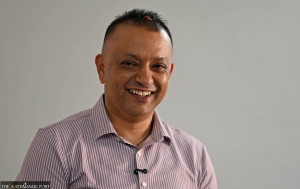
“Politics is defined less by generation than by perspective; therefore, the generational shift the politics of the country has witnessed will have no less prospects for mid-level leaders who have the vision to lead the country,” said Karna Malla, a CPN-UML leader who has been championing the generational change of leadership within his party.
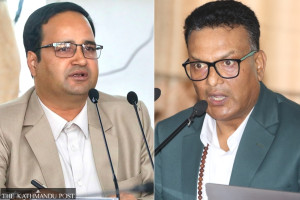
But Shankar Tiwari, a leader from the Nepali Congress, says the emergence of a new and even younger generation in national politics has created fresh challenges for leaders who had long championed generational change within their parties.
According to Tiwari, many leaders in traditional parties were on the verge of moving into top roles within their parties and in national politics. However, the electoral rise of the RSP, which has pushed established parties to the margins, has made that path far more uncertain. Their future prospects, he says, will now depend on how they respond to the next wave of younger politicians.
“The key question now is whether those leaders will be willing to create space within their parties for figures younger than themselves,” Tiwari said. “How they support and accommodate the next generation will ultimately determine their own political future.”
He adds that the performance of the current crop of younger ministers and lawmakers will also influence the prospects of mid-level leaders within traditional parties. If the new generation in government is able to meet public expectations, it could further intensify calls for leadership change within traditional parties.
The development raises fresh questions for old guard parties such as the Nepali Congress and the UML, among others, where many mid-level leaders—positioned below the top leadership but above grassroots organisers—have spent years advocating leadership change within their parties.
With an even younger set of leaders from the RSP now entering national politics through the ballot box, the space for those in traditional parties who once pushed for change from within appears increasingly uncertain.
However, 28-year-old RSP lawmaker Bablu Gupta, who also has served as the Youth and Sports minister in the immediate past interim government, says the rise of one age group into leadership, whether in government or Parliament, does not necessarily come at the expense of others.
“What will matter most,” Gupta explains, “is how the new lawmakers develop themselves in the coming days and the kind of support they receive from party and government leadership in that process.”
Political analyst Geja Sharma Wagle says leaders in traditional parties who once advocated generational change have not yet become irrelevant. According to him, Nepal has long debated generational transition in politics, but the discussion often overlooked a crucial dimension—that leadership change should also be accompanied by ideological clarity and visionary leadership.
As a result, Wagle argues, a perception emerged in society that generational change simply meant bringing in anyone new, regardless of their political understanding or long-term vision.
“For this reason, there is still political space for leaders who have been advocating leadership transition, particularly those who possess ideological clarity and the capacity to provide visionary leadership,” he said.
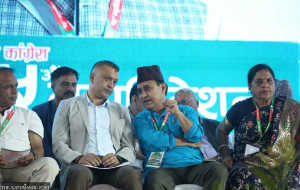
Meanwhile, Yubaraj Chaulagain of the Nepali Communist Party (NCP), a grouping of various leftist groups including the former Maoist Centre, argues that the debate should not be reduced to age alone. He points out that RSP chair Rabi Lamichhane and the party’s another top leader and current finance minister, Swarnim Wagle, are both older than Gagan Kumar Thapa, the chief of the Nepali Congress.
For Chaulagain, judging political change purely through the lens of age would therefore be misleading. The rise of relatively younger ministers and lawmakers through elections, he says, should not automatically call into question the relevance of second- and third-tier leaders within old guard parties.
Still, he acknowledges that, in the changing political context, younger leaders within traditional parties will eventually need to take greater initiative, even though those at the lower rungs of party structures are unlikely to claim leadership roles immediately.
Among the major parties, the Nepali Congress acted quickly after the September Gen Z movement and elected a new executive committee through a special convention under the leadership of Gagan Kumar Thapa. However, parties such as the UML and NCP, are still dominated by their long-standing leadership.
UML leader Malla also maintains that what Nepal ultimately needs is the right kind of politics rather than a simple change in age groups. He says he and others supported party leadership when its direction was correct but raised the issue of generational transition when they believed the leadership had strayed.
Like Wagle, Malla argues that leaders with clear vision and strong ideological grounding will continue to have a place in politics even as a younger generation rises to prominence.




 14.69°C Kathmandu