



 14.81°C Kathmandu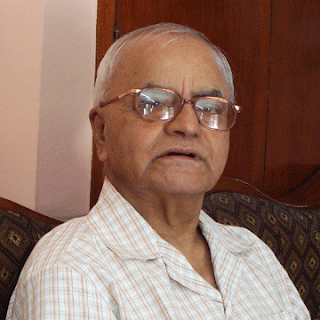

Sat, Oct 24, 2026
Columns
End of old party dominance
RSP's future hinges on unity of leaders, governance capability and fulfillment of tall promises.
bookmark
Lok Raj Baral
Published at : March 15, 2026
Updated at : March 15, 2026 07:19
Amid the campaign of the March elections, anyone could sense the wind blowing in favour of the three-year-old Rastriya Swatantra Party (RSP) with its bell (Ghanti) election symbol and the name of Balen Shah, the former Mayor of Kathmandu. Yet the tsunami-type results were unexpected. It's almost two-thirds majority in the 275-member parliament, along with the low presence of opposition parties, has made people curious about how the new party propelled by the strong wave would meet the expectations of the general public.
One of the consequences of electoral upheaval has been the end of the domination of old political parties in Nepali politics. The role of Nepali Congress (NC) in transforming Nepal from autocracy to liberal democracy cannot be berated. Its biography is full of triumphs, setbacks and tragedies, as it had to adopt different strategies ranging from peaceful movements to armed struggles against the Ranas and the Shahs. Nevertheless, the NC was able to weather all such odds and continued to dominate the Nepali political landscape.
Since its birth, the NC stayed in the limelight of national politics, so much so that its image could not be erased by the royal regime, which was then bent on destroying it completely. It survived and came back to occupy the centre stage in 1990 following the collapse of the royal regime. But the party leaders soon forgot the mandate delivered by the people and instead, picked up quarrels among themselves on petty personal interests and ego factors. Even while in its low ebb, the NC occupied the centre of politics. When the NC went on losing its distinct democratic identity by indulging in alliance building with other parties, especially the communists, for occupying the post of prime minister without addressing the minimum needs of the people, its unpopularity surged. In people’s perceptions, the three leaders—Sher Bahadur Deuba of the NC, KP Oli of the CPN-UML and Pushpa Kamal Dahal of the then Maoist Centre—became not only unpopular but were seen as culprits of damaging the democratic process.
The UML, which embraced a new avatar in 1991, just on the eve of the second parliamentary elections to be held under the newly proclaimed constitution that recognised the sovereignty of the people for the first time, was the beneficiary of the multiparty system and became prominent until the Gen Z uprising toppled it from power. The Maoist group, formed to transform Nepal both economically and politically, also became a party in the power-sharing game swinging between Oli and Deuba. Many Maoist agendas were adopted by other parliamentary parties while making the new republican constitution. Since the Maoist party could not retain its identity, it too, like other parties, not only entered into the quagmire of dirty politics but also went on changing its colour to share power and patronage.
When the three parties’ leaders made a political carousel by exchanging the post of prime minister among them, keeping their party members and the people in the dark, hostile public sentiments increased, awaiting an opportunity to ventilate their pent-up feelings. Such dissatisfaction and anger were reflected in both the uprisings and in the recently held parliamentary elections that came as a storm sweeping away the old patterns of party politics. It is believed that even the leaders of the RSP didn’t expect such stunning results that have changed the course of Nepali politics.
First, the election routed the established parties—the NC, the UML and the Nepali Communist Party (a combination of former Maoists and other groups). Second, the unravelling developments have indicated some trends: Dominance of the newly established RSP, and the declining trends of left parties’ influence. Although the resume of the RSP is not yet clear, being a non-communist in a conventional ideological sense, it still lacks clarity of thinking and objectives. Nevertheless, it has emerged as a non-left party that is likely to be a competitor for the NC. But it is too early to hazard any guess about it, as it is yet to evolve as a sustainable political force.
Third, such a scenario can be changed if the UML were to once again recover its lost ground, enabling it to transform organisationally under fresh leadership. Ironically, given the present context, the UML seems to be devoid of new leaders who can rejuvenate the party as per the demands of the hour. In contrast, the NC is likely to rejuvenate itself under the new leadership of Gagan Thapa and Bishwa Prakash Sharma, as both have shown their leadership qualities despite major electoral setbacks for the party.
Fourth, the Madhesh parties are virtually wiped out, as if the scope of regional parties is closed. But such a phenomenon can be temporary because the Madheshi agenda would never die, despite Balen Shah’s projection as a Madheshi leader who disclosed his Madheshi identity only after his nomination as a prime ministerial candidate.
Five, unlike some remarks made by observers, both the NC and the RSP would have to combine the elements of cadre-based and mass-based parties, as party building has certain requirements, including being cadre-based and at the same time retaining the character of a mass-based organisation. The 2026 abnormal elections do not fix a permanent pattern of the electoral process, nor will such elections always be mass-driven. What particular factors drove the voters to deliver such a sweeping victory for the RSP, however, needs to be studied.
Finally, storms are momentary, but emerging from their devastating effects requires patience, perseverance and determination. How the leadership of parties calibrate the new realities and how the new Balen-Rabi leadership would carry the burden of governance would determine both the forward and reverse wave of politics. Moreover, since Nepali politics perennially remains uncertain and unpredictable, pliable to be in a state of flux, the emerging trends may not also nullify such uncertainties. Made of heterogeneous persons who joined it just to be beneficiaries of the new dispensation may change colours in case the RSP leadership fails to satisfy them. The future of RSP is thus hinged on the unity of leaders, governance capability, fulfilment of tall promises and control, if not the end of corruption without fear and favour.
Lok Raj Baral
Baral is a professor of political science and former ambassador of Nepal to India.



Most Read from Columns


Editor's Picks





E-PAPER | October 24, 2026

×