



 20.51°C Kathmandu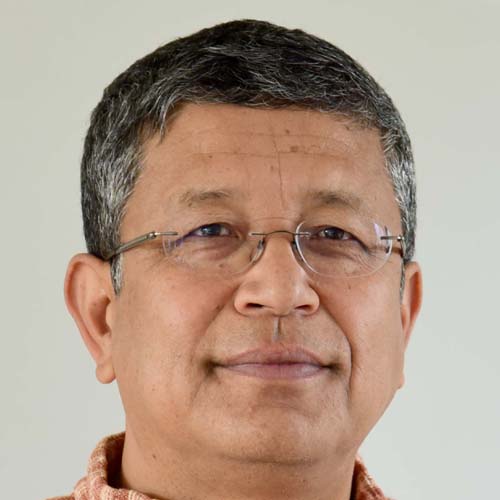
Mon, Oct 12, 2026
Columns
PM Shah’s leadership style mirrors past authoritarian Nepali politicians
Nepalis under PM Shah, less than two months in, are experiencing buyer’s remorse.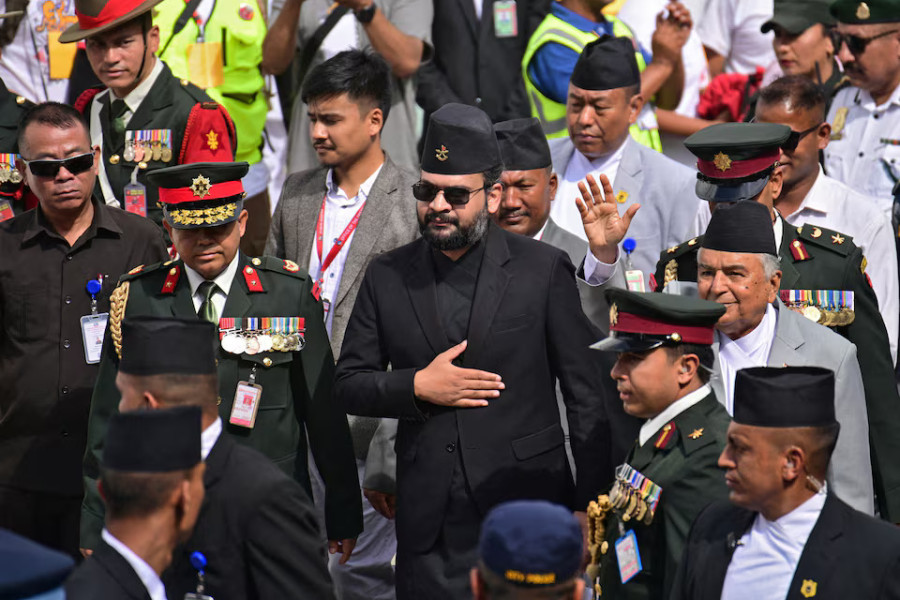
bookmark
Deepak Thapa
Published at : May 13, 2026
Updated at : May 14, 2026 09:41
On the eve of the general elections, I had written that it was fortuitous for the country that the Balendra Shah–KP Sharma Oli contest in Jhapa meant one of them was sure to lose. Between Shah and Oli, I noted that there was not much to choose, with both suffering from serious cases of hubris, a propensity for populism, a distaste for criticism, etc. The unfortunate corollary to my smug observation was that one of the two would indeed get elected. And so, here we are living under the prime ministership of Shah, and not even two months in, Nepalis are slowly being gripped by buyer’s remorse.
Everything seems to be happening on the fly. The haste with which the arrests of former prime minister Oli and ex-home minister Ramesh Lekhak was ordered demonstrated that the newbies in government are deciding without consideration of due process. Shah’s erstwhile home minister, Sudan Gurung, himself given to making rather dramatic interventions in the manner of his earlier incarnation as a disaster relief worker, even admitted learning after weeks in office that executive action was not the end-all and that there is something called the rule of law.
Days after Gurung’s departure, seemingly acting out of resentment for having been stymied as Kathmandu’s mayor, Shah ordered the destruction of illegal settlements in Kathmandu with hardly any consideration of the physical and psychological impact on the thousands who had to experience the destruction of their homes so wantonly. Shah may have had the law on his side to level those structures, but instead of acting out of spite against the most vulnerable group of people who lived precariously close to the river—not out of choice but out of compulsion—it could have been done in a much more humane manner. Shah seems to have been suffering a mayoral hangover and felt the impulse to act, although as prime minister, he should have known there was nothing to stand in his way. Careful planning would have achieved the same result with less suffering and even earned him kudos instead of brickbats.
Silent rule
If we needed any more proof that a presidential system would be ill-suited to our country, the Oli–Shah duo is our most proximate example of why. Even when beholden to a Parliament, with a similar majority as Shah’s backing him after the 2017 election, Oli acted like a president by all measures. Can one ever forget the scene of Oli correcting the then President Bidya Devi Bhandari on the wording of the oath on which he was being sworn in (followed by the tittering of the president)? Or the fact that he converted the prime minister’s residence literally into a party office? Or that he ordered the kidnapping of a sitting MP during the time of Covid-19 restrictions? Not to mention that he thought he was the final arbiter on knowledge of everything under the sun, and we had to pay obeisance to his omniscience. Thanks to the parliamentary form of government, Oli was removed, and the country spared any more of his idiosyncrasies.
Imagine how a President Balendra Shah would govern for the next five years. As it stands now, he is acting as if he were one. He seems to care not a whit that he is the prime minister in his capacity as the leader of the parliamentary party of the Rastriya Swatantra Party (RSP). As opposed to what would be expected, from all accounts, he has not even met with the MPs who voted him into office or even attended any of the party’s dos.
We are well aware that it was Balen-mania that swept the RSP to these heights, and Shah would be quite right to believe that most of the MPs owe their offices to him and him alone. He should also remember that it is the party that made him prime minister, and it is the same party that can give him the boot. If Shah’s tenure is going to reflect what we saw in the last few days and weeks, the still-inexplicable goodwill towards him is likely to soon exhaust, and won’t we all be relieved then that the Parliament has the power to recall him as opposed to having to suffer him for the duration of the term had he been a directly elected president?
Some see parallels between Shah and Singapore’s architect, Lee Kuan Yew. Besides the fact that both Shah and Lee assumed charge of their countries at the age of 35, there is not much in common between the two. Where Lee made deliberate attempts to court both the public and the media in his gargantuan efforts to transform an Asian backwater into a global financial centre, Shah appears to believe that not talking to reporters or explaining himself to the country is the way, perpetuating an aura of mystique. For all he achieved, Singapore never was a fully democratic country, and yet Lee saw it fit to make his case publicly throughout his time in office. In contrast, Shah is the leader of a functioning democracy and yet he has begun to rule by fiat, including taking measures that are likely to weaken the country’s already fragile democratic institutions, with nary a word about what his vision is, where we are headed, and how we are going to get there.
The ‘walk-out’
The latest incident that has raised eyebrows involved what was in effect a walk-out by the prime minister while the president was presenting the Shah government’s annual plans to the joint session of Parliament. He was also called out for not wearing the daura-suruwal, which many believe to be the only correct attire for such occasions. I do have beef with Shah in that he disrespected the high office of the country’s president, but not so much that he did not appear in the ‘national dress’.
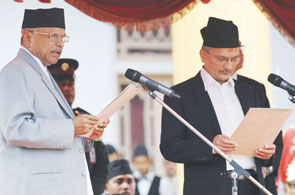
There have been occasions in the past when high officials of the state have chosen not to be thus clad. Back in 2008, Parmanand Jha got himself sworn in as the country’s vice-president in a formal dhoti and kurta while the Maoists, Pushpa Kamal Dahal and Baburam Bhattarai, opted for equally formal suits, with the latter even foregoing a tie, although both decided on a Bhadgaunle topi, in an apparent bid to affirm their Nepali-ness. The affront was the casualness in Shah’s choice of apparel—a jacket thrown over a neckless sweatshirt (or T-shirt) and white sneakers—definitely not the way one honours the sovereign expression of Nepalis represented by the Parliament.
Perhaps after the destruction following the Gen Z riots, Shah believes his role is that of a disruptor and sees fit to thumb his nose at established norms. But he should remember that it is one thing to go around cursing on social media as he did in his profanity-laced childish outburst late last year against the US, India and China, along with the Nepali Congress, the CPN-UML, the Maoists and the RSP, and quite another to actually get down to the serious business of governing. And, governing while taking everyone into confidence, including the people of Nepal who elected him.
Deepak Thapa
Deepak Thapa has been a fortnightly columnist with The Kathmandu Post since 2009, writing on a range of topical social and political issues.

Most Read from Columns
Before you take credit for Khula Manch, read its history
Shah went to the UN to speak for Nepal, then left before he could make the most of it
Why Nepal’s latest disaster needs a local name—not just a scientific label
Lesson learned after the death of Ronaldo
What Lubra can teach Nepal about climate-induced migration and resettlement
Editor's Picks

Constitutional Bench caught in seniority, ‘pick and choose’ dispute

A Dom boy’s long road to becoming a doctor

From blankets to handmade dolls, two foreign women bring comfort to flood survivors

News Analysis: When institutional defence exposes institutional fault lines

It’s a bird … it’s a plane … it’s the Indian ambassador’s farewell tweets
E-PAPER | October 12, 2026


×