



 22.06°C Kathmandu

Tue, Oct 20, 2026
Columns
Budget heralds a promise of middle-class expansion and market growth
In a deeper sense, it issues a call to the middle class itself: to step forward, engage productively, and help shape Nepal’s political economy.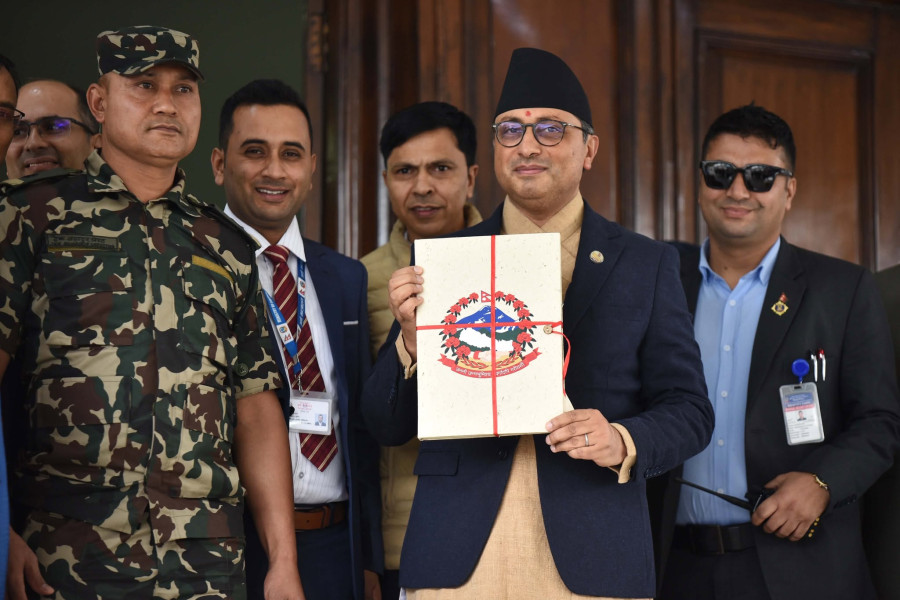
bookmark
Bigyan Babu Regmi
Published at : May 29, 2026
Updated at : May 31, 2026 07:23
Parliament today witnessed the economic blueprint of a single-majority government born from an unprecedented electoral shift, led by a sound economist-turned-political leader. The prevailing mood in the House reflected confidence in the Rastriya Swatantra Party (RSP) and Finance Minister Swarnim Wagle’s capacity to deliver the “departure” in Nepal’s political economy that he has long championed. True to form, his budget speech delivered a compelling narrative – a substantive recalibration across fiscal policy, from taxation and infrastructure to capital mobilisation and diaspora engagement.
The central message is clear: the expansion of the middle class and vibrant markets will drive Nepal’s economy forward. As with any bold break from the status quo, implementation challenges loom large. Hence, an apt occasion to assess how well the budget is (or was for that time) would be a year from now.
Tax reform as a decisive signal for middle-class resurgence
Recent budgets often amounted to incremental tweaks on familiar templates. This year’s speech marked a refreshing change in tone, substance, and underlying principles. Nowhere is this more evident than in the tax measures.
The reforms are explicitly designed to support middle-class growth. Doubling the tax-free threshold for individual income from Rs 500,000 to Rs 1 million annually will immediately boost disposable income for hundreds of thousands of earners. The reduction of the top marginal rate by ten percentage points (from 39% to 29%) benefits high earners, including the growing cohort of young professionals in tech and related sectors. Treating capital gains tax as the final tax for market investors – many of whom fall in the middle- to upper-middle-income bracket – provides welcome clarity and relief.
On the indirect tax front, the government has scrapped excise duty on 360 items and lowered customs duties on 273 raw materials. These steps signal a deliberate move away from over-reliance on import-based revenue while aiming to foster domestic production, ease supply-chain costs, and help moderate inflation in key sectors. A 10 percent VAT discount for digital payments further aligns policy with the push toward a modern, digital economy.
Tax reforms are comparatively straightforward to enact. Their success, however, hinges on cooperation from both citizens and businesses. By invoking Laffer-curve logic, Minister Wagle appears to bet that lower rates and simpler compliance will broaden the tax base, reduce evasion, and encourage formalisation. Early signs of improved voluntary compliance would validate this approach.
Consolidated push on infrastructure as a catalyst for market expansion
A long-standing advocate of connectivity as an economic multiplier, Minister Wagle has placed ambitious emphasis on physical infrastructure. Priorities include upgrading and expanding road networks, tourism-related facilities via regional circuits/quads, irrigation for agriculture, and sports infrastructure to nurture a budding sports economy. The cross-district and cross-provincial focus suggests a welcome shift toward more coordinated, integrated development. The budget also eyes green and sustainable elements, including climate-resilient structures and renewable energy-linked infrastructure.
The vision is bold and necessary, but surely, equally challenging. More importantly, infrastructure has been an obvious focus year after year, long before him. So, delivering on the renewed bet on infrastructure will test the government’s ability to break the perennial cycle of poor-quality execution, cost overruns, and delays. Success will demand serious homework on legal frameworks, procurement rules, project management, and robust monitoring systems. These will serve as a key test for the minister and the government as the budget raises the bar on the expectation of tangible change and structural shift in the way development is delivered.
Private and alternative capital mobilisation as an indispensable force for sustained growth
For a country like Nepal, with a structurally limited domestic revenue base, private capital and alternative sources of financing will need to shoulder a larger share of investment. Minister Wagle has outlined systematic channels: dedicated financing facilities, government-backed bonds (including green and diaspora-oriented instruments), favourable capital gains treatment, improved exit policies (especially for offshore and foreign investors), and enhanced public-private partnership (PPP) frameworks.
These measures aim to tap diaspora savings, institutional investors, and foreign capital more effectively. Many in the Nepali diaspora and domestic fixed-income investors may find attractive entry points through bonds and other structured instruments. Complementary steps – such as legal reforms for ease of doing business, investment summits, and streamlined approval processes under the Investment Board – seek to rebuild private sector confidence.
Of course, fiscal policy alone cannot unlock this potential. Supportive monetary policy, consistent macroeconomic stability, and credible governance will be equally critical. If executed well, these initiatives could gradually reduce pressure on public borrowing while accelerating technology transfer and job-creating investments. Delivering on these will see Dr. Wagle’s appetite for reorienting and restructuring the economy as he means it.
Structural vulnerabilities and the test of execution
Despite an optimistic outlook on the budget, it nonetheless continues to expose our structural vulnerabilities – mostly those emerging from the ever-existing need to rely on sizeable deficit. Nepal’s growth has remained subdued for years, and identifying scalable new engines of expansion remains challenging. The budget, therefore, maintains a significant fiscal deficit, with a primary reliance on domestic borrowing to bridge the gap – a continuation of recent trends that underscore persistent revenue constraints.
Indeed, structural transformation cannot be achieved through a single annual budget. With Minister Wagle expected to present several more budgets in this term, the longer-term test will be whether fiscal policy can gradually pivot from debt-financed deficits toward healthier, broader-based public revenue and more productive spending. This will require not only strong revenue administration but also disciplined expenditure prioritisation and improved capital absorption capacity.
Overall, this budget prioritises reform and lays a strong foundation for middle-class expansion and market development. In a deeper sense, it issues a call to the middle class itself: to step forward, engage productively, and help shape Nepal’s political economy. Implementation will determine whether the promise translates into tangible progress. If the government matches ambition with execution discipline, this could mark a genuine turning point.
Bigyan Babu Regmi
Regmi is an economist engaged with ETH Zurich, Switzerland.



Most Read from Columns


Editor's Picks




E-PAPER | October 20, 2026

×