



 12.64°C Kathmandu

Sat, Oct 24, 2026
Columns
Nepal wrote the rules for climate adaptation. Its rivers never got the memo
Three municipalities along the Karnali river show how climate policies meant to protect the poorest communities often fail to reach them.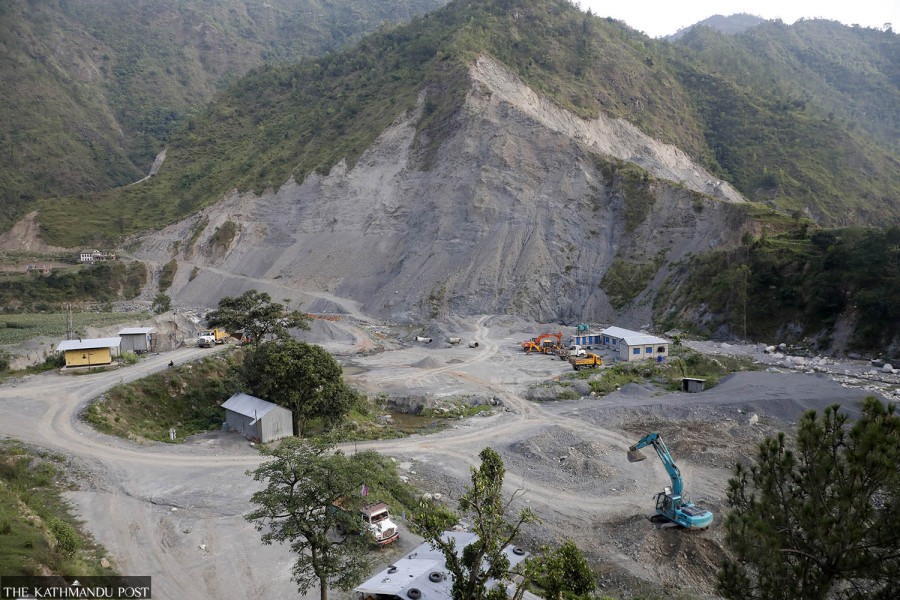
bookmark
Nava Raj Baral
Published at : August 17, 2026
Updated at : August 17, 2026 16:39
In the mountains of Kalikot, wells dry up before the monsoon arrives. In Dailekh, landslides repeatedly damage the Karnali Highway. Farther upstream in Bajura, rivers erode farmland and suddenly change course, damaging irrigation systems and small hydropower projects.
These three places face different disasters, yet they share a common reality: The residents are often excluded from decisions about adaptation funding and priorities. Fifteen years ago, Nepal promised a different approach. Its national adaptation policy committed 80 percent of international climate finance to local communities and aimed to give villagers a direct role in deciding how to adapt. That promise has largely stalled between Kathmandu and the communities it was meant to serve.
For households across the basin, agricultural losses have become the biggest economic burden. Declining livestock production, rising food prices and disaster recovery costs add further pressure. Many families cannot absorb these expenses. Water shortages and the loss of traditional livelihoods affect about a quarter of households. School attendance also suffers in nearly one out of three households. As farming becomes less reliable and water grows scarce, more men leave for seasonal work in India. Women are then left to manage both households and livelihoods.
The risks vary across the basin. Upstream communities face seasonal water shortages caused by reduced snowfall and shrinking river flows. In middle sections, irregular river discharge triggers landslides. Downstream, these impacts appear as flooding and riverbank erosion. Government disaster records from 2012 to 2025 show that landslides and floods increased alongside rainfall and peaked between 2017 and 2019.
One finding stands out. The deadliest events in the downstream municipality were not floods but forest fires. Yet forest fires receive little attention in regional climate discussions. A flood response strategy designed for downstream communities offers little help to a mountain village struggling with dry wells.
However, communities have not merely waited for external assistance. Many households have adapted by diversifying crops and livestock, spreading risk across different food and income sources. Others rely on community-managed irrigation channels, labour-sharing arrangements, and traditional medicine. These responses are locally organised, affordable and widely used.
Formal adaptation programmes tell a different story. Households participate in relatively large numbers when projects involve physical work such as slope stabilisation or watershed management. Participation drops sharply when it comes to early warning systems, disaster record keeping, or technical training. In some cases, fewer than one in twenty households take part. Dalits, women, and landless families are often invited to contribute labour. However, they rarely have a meaningful role in planning, budgeting, or monitoring. These decisions determine where resources go and who benefits. Participatory exclusion appears consistently across all three municipalities.
The problem extends beyond local governance. Nepal’s 2015 constitution left uncertainty about which level of government is responsible for adaptation. Responsibilities are divided among federal, provincial, and municipal tiers. Funding arrives unevenly, municipal offices often lack technical expertise, and monitoring is limited once projects begin. International donor programmes can worsen the problem as they often favour short-term, highly visible projects over long-term institution building.
Hydropower adds another layer of challenge. Large projects, including the 900-megawatt Upper Karnali and 750-megawatt West Seti, continue with limited assessment of climate risks. They also pay little attention to downstream vulnerability. Benefits tend to flow disproportionately to higher-caste groups. Meanwhile, marginalised communities remain largely excluded from employment opportunities and decision-making processes. At the national level, hydropower is promoted as a climate solution. In the Upper Karnali, however, it may also be creating new risks for the same communities that adaptation policies are meant to protect.
Adaptation strategies should be tailored to different sections of the basin rather than applied uniformly. Traditional coping practices should receive formal support instead of being replaced. Communities also need stronger early warning systems. Reforms such as quotas and social audits could give marginalised households a genuine voice in decision-making rather than limiting their role to manual labour. Whether Nepal’s government or its international donors act on these recommendations remains uncertain. What is already clear is that designing a strong policy is not the same as delivering one effectively. In the Upper Karnali, the gap between those two goals is reflected in whose voices are heard when adaptation funding is finally spent.
This article is based on the research paper "Policy Evaporation in the Himalayas: Climate Adaptation Gaps in Nepal's Karnali Basin" by Nava Raj Baral and Gokul Prasad Neupane.
Nava Raj Baral
Baral is an independent researcher who covers social and climate issues.





Most Read from Columns


.PNG&w=300&height=200)
Editor's Picks





E-PAPER | October 24, 2026

×