



 23.43°C Kathmandu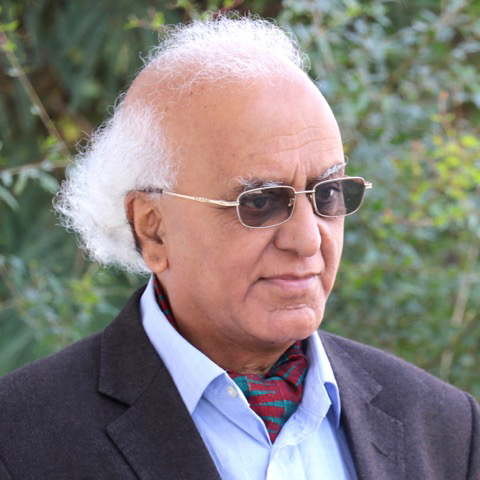

Tue, Oct 20, 2026
Columns
How Nepali diaspora literature confronts borders and belonging
The question of readership in diasporic literature is important and deserves serious discussion and engagement..png&w=900&height=601)
bookmark
Abhi Subedi
Published at : August 15, 2026
Updated at : August 15, 2026 10:52
The invitation I received early this month from the Centre for Nepal Studies UK to participate in a live webinar on the topic ‘How does diaspora writing reshape the Nepali literary sphere?’ impressed me in several ways. Nepali diaspora writing has strongly drawn the attention of researchers, Nepali writers and literary critics over the years. Literary writers and critics have been eloquent on this subject. The participants were Nepali fiction writer Neelam Karki Niharika, travel writer Krishna Bajgai and my former student and well-known scholar Mahesh Paudyal. Sangita Swechcha curated the webinar.
Diasporic writing has become a popular subject among writers within and outside Nepal, even though it may require further discussion and writing to conclude that it has transformed Nepali writing. Discussions of the Nepali diaspora encompass both broad and minuscule issues. Debates about the role of the Nepali diaspora, especially in Darjeeling, Sikkim, Assam and other places, have undergone various metamorphoses throughout history. Nepalis and their role in contributing to the formation of states and territorial administrations in India have gone down in history.
The first phase of diaspora is one of ambivalence. Literary writers of the early generations, all based and active in Darjeeling, expressed ambivalence in their writing and in their shifting bases between India and Nepal. The pioneers known by the acronym Su Dha Pa or Surya Bikram Gyawali, Dharanidhar Sharma and Paras Mani Pradhan represent that diasporic ambivalence in Nepali writing and activism. Surya Bikram Gyawali became the writer of ‘brave Nepali history’ (in the words of historian Pratyoush Onta) and the Chancellor of the Royal Nepal Academy. Dharanidhar moved to Nepal.
Literature has played a quiet role. Obtrusive and unobtrusive modes can be identified in this regard. Lain Singh Bangdel’s position was similar to Gyawali’s. Bangdel also became Chancellor of the Royal Nepal Academy, but his famous diasporic novel Muluk Bahira, or ‘outside the native land ’, pulsates with ambivalence and a quest for diasporic identity. Lil Bahadur Chetri’s Basain has become a classic of migration literature, as the title suggests. Many examples exist.
The fuzzy border of diaspora should be noted here. Literature production in Banaras became possible through ‘print capitalism’, to use Francesca Orseni’s expression, in the second half of the 19th century and continued well into the early decades of the 20th century. This deserves discussion in relation to diasporic literature. Production, readership and sales were the words of print capitalism. The printing of Bhanubhakta Acharya’s Ramayana brings together these various strands of the early diasporic anxieties. The mantra of the early Indic Nepali diaspora was the quest, and its primary means was producing texts. Banaras’ print capitalism saw the publication of many books and literary magazines. Then came the literary textbook production of Paras Mani Pradhan. The carefully prepared diasporic texts were our textbooks. I grew up with them without ever thinking about who had created and produced them.
So what I call the productive ambivalence of books from the first phase of the Indic Nepali diaspora was part of the educational campaign. We should look at this with a broader perspective. The fuzzy lines between native and diasporic literature remained a force of a certain order for a long time. They persisted well into the writings of Indra Rai and the Tesro Ayam. The diasporic line became broader. Later, the idioms changed. Literary writers became Indian Nepali writers. The motif of the ‘muluk bahira’ psyche was not strongly evoked even in earlier times. Govinda Bhattarai’s novel Muglan is an important intervention in that area. Written by a Nepali writer with diasporic sympathy and empathy, this novel evokes Muglan’s conditionality. I would call it an important meta-fictional work on the theme of diasporic imaginaire.
Ramji Timilsina, a fine scholar and my erstwhile student and a PhD on diasporic literature, in an article titled ‘Use and Misuse of ‘Diaspora’ in Nepali Literary Discourse’ says, “Those who have crossed the border of Nepal, have permanently settled in a new nation, and have grown a community that resembles and reflects Nepal are the members of the Nepali Diaspora.” He further adds, “They maintain and grow contacts and relations with the homeland through its members and make physical visits to it; they make use of communication”. Timilsina concludes, “These features show that a diaspora is different from transnational mobile communities and the transnational outsiders.”
Literary critics and historians assert that the geographical and national spaces of the Nepali Diaspora are in India, Bhutan and Burma. The other category of the incipient Nepali Diaspora, as commonly discussed, is England, USA, Canada and Australia. Nepali diaspora is growing. But we must address the earlier category again. I have heard in interactions and read in writings that the ambivalence of the Nepali diaspora in the case of the Nepalis in India is evoked frequently. We ask: Are the established Indian Nepali writers diasporic? I think they are Indian Nepali writers. They do not maintain the nostalgia or angst related to the original land in the same way as writers of earlier times.
The question of readership in diasporic literature is important; it deserves serious discussion and engagement. This calls for expanding readership and working with a psyche of sharing. I think this is already happening and should be seen as an important shift in readership and in the creation of a readership sphere in different countries. The growing diasporic population, rising interest in writing, and the availability of sharing tools are notable. I think this phenomenon has become an important reality that will affect the very nature of diasporic literature and the praxis of sharing and spreading.
Another feature is the careful and subtle creation of the diasporic experience by native writers and publishing them either in the original language, such as Nepali and Nepal Bhasha, or getting them translated into English. I want to mention one such novel titled 17 September written in Nepal Bhasha by Malla K Sundar and translated into English by the Lisbon-based scholar Jyoti Tuladhar.
Nepali diasporic literary output is growing. The spheres of writing are expanding. With this, the identification of diasporic Nepali writings and writers is also growing. Connectivity and organisational networks have created a unique condition in diasporic literature. Literary organisations like the International Nepali Literary Society (Anesasa), along with visits by writers from Nepal to other countries, have fostered a culture of connectivity that encourages diasporic literature. Efforts are made to build cross-national readership by familiarising readers with works by diasporic writers. Launching their work in Nepal, especially in Kathmandu, organising interactions with them and creating literary awards are some productive activities.
Abhi Subedi
Abhi Subedi is a poet, playwright and a columnist.





Most Read from Columns





Editor's Picks




E-PAPER | October 20, 2026

×