



 18.26°C Kathmandu

Thu, Nov 5, 2026
Columns
What happens when the police are the problem?
The removal of Nepal’s police chief has renewed questions about police independence. Accountability must extend beyond the institution.
bookmark
Majid Ansari
Published at : November 5, 2026
Updated at : November 5, 2026 18:30
Nepal now has stronger laws against torture and disappearance than ever before. Yet families still sometimes find that the road to justice runs through the very institution they accuse. This week, the police chief’s removal showed the road has another side.
In Part 1, I explained how a democratic Constitution was handed to an institution shaped by autocracy. This part asks what happened when that institution was tested by war, by unrest and by families who kept knocking on the state’s door. It also asks why the question feels so close this week, when the Cabinet removed Inspector General Dan Bahadur Karki and made him the prime minister’s security adviser.
A right on paper means little if the institution accused of violating it also holds the station, the officers, the records and most of the evidence. The test of democratic policing is whether the system can look honestly into its own conduct, and whether the people who try are protected while they do. Behind every case below is a person who waited.
Policing in wartime
When the Maoist insurgency began in 1996, police posts were attacked, and officers were killed, each leaving a family waiting at home. In 2001, the Armed Police Force was created for counter-insurgency. The war asked the police to act as a security force just as Nepal was giving human rights greater weight in law, and the record was grave. Amnesty International documented unjustified lethal force, torture to extract confessions, deaths in custody and weak investigations. Jhakku Prasad Subedi was reportedly beaten so badly in custody that he could not walk for 25 days. Fairness requires the other half: the insurgency also killed, abducted and tortured, and transitional justice still struggles to give both sets of victims the truth.
The disappeared
Rajendra Prasad Dhakal was an advocate and rights defender in Gorkha. Police arrested him on January 8, 1999 and, according to later findings, took him to the Bel Chautara area police office. His family never saw him again. In April 1999, the police told the Supreme Court they knew nothing of his whereabouts. When the Court finally ruled on June 1, 2007, together with 82 other petitions, it accepted that the police had disappeared him, told Nepal to make enforced disappearance a crime and said perpetrators must not enjoy impunity. His wife, Bimala, is still waiting. TRIAL International, which took her case to the UN Human Rights Committee, says the ruling has not been meaningfully acted on.
Maina Sunuwar was 15 when Army personnel took her from her home in Kavre in February 2004. She was tortured and killed. Her mother, Devi, fought for years, and in 2017 the Kavre District Court sentenced three former officers to 20 years each, the first civilian-court conviction of security officials for a conflict-era crime. The Nepali Army challenged it, and the sentences have not been carried out. When the accused belongs to a powerful institution, justice depends on an investigator independent enough to resist pressure.
Peace, and an unfinished promise
After 2006, reform talk centred on the Army and former combatants. Constituent Assembly debates warned that the Home Ministry should not be the only check on the police, and that the police should not become the tool of whichever party holds it. The 2015 Constitution then provided, in Article 268, for federal and provincial police, and said security organs should be accountable to the people. It left hard questions: Who appoints and transfers provincial police leaders, who controls intelligence and discipline, and whose orders prevail when federal and provincial interests collide.
When legitimacy collapses
The new order was tested almost at once. Human Rights Watch documented 25 deaths in five Tarai districts in 2015, nine police officers and 16 members of the public, and questioned whether police firing was necessary and proportionate. Its report took its title from a witness: “Like we are not Nepali.” In Tikapur, eight security personnel and a child died after protesters attacked police. Amnesty recorded allegations of torture and forced confessions against Tharu detainees. The Lal Commission, formed in 2016 to look into all of this, submitted its report in 2017. It is still unpublished. In August, Nepali Congress president Gagan Thapa urged its release and a minister pledged to publish it. The families of the officers killed in Tikapur deserve to know what happened. So do the Tharu families caught up in the arrests that followed.
Strong laws, weak roads
Nepal has built a stronger legal wall against torture, but victims still report intimidation, weak medical records, officers reluctant to investigate colleagues and court orders that are never carried out. Nepal Police’s Human Rights Section says 649 personnel have faced action, which is real progress. Yet is internal oversight enough when the body under investigation controls the station, the records and the evidence?
Suntali Dhami’s case suggests not. On September 27, 2009, Dhami, a police constable, was raped by male colleagues at the Achham District Police Office. The government attorney’s office decided not to prosecute several of the accused, and the Supreme Court overruled it and ordered prosecution. Justice failed at several doors and reopened only because a woman and the people beside her refused to let it close.
The investigator’s side of the story
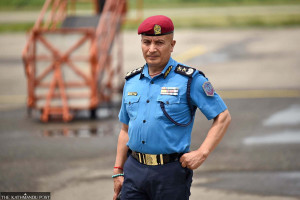
The same test arrived this week from the other side. On November 4, the Cabinet removed Karki and made him the prime minister’s security adviser, with Manoj KC taking over. The government said no action had been taken against him, only a reshuffle of responsibilities, and credited a directive from the ruling party. The party said the decision was the government’s own.
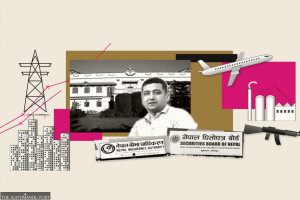
Officials told Kantipur that the real reasons lay elsewhere: his handling of the investigation into Inam Sapkota, a fixer in custody on money-laundering charges; his legal objections to orders for immediate arrests; and a long-held wish in Prime Minister Balendra Shah’s camp to see KC lead the force. Officials also accuse Karki of an improper relationship with Sapkota. He denies it. None of this is proven, and Karki has taken the matter to the Supreme Court.
Nepal has been here before. In 1997, Home Minister Bamdev Gautam moved Inspector General Achyut Krishna Kharel to a post that had not been sanctioned for him, and a later Cabinet brought him back. Nearly thirty years on, the person who must be able to investigate the powerful can still lose his post in a single Cabinet meeting. What do officers learn when a chief can be replaced overnight, whatever the reason? Whether this removal was lawful is for the Supreme Court to decide. Whether Nepal’s investigators are safe is a question for all of us.
That leaves a smaller question, closer to home: When I stand in front of a police officer, what can I say, and what will happen if I say it?
Next week in this series: Part 3. Can a friend be questioned?
Majid Ansari
Ansari is a youth activist.




Most Read from Columns



Editor's Picks


E-PAPER | November 05, 2026

×