



 8.12°C Kathmandu

Fri, Nov 27, 2026
Columns
Sonia’s memoir: Bold, raw and a tad dishonest
Even as the book glows with rawness and intrepidity in Sonia Gandhi’s personal thoughts, her lack of honest reflection on key political matters dims the shine.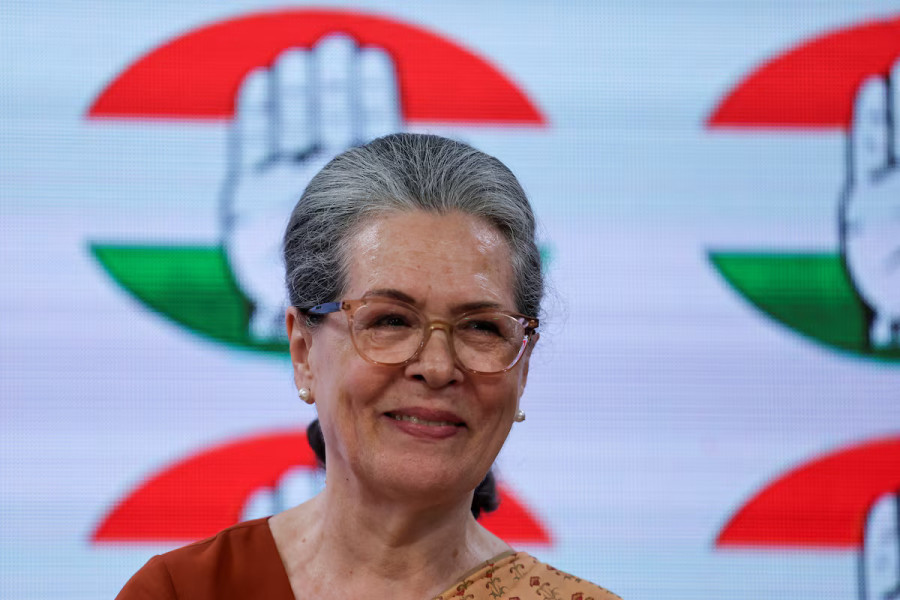
bookmark
Ruhi Tewari
Published at : November 26, 2026
Updated at : November 27, 2026 07:20
All of India has suddenly turned into a book club. The trigger—Sonia Gandhi’s recently released memoir Belonging: A Journey of Love. Everyone around seems to be discussing it, holding forth on what works and what does not, and expressing with great passion views and opinions on it. The book has become a conversation piece among supporters and detractors alike, and even the fence-sitters are hardly holding back.
It would, thus, hardly be an exaggeration to say the book is the most talked-about in India in recent years. But is the book worth the hype? At the very outset, let me say this is not meant to be a book review. This is an attempt to explore the persona behind the enigmatic politician that Sonia Gandhi has been, through the book that offers a rather generous window into her life and times.
I read the book with enthusiastic promptness, fascinated and often, even mesmerised, a testimony to its readability and effectiveness. It is a bold attempt, a refreshingly brave move by a leading political figure to lay bare her deepest vulnerabilities, darkest fears and darndest thoughts. This is accentuated by the blanket of mystery and fierce privacy that Sonia Gandhi has always kept around herself.
But even as it glows with rawness and intrepidity when it comes to Sonia Gandhi’s personal thoughts, her lack of honest reflection on key political matters dims the shine. That also gives us an insight into the personality of one of India’s most astute politicians—she is gutsy and dauntless, but suffers, like most other political figures, from the inability to introspect with 100 percent honesty.
The hits
Belonging is rich in information, making it an intriguing read. The glimpses into Sonia Gandhi’s childhood and growing-up years are painstakingly detailed, often feeling warm and fuzzy and offering a fascinating backstory about the reticent political figure.
She has talked at length about her years in Italy, and later in the United Kingdom, her meeting with Rajiv Gandhi and how the love affair blossomed, and then about her early years in India, her struggle to acclimatise, her relationship with her mother-in-law and former Prime Minister Indira Gandhi, her equation with her children and her gradual tryst with politics. In a sense, Sonia Gandhi has broken a long-held silence.
What makes the book refreshing is the rawness and honesty about her private feelings. She has bravely laid out her vulnerabilities, her weaknesses and her fears—about the new life she had to adapt to, and more specifically, her fierce reluctance to let her husband enter active politics, and later, her own journey in the political world.
Sonia Gandhi hasn’t held back, speaking with abandon about what she disliked and the worries that plagued her.
As a published author myself, I understand the importance of not letting out too much and respecting the freshness of a book for a new reader, and hence, I’m abstaining from giving out too many exact instances. But a great example of the honesty rare in the political world is her admission of being a nervous and unsure public speaker, and her complete lack of confidence in her oratory skills. Her feeling of guilt in what she saw as perhaps neglecting her children and their confined, constricted lives while she and her husband dabbled in politics is another example of a frank look into her innermost feelings.
It’s invigorating to see a mainstream politician let out her deepest horrors and shortcomings, in a world where a muscular, macho, Teflon image—especially in the era of Narendra Modi—is celebrated with pride. Somewhere, this tells me that Sonia Gandhi is gutsier and more resilient than she has been given credit for, and far more secure about her journey than many others.
The misses
Even as Sonia Gandhi excels at revealing her most intimate feelings, she falls short of showing the same courage and awareness when speaking about the big political developments involving the Congress party.
As she writes about the infamous Emergency imposed by Indira Gandhi, Sonia almost exonerates her mother-in-law, absolving her of much wrongdoing, and attributing the decision to extraordinary external circumstances. While she does admit it was a mistake, she almost justifies it from Indira Gandhi’s point of view, even as she blames her late brother-in-law Sanjay Gandhi for some excesses. For a party that today claims to stand against an ‘authoritarian’ BJP government, glossing over its own role in the Emergency is a shoddy approach.
Another disappointing bit is her recollection of the 1984 anti-Sikh riots post Indira Gandhi’s assassination and her reluctance to boldly own up to the Congress’ role in it. Her attempt to justify Rajiv Gandhi’s reason for his regressive decision to overturn the Supreme Court verdict in the Shah Bano case also feels like a cop out.
Further, there is complete reluctance to introspect on the reasons for the Congress’ shocking decline over the past decade and a half, almost as if Sonia Gandhi wants to lead the pack in living in denial. Much of the blame for the Congress’ electoral debacles has been placed on the rival BJP and its leadership, with very little done to acknowledge where her own party may have messed up; frankly, the examples are innumerable. And of course, she fails to critically analyse her son’s weaknesses as a politician and leader, projecting him more as a victim instead of acknowledging him as someone who may have sometimes given the impression of being a dilettante.
Perhaps, despite her astute understanding of politics, Sonia Gandhi suffers from the same human failings as many others—the inability to critically analyse what is close to her.
As a whole, Belonging: A Journey of Love is an odd cocktail of honesty and dishonesty, of candidness and deliberate evasiveness and of the ability to look deep within but the inability to acknowledge some uncomfortable truths. Sonia Gandhi, after all, is human. As is her book.
Ruhi Tewari
Tewari is a Delhi-based senior journalist and author of ‘What Women Want—Understanding the Female Voter in Modern India’.


Most Read from Columns
Are Nepal’s celebrated technocrats serving the country or global capital?

International recognition is no proof of serving global capital

Who is the real prime minister?

How Mamta Kafle case shows why digital records matter when a Nepali disappears abroad
Nepal’s psychedelic mushrooms need experts, not hype
Editor's Picks

National Games put Karnali’s sporting ambitions to test

Five lessons in golf—and politics—for Prime Minister Balendra Shah

How documentary cinema captures a South Asia in transit
The killings have a name: Femicide. Nepal’s law does not recognise it
Why buying a first home is becoming a distant dream for young Nepalis
E-PAPER | November 27, 2026

×