



 14.19°C Kathmandu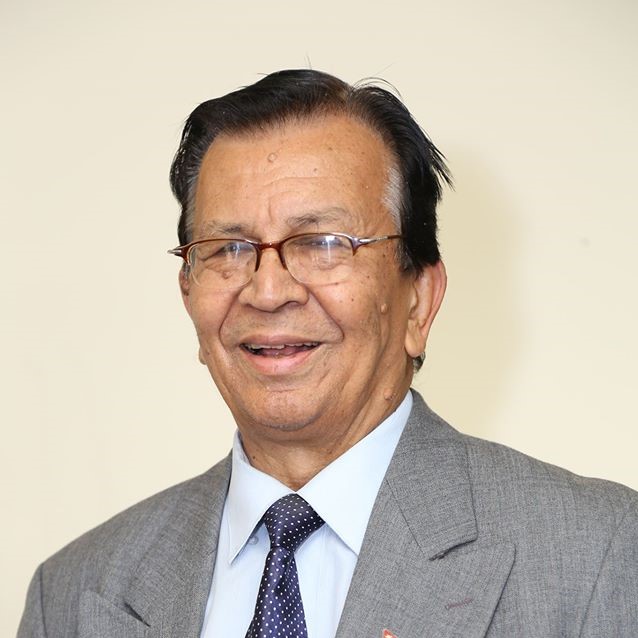

Wed, Oct 21, 2026
Columns
Nepal has never encroached upon Indian territory
Nepal has not engaged in full-scale territorial encroachment at any border point in the manner that India has done in Limpiyadhura, Kalapani and Susta.
bookmark
Buddhi Narayan Shrestha
Published at : May 31, 2026
Updated at : May 31, 2026 21:30
“It might surprise you, but India hasn't just encroached on Nepal’s land; Nepal has also encroached on India's land in many places.” — Prime Minister Balendra Shah in Parliament on Sunday.
Nepal has never encroached upon Indian territory, nor has it altered borders. However, at certain border points, there are instances of cross-holding occupation (cross-border cultivation and possession) on actively tilled agricultural lands.
This implies that while Indian actors have occupied and asserted control over lands belonging to Nepali farmers, Nepali farmers have similarly cultivated and occupied agricultural plots belonging to Indian farmers. This phenomenon is technically defined as cross-holding occupation.
Take, for instance, the Sirsiya River in the Birgunj Metropolitan City area. When the Treaty of Sugauli was signed, the Sirsiya River followed a straight course. Over time, the river altered its path, taking on a meandering, serpentine shape. As a result of this shifting course, several small plots—amounting to a few katthas of land previously tilled by Nepalis—fell into Indian possession. Conversely, Nepalis began cultivating portions of land that originally belonged to Indians. Because the Sirsiya River continued to be recognised as the border line after shifting from a straight to a meandering course, it naturally gave rise to this cross-holding occupation.
Nepal has not engaged in full-scale territorial encroachment at any border point in the manner that India has done in Limpiyadhura, Kalapani, and Susta. While speaking in Parliament, the Prime Minister raised the issue of Indian encroachment in Limpiyadhura and Kalapani. However, that geopolitical encroachment cannot be compared to minor cross-holding occupations. The latter involves merely one or two bighas of agricultural land, whereas the Lipulekh, Kalapani, and Limpiyadhura region encompasses an expansive territory of approximately 372 square kilometres.
A welcome move
The Prime Minister also informed Parliament that diplomatic dialogues regarding the border have been initiated not only with India and China but also with the British Government. Until now, no official records have been made public indicating that the Government of Nepal has formally engaged the United Kingdom on the Nepal-India border issue. Even if Prime Minister Shah has initiated such talks, it has not yet been reported in the mainstream media. If the Prime Minister is conducting these dialogues through quiet diplomacy behind the scenes, it is a highly positive development.
The Treaty of Sugauli was executed between Nepal and British India, not the modern Republic of India. If the Prime Minister is calling on the United Kingdom to step in as a third party to help resolve the Nepal-India border dispute, it is a commendable step. Asking the UK to mediate should be viewed constructively.
When a border dispute arises between two nations, the primary recourse is always bilateral dialogue. A solution must first be sought through diplomatic channels. However, if bilateral talks fail to yield a resolution, requesting a third party to mediate is a standard and acceptable practice.
Seeking mediation is a pragmatic move, given that the Lipulekh, Limpiyadhura, and Kalapani regions have remained under Indian control for the last 64 years. Despite Nepal repeatedly raising the issue, India has refused to vacate the territory. If the Prime Minister has formally requested the United Kingdom to act as a mediator, and if India agrees to accept such mediation, it will mark a profoundly positive and historic breakthrough in border diplomacy.
Translated from an Op-Ed piece originally published in Kantipur.
Buddhi Narayan Shrestha
Shrestha is a former team leader of the Nepal-India Technical Level Joint Boundary Committee.





Most Read from Columns




Editor's Picks




E-PAPER | October 21, 2026

×