Last year I sat across from the managing partner of a small advisory firm while he named a fear most people in his seat keep to themselves. His partners are in their 70s and 80s. Almost all of the firm’s revenue runs through two individuals’ personal relationships. There is no real mechanism for anyone else to bring in work. He put it plainly: If one of them leaves, does the firm just crumble?
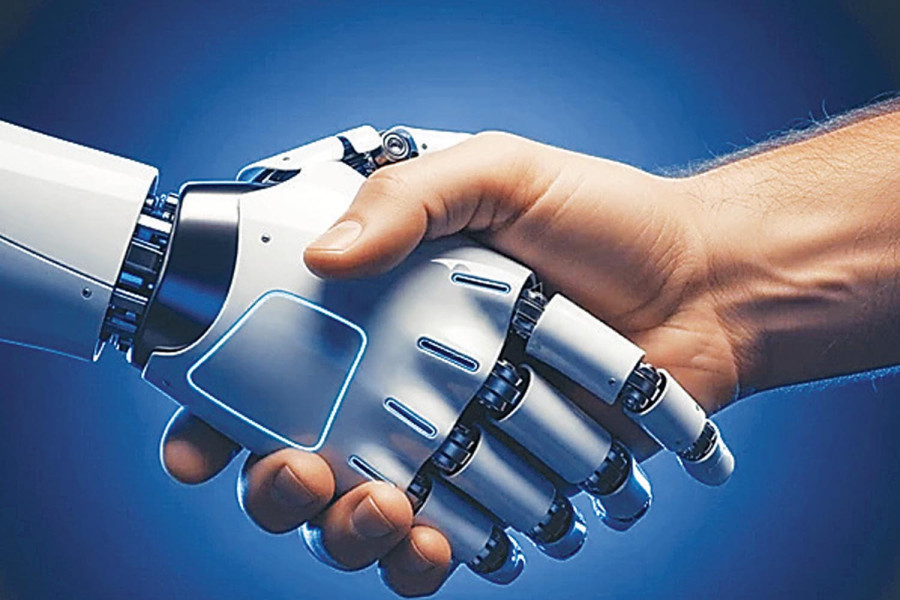
That question stayed with me for a year. Here is where it landed after around 125 conversations with owners and partners at small expert firms, and the advisors who work with them: In a world of AI, relationships matter more, not less. The cheaper the machines make everything else, the more the relationship becomes the thing a client is actually paying for.
Start with what AI is actually eating. The analyst layer. The research, the first-draft deck, the market map, the memo, the grind that junior people used to do and firms used to bill for. That work is getting cheap, fast. So what is a client still willing to pay a premium for?
Judgment, and the relationship that lets you apply it at the right moment. A senior partner at a large firm told me his firm has to move from 20 percent of its revenue coming from partner time to something closer to forty. And the forty, he said, is relationship management, influence, and turning insight into action. The part a machine will not do for you. The machine consumed the input. The human still owns the judgment and the timing.
We usually explain the rainmaker with the word charisma, as if it were a gift you are born with. I do not think that is right. The rainmaker’s real edge is discipline, and it is a discipline almost nobody else can afford to run by hand. Hold a live list of the people who matter. Notice when something changes in their world. Always show up with something worth saying.
Sounds simple. It is brutally manual. Someone who does this at a world-class level, professionally, told me each good touch costs him 15 to 20 minutes of research per person. His own word for it was annoying. And very manual. At another firm, the entire relationship history lives in about fifty spreadsheets, kept by hand, that break the moment a company belongs in two categories at once. The CRM they pay for is, in one partner’s words, no brain, just storage.
Run by hand, this discipline caps at what one head can hold. So the rest of the firm’s pipeline stays hostage to referral luck, and that is not a small thing. When I asked owners where their revenue actually comes from, almost none of them had to think about it. Somewhere between 70 and 90 percent came from referrals and warm relationships.
Going in, I assumed the complaint would get me more leads. It almost never did. Out of 40-odd firms, only a handful named leads as their first problem. What came up instead was quieter and scarier: The whole thing runs through one or two people, and no one has a plan for what happens when they stop.
Now put those two facts together. Analysis is getting cheap. The relationship discipline does not scale. Most people read that and conclude the machines win, and the human touch fades into nostalgia. I think they have it backwards.
When analysis was scarce and expensive, having smart analysts was a genuine moat. The relationship was one edge among several. Now that analysis is cheap, and everyone holds the same tools, the relationship discipline is close to the only thing left that a competitor cannot download.
A principal at one boutique put the contrast plainly: broad, generic outreach produces very few serious conversations, while timely outreach to the right person about something they actually care about performs materially better. Mass outreach is worth less precisely because it is cheap and easy to automate. Well-timed relevance is much harder to replicate.
There is a cruel twist inside this. The people who are best at the discipline are the ones with the least time to run it. A solo advisor said it better than any framework I have read: If you are working, you are not selling, and if you are selling, you are not working.
So here is the question I kept circling. If the rainmaker’s edge is a discipline and not a personality, can you turn it into a system that a whole firm runs?
I think you can. Not a personality you hire for, but an engine anyone in the firm can operate: Every key account gets watched, every key person inside it gets watched, and when something changes, whoever owns that relationship gets both the reason to reach out and the thing worth saying.
What that engine is really for became clear in one conversation. A principal wins the large majority of the engagements he actually gets in front of. His constraint is not closing. It is getting into more rooms, early enough to matter. The system is not there to replace him. It is there to get him more at-bats, earlier.
Zoom out, because the stakes are bigger than any one firm’s pipeline. There are tens of thousands of small expert firms, and right now they are squeezed from two sides at once. AI is eating the analyst work they used to bill for. And their growth engine, the rainmaker, does not scale and does not last. Going back to the room I opened with. Partners in their 70s and 80s. Revenue through two people. No way for anyone else to originate. That is not a rare firm. That is the shape of the whole category.
These firms have two futures. They grow past their rainmakers and outlive them. Or they die with them, or get absorbed by someone larger, because they never built a way to grow that did not depend on one or two people. That is the real choice in front of the category, and very few firms are making it on purpose.
The firms that make it through the next few years will not be the ones with the best analysis. Everyone will have that. It is already close to free. They will be the ones that took what their best rainmaker keeps in his head, knowing who matters and showing up at the right moment, and made it a system instead of a person. When analysis becomes cheap, relationship intelligence becomes one of the few durable advantages left. The firms best positioned for the next decade will be those that turn what their best rainmakers know into institutional memory that can outlast any one person.




 18.55°C Kathmandu