How Nepal’s diverse voices are shaping political awakening and responding to modern challenges
To channel great moments of awakening, we need political management: governing politicians and an opposition that cautions and advises. Post File Photo
I am struck by the way a diverse group of people have developed their ways of responding to the complex calls of the times in Nepal. They include academics of various kinds, serious and jesting politicians, analysts, diverse media pundits, creative writers, artists, experts, advisors, philanthropists, civil rights activists, dabblers and idlers. It is not possible, even briefly, to capture the diverse ways in which their responses to the changing times and the series of events gripping this country have evolved over time.
The people listed above have developed diverse ways of responding to the calls and addressing the genius of the times. What is striking, however, is that Nepal has experienced unprecedented commotion across historical, geographical, ecological, political, economic, administrative, financial and educational spheres. We can see the diversity and complexity of the problems by looking at their nature and volume, as well as the problems and achievements.
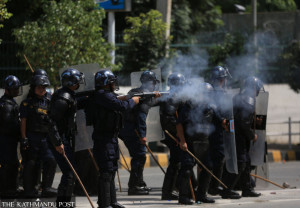
Political issues have dominated discussions, particularly in light of the changes that have taken place over the years. The rise of youth is the single most dominant factor in this country’s politics. The Gen Z uprising of 2025 has become a mantra used to evoke politics today. What is becoming apparent is that it is a global phenomenon.
Youth uprisings in Asian and European countries have become the dominant metaphor of our time. The role of students in sweeping the election and turning the tide of history in Serbia is the latest example of a student uprising in politics. Other youth movements also exist. The recent political shift in Nepal has created challenges that political scientists and senior political thinkers have been discussing in earnest. They have discussed crucial historical points and alternatives. Professor Lokraj Baral examines the waves in the Nepali Congress, to take one example.
The grand narratives of theory and political hegemony are changing. Measuring this change has become an important issue in Nepal, as it is everywhere in the world. How to tell the old from the new is the outstanding question. Let us turn to politics to try to answer this question.
The question of old and new has been profusely pronounced, if not seriously discussed, in Nepal’s political sphere. The parlance that the old is being replaced by the new, and that youths have emerged to take over the leadership of political parties, has become the most touted topic in Nepali politics. Parties, especially left-leaning ones, are grappling with this question of age-related leadership and ideology.
An attempt to revamp old ideals is a natural process, and probably the only way to give continuity to the tradition of leadership and the definition of followers. One question that has emerged as a prominent issue today is not only the nature of leadership but also of the followers, or the audience, of the parties. Their psyche is measured. The erstwhile revolutionaries, for example, now make cool and reality-based assessments of their actions. Some old leaders of the major political parties issue calls, even orders, not to question the leadership structure of the parties.
That would work if the concerned party were in power, as we have seen in some countries where old leaders in power call on people to follow a certain ideological path or set of principles. But that is no longer the case in Nepal. Parties now have to deal not only with familiar ideological questions but also with the algorithmic digital system that some political scholars have started to describe. Newfangled conspiracy theories and apocalyptic imaginaire also draw from the digital system.
All the major political parties that have ruled for many years are no longer in power. So, they are resorting to organising their parties around the principles and theories. The Gen Z movement changed the structure. But it also raised a major question: how to organise a party in power, like the Rastriya Swatantra Party, around leaders and principles. The leaders of this party, which won nearly two-thirds of the seats in Parliament, are dealing with the question of organising party leadership, streamlining the structure of the supporters or followers. This is not an ordinary challenge but an important moment in history. For that reason, it is a big task for the party to carve out a pragmatic structure that reflects what the British philosopher Bertrand Russell often repeated as the binary of ‘leaders and followers’ that may change its shape with the changing times.
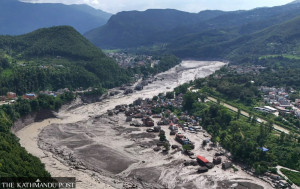
But the themes that shook the Nepalis out of complacency are not only political. They are also physical, and they are huge in scale and impact. The most prominent one is the Bhotekoshi flood. Nepal is facing problems of diverse dimensions. These include physical, economic and ecological dimensions—challenges of an entirely human dimension involving management, protection and settlements.
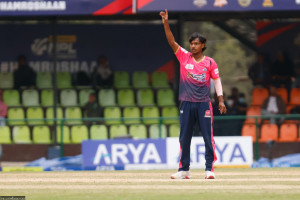
Human dignity is another major question. People in dire straits face the question of maintaining human dignity and livelihood. The question of management is linked to politics. I like discussions in responsible media that link human topics to the political changes the country has experienced. This involves personas, their actions, behaviours and ethical dimensions. But there are celebratory sides too. Take the festive mood brought by the third season of the Nepal Premier League (NPL) taking place at Tribhuvan University International Cricket Ground in Kirtipur. For someone like me, who has spent my life teaching there, seeing the euphoric crowds is a welcome surprise. That also brings to mind the university’s history and the difficulties this noble institution has faced over time.
We are living with the great awakening in this country. Awakening is related to action. We should see how our actions support the moments of awakening on different fronts. I want to end with a political note. To channel the great moments of awakening, we need a system of management associated with politics, with politicians who rule and an opposition that cautions and advises. It requires the cooperation and participation of free minds and spirits, whose presence is growing in this country.




 16.66°C Kathmandu