



 14.81°C Kathmandu

Sat, Oct 24, 2026
Columns
Is Nepal repeating India’s mistake?
If Nepal is to continue enforcing silence and digital intimidation, the final reckoning will come from the streets.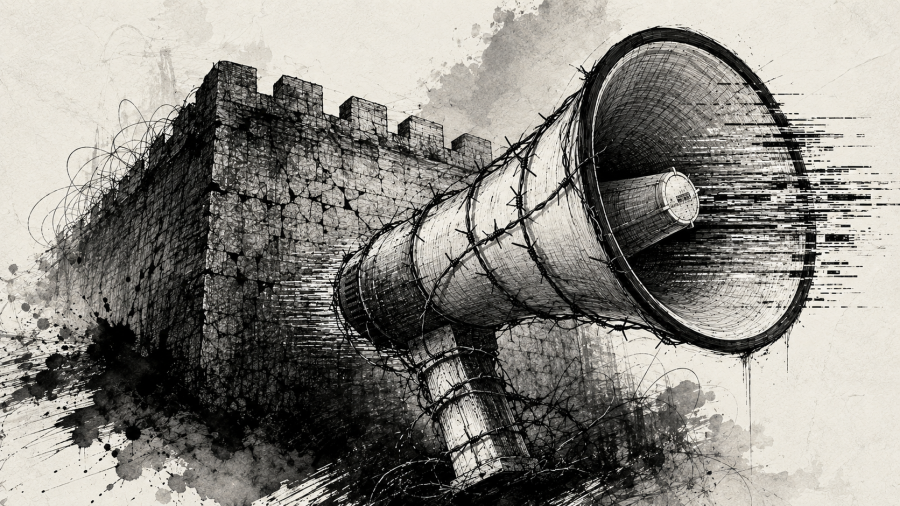
bookmark
Biken K Dawadi
Published at : July 30, 2026
Updated at : July 31, 2026 08:58
On Wednesday morning, in an interaction with a closed group of Nepali civil society members, Indian social activist Harsh Mander said that the ‘Citadel of fear’ in India’s socio-political landscape has been dismantled, but the ‘citadel of hate’ still stands. Mander was reflecting on the seismic impact of the Cockroach Janta Party (CJP) protests in July. After Chief Justice of India Surya Kant labelled unemployed youth as ‘cockroaches’ on May 15, the CJP reclaimed the slur to forge a satirical, digitally organised group against the system. What began as an online campaign quickly transformed into a mass, leaderless uprising at New Delhi’s Jantar Mantar, driven by fury over leaks in the NEET-UG medical entrance exams and a broader collapse of public trust.
The CJP movement was the inevitable explosion of friction points that have long simmered beneath the surface of the Indian state. For the middle and working class, standardised entrance exams are the primary vehicle for upward social mobility. When these papers leak, as they so often have over the years, years of family savings and student labour are erased. The system had normalised such leaks, with the perpetrators rarely receiving punishment. This was a breach of the meritocratic social contract.
While we regularly see opposition parties and their student wings, both politically motivated, protest paper leaks in India, the CJP protest marked a major departure from the nature of protests, somewhat mimicking September’s Gen Z protests in Nepal. Like Nepal’s movement, the ‘Instagram satyagrahis’ in India bypassed traditional, co-opted political student wings to build a ‘carnival of protest’ that used humour and meme warfare to strip the state of its ability to intimidate them. They forced the resignation of Union Education Minister Dharmendra Pradhan and secured compensation for affected families.
While the current regime in Kathmandu rode to power on the popular anti-establishment rhetoric of September’s protest, Nepal still mirrors Mander’s analogy of citadels, albeit subtly, with a similar layer of digital toxicity that is quietly building a citadel of fear. Across social media platforms, there is an overwhelming, often blind support for the ruling Rastriya Swatantra Party (RSP) and the regime of Prime Minister Balendra Shah. RSP anti-establishment energy has curdled into an aggressive shield that suffocates democratic discourse. Anyone who dares to critique the government faces immediate, seemingly coordinated cyber-harassment.
This digital lynch-mob culture has become so intense that seasoned journalists and public intellectuals have started to self-censor their opinions. The new generation of civil society leaders have been forced to meet behind closed doors, as was the case in Mander’s interaction programme, similar to the underground meetings after Gyanendra’s coup d'état. A portion of these online enforcers can be traced to online groups like Men’s Room Reloaded (MRR)—a Facebook group founded by PM Shah’s chief adviser Kumar Byanjankar—that originated in toxic, pornographic subcultures. This, however, is not an avant-garde practice of the current regime. Previously, the CPN-UML erected an IT cell to cloud critiques against the party and its leaders with opinion-muzzling comments. That such groups are the digital enforcement arms for ruling parties has created a pervasive climate of fear. It was true of UML’s leadership, and it is true now: When citizens are afraid to speak, the vital feedback loops of a healthy democracy are severed.
While the digital citadel of fear rises in Kathmandu, a citadel of hate is simultaneously being constructed along the Tarai belt. The recent communal violence in Sunsari’s Dewanganj, which left one young man dead and 22 others injured, is a chilling warning for the Nepali state. Allegedly triggered by a dispute over loud music during a Bolbam procession, this was not an isolated event. The Armed Police Force (APF) had flagged this growing communal divide three years ago, warning that organised attempts were being made to foment religious and ethnic divisions. The report explicitly urged the government to learn from communal violence elsewhere in South Asia to resolve disputes before they escalated into widespread unrest. However, these warnings were ignored by the political leadership.
If the root causes of the Sunsari incident are not investigated with absolute transparency, Nepal risks normalising the same culture of mob-lynching and communal polarisation that has plagued India for over a decade. The high-handedness of the security response in Sunsari, where police reportedly fired indiscriminately, only deepens public anger.
Meanwhile, silence from PM Shah during this crisis does not help the cause. Except for a social media statement, the PM has been conspicuously absent from the necessary acts of statesmanship. He did not attend the all-party meeting held to address the Sunsari unrest. In a time of national tension, a PM should be the calming voice of the nation, perhaps through a televised address, rather than a distant figure operating through a digital screen.
Furthermore, PM Shah’s relationship with President Ramchandra Paudel has become virtually non-existent, with no substantive consultations taking place in four months. If he continues to govern in isolation, relying on security forces to contain violence rather than political dialogue to prevent it, Nepal will transform into a citadel of hate where the state’s only language is force.
This pattern of administrative arrogance extends to the education sector. The recent Tribhuvan University (TU) leak, where Master of Business Studies (MBS) question papers surfaced in a WhatsApp group of over 1,000 members just five minutes into the exam, is a direct echo of the Indian NEET scandal. While Education Minister Sasmit Pokharel has been praised by his supporters for the swift arrest of the teacher responsible, this is merely a cosmetic PR move if the structural flaws are not addressed. True accountability extends beyond just catching a single ‘Sulav Sir’ to a total restoration of meritocracy in systems like TU and Lok Sewa. As seen in India, when young citizens feel that honest routes to success are rigged, the meritocratic social contract is breached, and their frustration eventually spills onto the streets.
Nepal’s leadership must realise that an anti-establishment origin story does not grant permanent immunity. The same digital tools that built the current regime’s platform can just as easily turn against them if they absorb the ills of the old guard. Governance requires transparent delivery and the courage to engage with criticism rather than social media optics.
When I interviewed Nepali geopolitical analyst Chandra Dev Bhatta for this paper in the aftermath of Nepal’s Gen Z protest, he said that the events in Nepal must have made India restless. While many dismissed Bhatta’s claim as far-fetched, it turned out to be true to an extent. The Indian movement shows that when a government refuses to engage in honest dialogue and chooses intimidation, public anger evolves into an unstoppable, decentralised force. Now, conversely, the events in India have stirred restlessness into the new generation of civil society leaders in Nepal.
Nepal can choose proactive accountability today, or it can continue down a path of enforced silence and digital intimidation until the dam of public patience breaks. The state can either mend the land through trust and integrity now, or wait for the streets to demand a final, unforgiving reckoning.
Biken K Dawadi
Dawadi is an Op-Ed Editor at the Post.





Most Read from Columns


Editor's Picks





E-PAPER | October 24, 2026

×