



 21.12°C Kathmandu
Thu, Nov 12, 2026
Columns
Nepal’s calendar gives Chhath one day. The festival takes five
A single national holiday leaves Madheshi, Tharu and other observers to negotiate time off for a five-day tradition with a 36-hour fast.
bookmark![]()
File Photo ![]()
File Photo ![]()
File Photo ![]()
File Photo ![]()
Anjali Sah
Published at : November 12, 2026
Updated at : November 12, 2026 14:28
When a college senior casually asked if she could fast for a single day to observe Chhath Maha Parva, it highlighted a troubling systemic reality: when the state systematically compresses a deeply sacred, multi-day eco-spiritual tradition into a single token holiday, it erases the culture’s essence and invites people to treat centuries of lived wisdom as a drive-through experience.
For seven years, I have argued for national recognition of Chhath as a complete, five-day spiritual and ecological commitment, moving from Godhan Kutai on Goverdhan Puja through Nhay-Khay, Kharna, and Sajhiya Ghat, before concluding with Bhorbha Ghat. In practice, however, Singha Durbar grants just one official national holiday, leaving Madheshi communities across Nepal scrambling to negotiate local time off. Even institutions birthed from federal restructuring, such as the Madheshi Commission, have proved functionally useless. Ever since the new constitution was passed amidst protests and bloodshed in Madhesh, state bodies have repeatedly fallen back into centralised ruling-class habits.
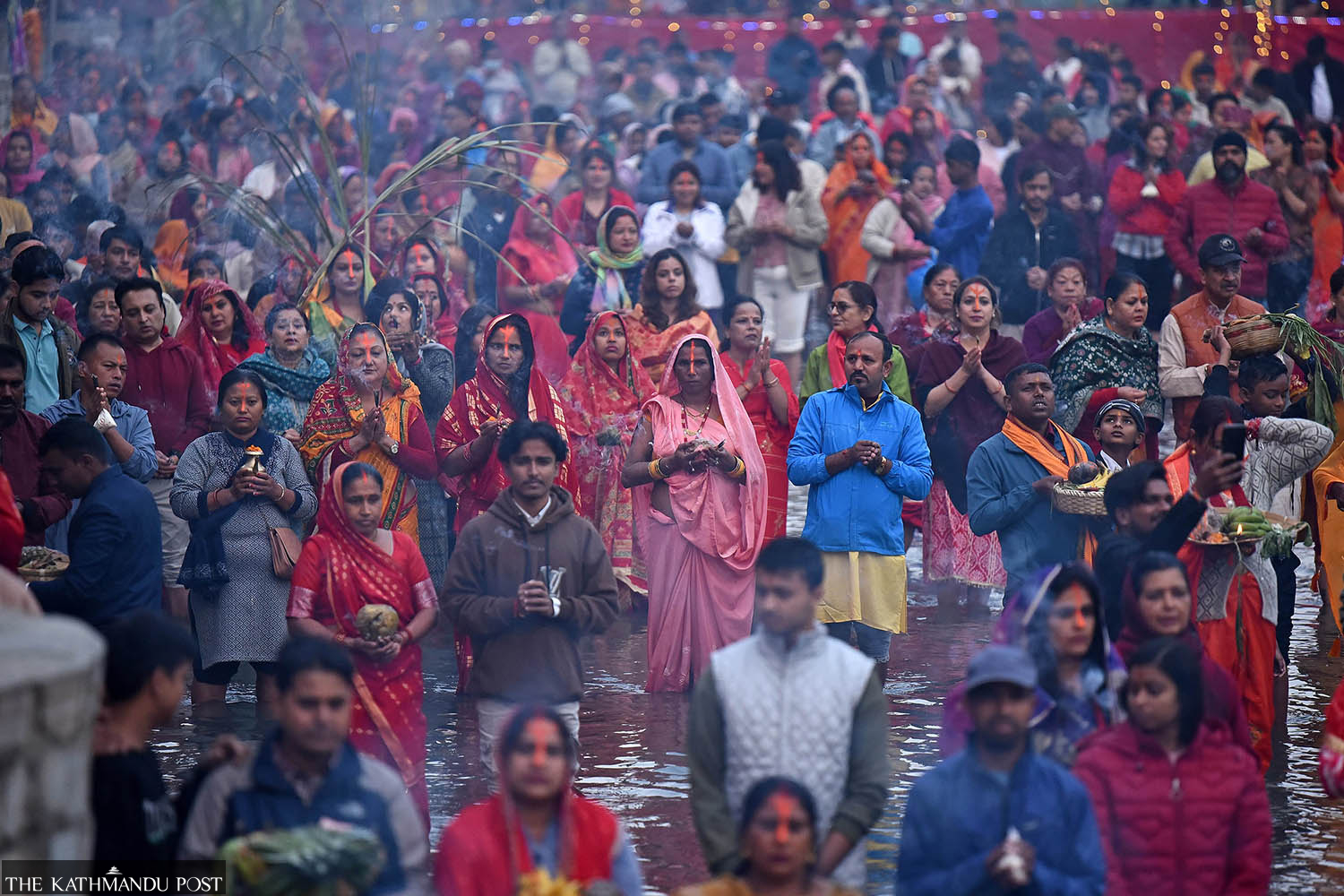
This administrative refusal ignores geographic realities. Chhath is actively celebrated across the entire southern plains, spanning at least 23 districts in the Tarai region. Yet, formal provincial holidays remain confined to the eight districts of Madhesh Province. Millions of Madheshi and Tharu citizens in outer districts are left entirely at the mercy of reluctant municipal notices or forced to use personal leave. The gap extends to Kathmandu, where observing families must stretch a five-day ritual around office hours, school schedules, and rented apartments far from the riverbanks. The last two days are highly engaging days which require each family member to be fully present. Confining holidays to one province treats Chhath as a regional curiosity rather than national heritage. When the state reduces widespread culture to an isolated photo opportunity, mainstream society mirrors that neglect, repackaging a discipline-heavy festival into a fast-tracked aesthetic trend for social media.
The practical consequences are severe. While the fast alone lasts around 36 hours, the national calendar recognises only Sajhiya Ghat. Students and workers face exams, attendance penalties, and unpaid leave, while Madheshi lawyers struggle with court hearing dates (pesi), mostly on the fifth day (Bhorbha Ghat). A petition on SpeakUp Nepal calls for a gazetted, continuous three-day national holiday across all 77 districts, applying to public and private sectors alike, alongside directives prohibiting mandatory attendance or exams during the festival.
Nepal can look across the border for examples of serious cultural recognition. On 28 September 2025, India's Prime Minister Narendra Modi announced efforts to seek UNESCO Intangible Cultural Heritage status for Chhath Mahaparva, signalling that a tradition rooted in these shared river plains is recognised as living heritage worth safeguarding. If Chhath can be championed on that scale abroad, Nepal should grant it full recognition on its own national calendar and claim its historical origins domestically before pursuing UNESCO recognition from the Nepal side as well. Nepal’s identity is incomplete without Mithila and Awadh civilisation, just like Newa, Khas Arya, and many others.
However, a public holiday is only the visible edge of the problem; deeper erasures persist within cultural consumption, gendered labour, environmental degradation, and social structures.
Gendered labour vs. radical equality
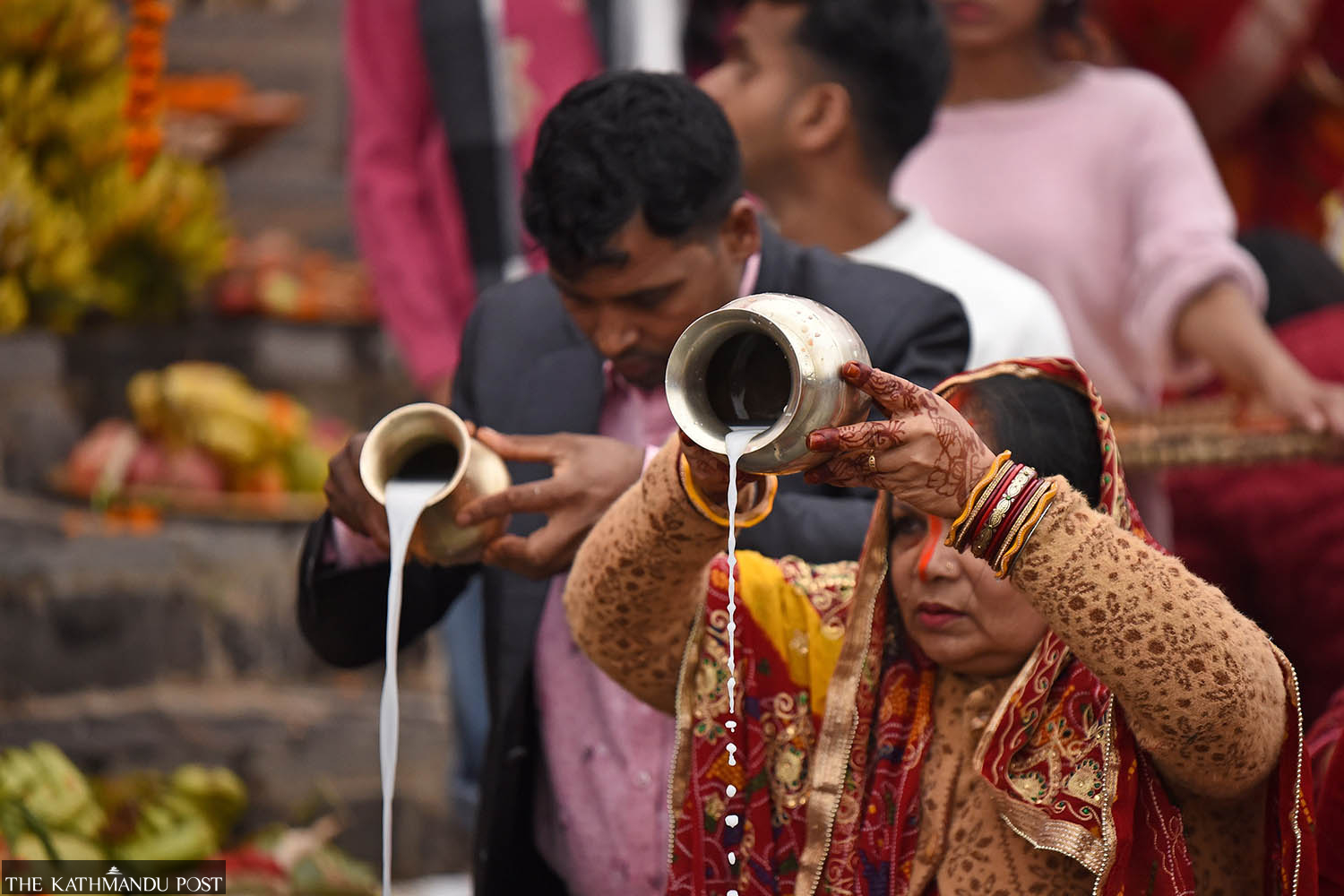
Chhath carries radical, anti-patriarchal potential. Unlike dominant Hindu rituals, anyone regardless of gender can undertake the fast, and no male Brahmin priests stand between the devotee and the divine. Worship is performed directly with nature, and men and boys actively fast and pray. Yet romanticised rhetoric must not obscure domestic realities. The invisible, exhausting labour of deep-cleaning houses, preparing satvik meals, washing tens of kilograms of wheat, and maintaining strict purity falls heavily on women. An intersectional lens requires honouring Chhath's progressive, priestless structure while actively challenging the unequal gendered care work that sustains it behind closed doors.
Indigenous ecology vs. plastic convenience
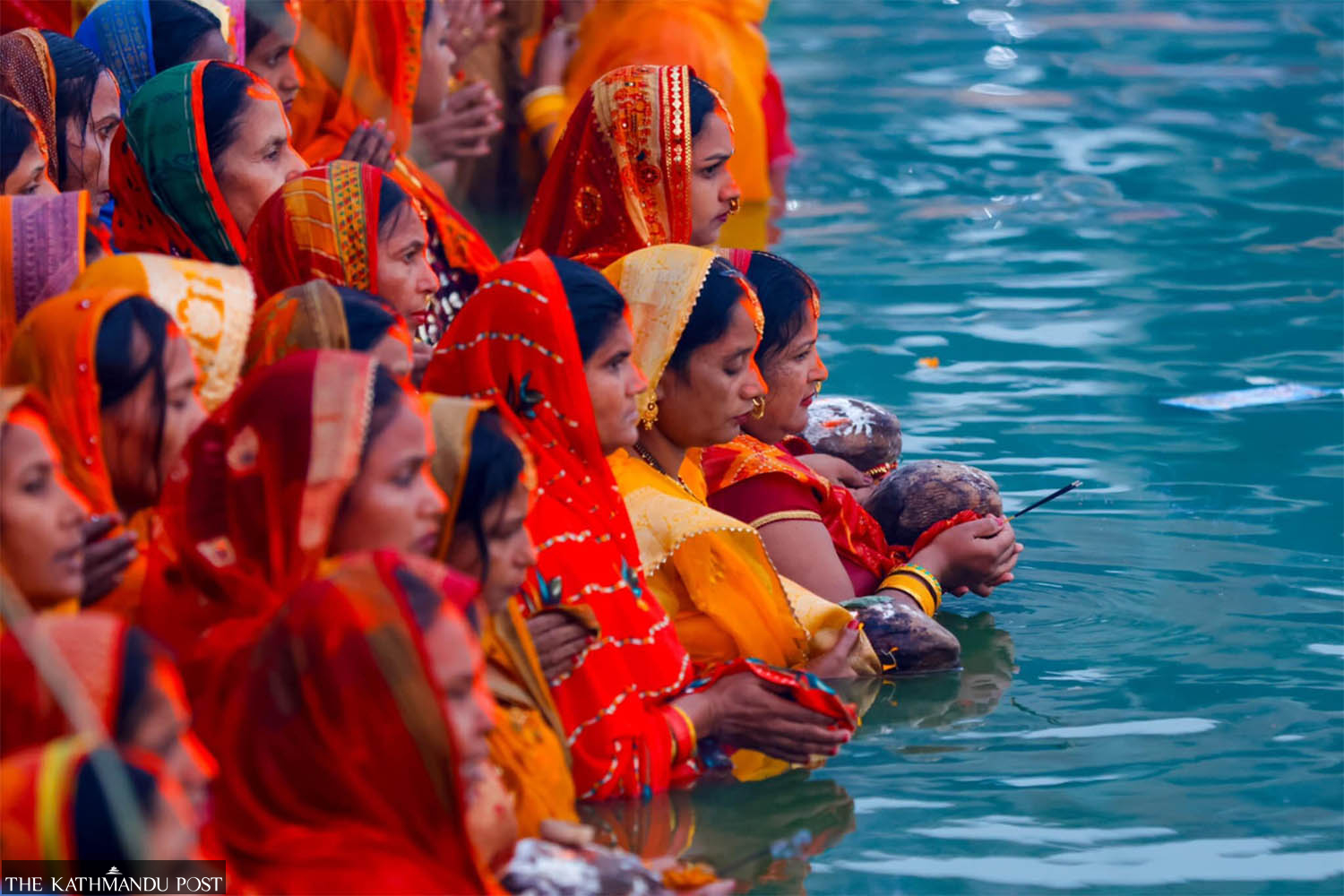
At its core, Chhath is one of the most sophisticated indigenous ecological systems on the planet, timed with the transition from humid summer to cold winter as an annual ecological reset. Neighbourhoods unite to clean natural waterways and construct temporary ghats from river mud, banana leaves, bamboo soops, and local earthenware. Every offering originates from the earth and returns to it without a trace. Today, however, uncontrolled commercialism, synthetic garlands, single-use plastics, and non-biodegradable decorations clutter riverbanks, compromising a tradition built on reverence for water and soil.
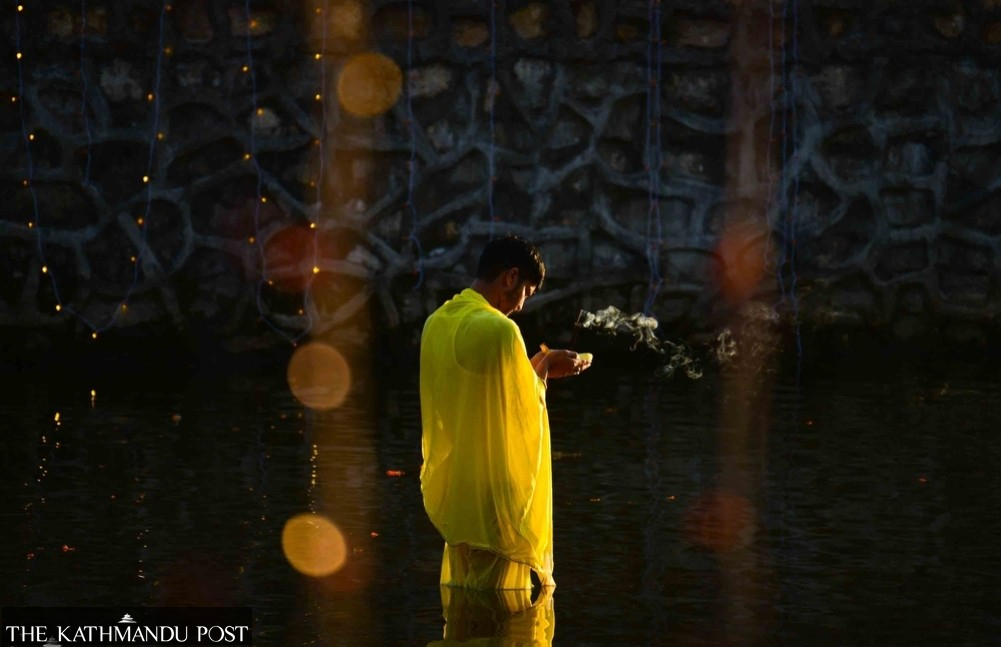
A sustainable Chhath supported by federal, provincial and local governments, offering clean, well-lit ghats, plastic-free guidelines, proper water management, and adequate public holidays, could thrive as a model of cultural eco-tourism and preservation without compromising its sacred nature. And it’s never too late to work on this part at both the community and government levels jointly.
Subaltern heritage and access at the ghats
Chhath operates within Vedic mainstream structures and beyond as well. It requires no priests, mantras or temples, and key elements like the earthen Shreesapta and thekuwa may trace back to subaltern or Buddhist roots kept alive by historically marginalised communities. Today, its observance extends across caste, class, gender, religion and region, with Tharu, Newar, Muslim and hill communities participating side by side in cities like Janakpur, Birgunj and Nepalganj. A tradition shared this widely deserves a calendar and a riverbank that is open to all.
Despite this inclusive potential, caste dynamics at the ghats remain a frequent topic of debate, often misconstrued by sensationalist reporting. When a reporter asked why Dalits were barred from touching the Shreesapta, it revealed flat cultural illiteracy: the Shreesapta is a private, family-lineage emblem tied to household ancestral (kul) rites, not touched by outside households regardless of caste. Simultaneously, caste discrimination remains an undeniable reality in South Asian society. In rural areas, spatial separation at ghats is heavily reinforced by state neglect, as the government fails to provide inclusive town planning or equal infrastructure, leaving marginalised communities with polluted sections of riverbanks. Prejudiced attitudes persist among both local conservative elites and uninformed urban commentators.
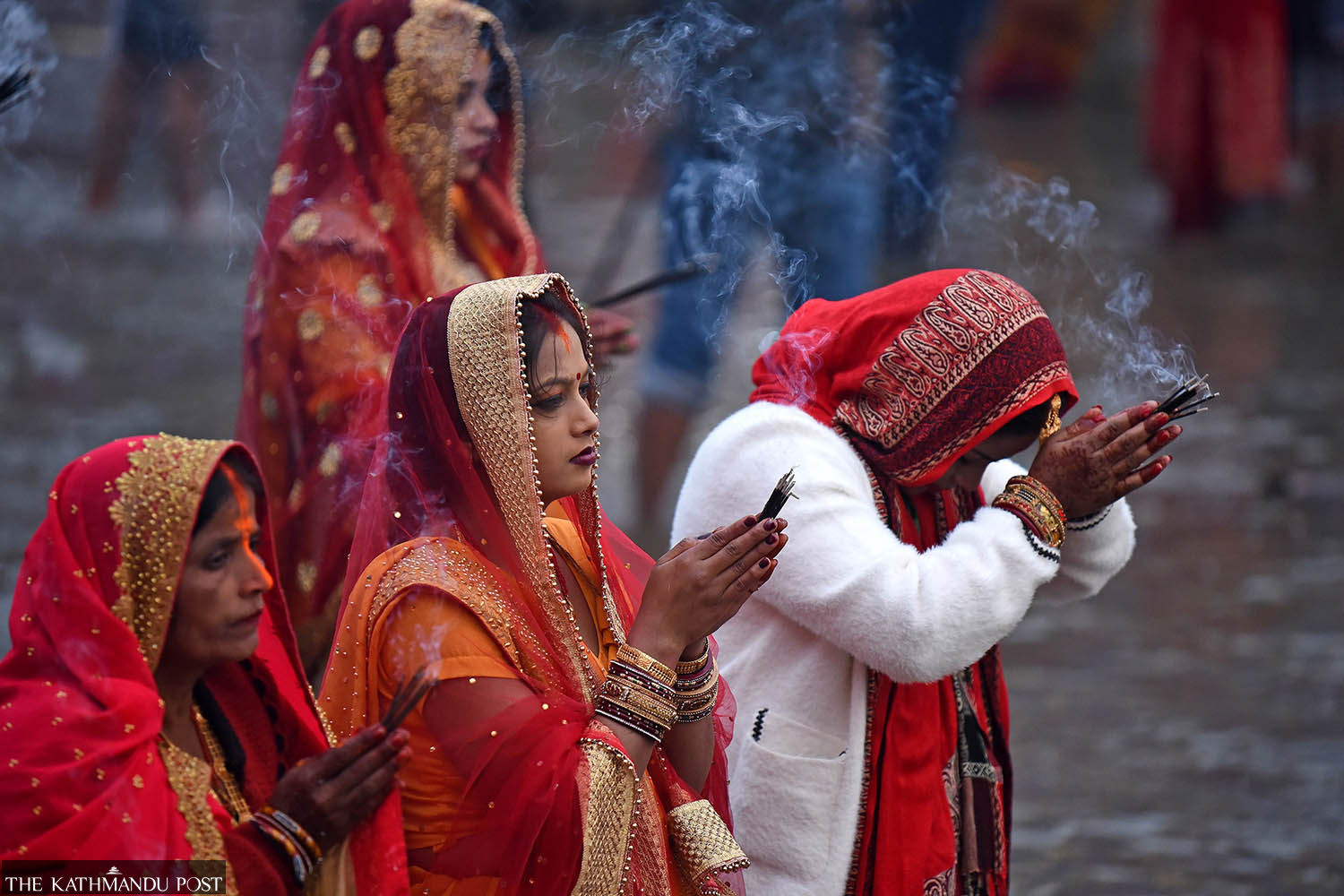
On 5 November 2026, the Ministry of Women, Children, Gender and Sexual Minorities and Social Security urged the public to refrain from caste discrimination and separate Dalit ghats under anti-discrimination laws. While welcome, policy statements alone cannot replace the equitable planning and infrastructure required for truly inclusive riverbanks.
Call for genuine recognition
The demand for meaningful recognition is backed by over 1,600 petitions filed at the ministry level, yet online discussions are frequently met with hostile and dismissive commentary. This hostility highlights how little Chhath is understood and how urgently recognition is needed.
Chhath does not belong to a single calendar day, sensationalised reporting, eight designated districts, or plastic consumerism. It belongs to the soil, the water, the rising sun, and the working-class devotees who preserve it across generations. Until the Nepalese state adjusts its calendar to respect the multi-day reality of Chhath nationwide, and until society unlearns caste bias, gendered labour exploitation, and environmental harm, the celebration remains incomplete. The sun shines on everyone without condition; our laws, reporting and daily actions must finally do the same.
As my aunt says, “Diannath sada sahaya”, which means the Sun God always blesses us. I hope that cultural recognition becomes undeniable, dignified rights for everyone.
Anjali Sah
Sah is an intersectional Madheshi feminist who has been engaged in grassroots activism for child rights, women's rights, farmers' rights and Madheshi advocacy for the past six years.


Most Read from Columns

Why the NPL can turn Nepal’s promises into wins
Nepal’s 250-year-old foreign policy still works. Why does no one use it?
Can Nepal cook dal bhat on its own electricity?
Nepal has the creativity and talent to build its own industries. What it needs is government support
Why Modi 3.0 is a pale shadow of its first two terms
Editor's Picks
Tihar’s electric glow threatens Bhaktapur’s clay-lamp tradition

After Nepal’s recent disaster, it wants to test whether COP31 can deliver climate justice

Jijivisha stitched Everest onto a red-carpet suit. Nothing came from Paris, Milan or New York.

Balendra Shah’s Facebook page used to hold power to account. Now it holds power.
Momo, mon amour: A Nepali bill of fare — and affair
E-PAPER | November 12, 2026

×