



 14.81°C Kathmandu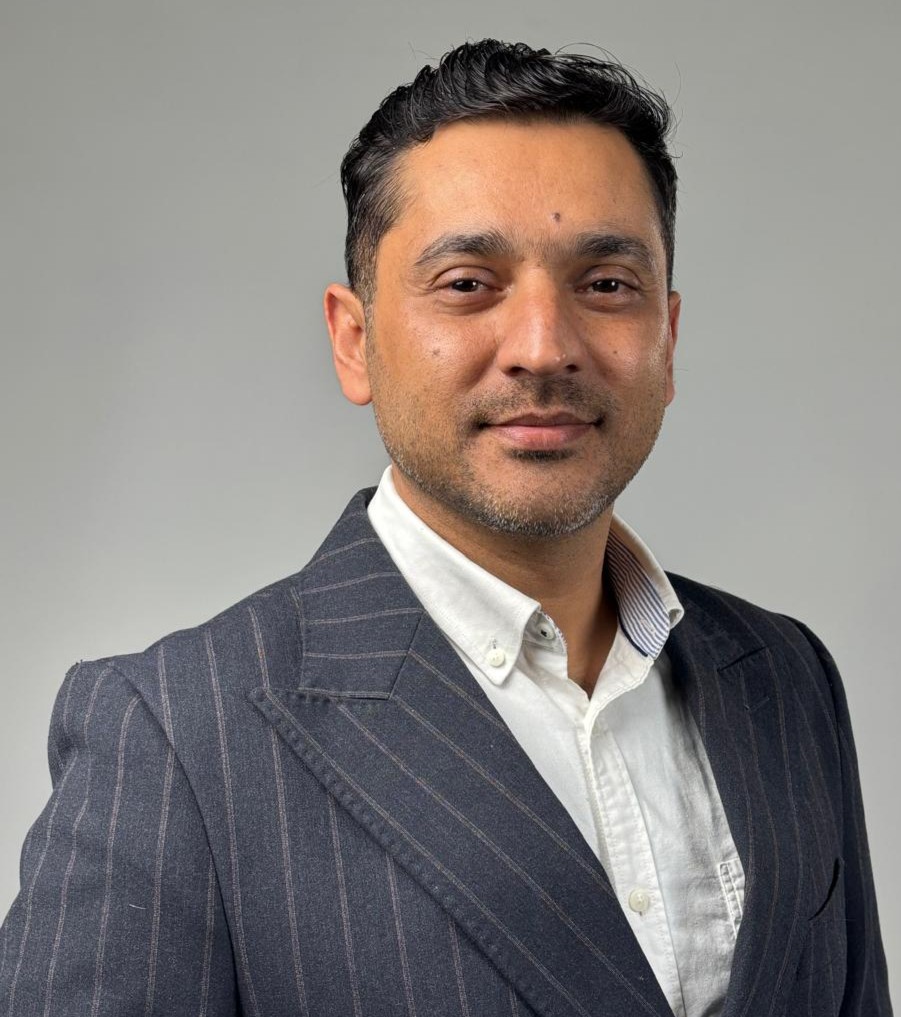
Sat, Oct 24, 2026
Columns
Madhesh tests Nepal’s secular credentials
Last week’s unrest has highlighted the urgent need to translate the political principle of secularism into a cultural praxis.
bookmark
Dinesh Kafle
Published at : August 2, 2026
Updated at : August 2, 2026 22:32
After a week of communal turmoil, Madhesh is finally settling down. The home minister’s crisis management strategy has helped bring leaders of the Hindu and Muslim communities to the talks table. The prime minister’s earnest outreach to political actors in the region, though a tad belated, has helped establish a sense of accountability and fraternity. However, the flames of communalism hardly die down with ad hoc measures. Bureaucratic management of the communal tension must be followed by long-term strategies to address deep-rooted problems, beginning with the concept of secularism itself.
From what we have heard from the media, Prime Minister Balendra Shah is firm in his commitment to secularism. His argument, as his interlocutors put forth, is clear: Any debate on the desecularisation of the Nepali state entails an unviable quest to undo republicanism and federalism. Based on this information, we can rest assured that secularism as a political principle of the Nepali state is in good hands—at least for now. But we cannot remain complacent.
First things first, the timing of the communal tension tells us something about a subterranean effort underway in Madhesh to undo secularism. Certainly, the tensions began with a display of machismo from men belonging to two different communities in Kaptanganj of Sunsari: Hindu devotees on the Bol Bam procession blasting religious hymns at night and local Muslim youths trying to cut the former down to size. Enter the trigger-happy police, and a local brawl explodes into a vulgar display of communal hatred spanning an entire province.
Consultations on constitution amendment are underway at the national level, and this is the right time for anti-secularists to intervene. The signs are already out there: Members of various Hindutva-aligned outfits are in constant negotiations with the home minister, with a prominent demand of a return to ‘Hindu Rashtra.’ The home minister is said to have circumvented this demand, instead committing to more viable outcomes in the immediate run. But the negotiations have veered towards reinforcing a unilateral communal suspicion, including a greater scrutiny of madrassas.
Yes, scrutinise Madrassas, but also mandirs. Incidents in the last few years have shown that communalism is not the prerogative of just one religion or community. Instead, we are too quick to provoke and be provoked: Social media used to share communally insensitive videos; religious processions rerouted through the village of a different community just to provoke. Banke, Dhanusa and Sarlahi have seen similar cases of communal tension in the recent past, reinforcing the belief that the same grammar of communalism is being taught across Madhesh: Individuals from a certain community commit verbal or physical acts that undermine communal harmony, followed by the politicisation of the incidents. The Armed Police Force recorded 25 incidents of religious or ethnic conflict between the fiscal years 2020-21 and 2023-24. But who is fueling the communal flare-ups in Madhesh?
An obvious suspect is the wave of communalism sweeping through the bordering towns in Bihar and Uttar Pradesh of India. The open border presents a significant challenge in containing the politicisation of religion, often sponsored by political parties, as is the case with India. The rise of the Bharatiya Janata Party has been concomitant with the shrinking of the secular public sphere in India, and this is no sheer coincidence. State-sponsored hatred of the Muslim minority has been a reality in the last 12 years, ever since the Rashtriya Swayamsevak Sangh-backed BJP came into power. This has paid the party off very well: “Hindu khatre mein hain” (The Hindus are in danger) has been the most consistent political slogan of the BJP, which likes to use the suffix of ‘jihad’ against an entire community wherever it suits.
You don’t always need your apparatchiks to do the legwork: RSS’s brand of Hindutva has spilled over digitally as well, with Nepalis increasingly getting comfortable with the slogan “Jai Shree Ram”, replacing the local version, “Jai Siya Ram”. The politicisation of Hinduism on the streets of Madhesh last week has helped lay the groundwork for a return to Hinduism as a political principle. Once the road to the politicisation of religion has been paved and the secular fabric of the society torn, turning back becomes difficult, if not impossible. But turn we must. And how?
As the latest bout of communalism in Madhesh has shown, a state’s toleration of different religions does not automatically translate into religious tolerance in society. The Nepali state has certainly ensured the recognition and survival of Muslims as a political community; but it has, as of now, failed to secularise the society in a way that the Muslims feel acknowledged as the co-builders of the society itself. The state, therefore, must see to it that official secularism translates into a lived reality in Nepal. This begins with differentiating Hinduism as a cultural practice from its political offshoot, Hindutva, which is often intolerant and even violent—and replicating this for all religious communities.
Apart from the obvious operationalisation of political Hindutva in Madhesh, the current imbroglio is also the result of our internal failures at institutionalisation of secularism in the past two decades. If the tipping point came in the form of violence in Madhesh, the conditions had also been laid out in the vacuum of the public sphere left by political parties, successive governments and civil society. The Nepali state did the right thing by adopting secularism through the reinstated parliament in 2006, and then codifying it through the interim constitution of 2007 and the 2015 constitution. However, as Nepal’s political and civic spaces brimmed with debates over state restructuring, most vociferously over federalism, secularism remained just an et cetera.
Every political party shied away from talking about secularism, as if they had committed a crime by letting it seep into the interim constitution. Civil society members said in hushed voices that although secularism was a theoretical prerequisite for democracy, Nepali Hinduism wasn’t bad either. Antisecularists, thereby, kept abusing secularism as a foreign import imposed by NGOs to expand ‘foreign’ religions, including Christianity and Islam, and undermine Hinduism. In the absence of a sustained debate on the affirmative effects of secularism, common Nepalis have, therefore, felt that it was shoved down their throats, and hence a muted acceptance of the idea that Nepal can actually go back to Hinduism.
The communal flare-up this time has laid bare the fault lines of the official secularism we hastily adopted as the Nepali state’s political principle twenty years ago. It is now time to return to the beginning and establish that secularism isn’t a foreign idea sheepishly inserted into our constitution but a consciousness and a lived experience. Only when it becomes an integral part of our cultural praxis does secularism find its true meaning and acceptance.
Dinesh Kafle
Kafle teaches at the Kathmandu University School of Arts.


Most Read from Columns


Editor's Picks





E-PAPER | October 24, 2026

×