Shah government formed commissions but cares little for the outcome
A review of the administration’s investigation panels reveals a pattern of delayed reports, unfulfilled promises and unresolved questions over accountability. A review by Kantipur shows that the Shah-led government has formed at least 10 high-profile commissions and investigative committees since taking office. RSS
Forming high-level probe commissions and task forces in response to public outrage is a long-standing political practice in Nepal. For decades, governments have responded to crises by setting up investigative panels, often to address public anger.
Prime Minister Balendra Shah’s government came to power promising to break with such practices and usher in greater transparency and accountability.
Yet months into its tenure, the administration appears to be repeating the pattern it had pledged to change.
A review by Kantipur shows that the Shah-led government has formed at least 10 high-profile commissions and investigative committees since taking office. But the urgency shown in forming them appears to disappear once they complete their work and submit their reports.
Reports on constitutional reform, national security, human rights violations and loss of life have either not been made public, not been formally received or remain unimplemented. The practice has raised questions over the purpose and effectiveness of commissions that are established at considerable public expense.
One of the clearest examples is the debate paper on constitutional amendment.
Amid widespread political dissatisfaction, the Cabinet decided on March 30 to form a specialised task force to prepare a comprehensive paper on possible constitutional amendments.
Coordinated by Prime Minister Shah’s political adviser, Asim Shah, the task force began work on April 8. After consultations with political parties, legal experts and civic stakeholders, it completed its assignment and submitted its final report to the government on July 16.
According to people familiar with the document, the task force proposed sweeping constitutional changes. The debate paper reportedly recommends amendments to 242 articles of the constitution and calls for the formation of a high-level constitution amendment commission to oversee the process.
Despite the scale of the proposed changes, the report remains with the prime minister’s office. The government has neither made it public nor initiated broader parliamentary or public discussion on its recommendations.
Sources say the government has hesitated to release the report because opposition parties and some smaller political groups have declined to take ownership of it.
Constitutional experts, however, say political disagreement does not absolve the government of its responsibility to make the report public. After spending state resources and months collecting suggestions, they argue that the government should release the debate paper and allow a national discussion on the proposed changes.
By keeping it out of the public domain, the prime minister’s office has stalled debate on potentially far-reaching changes to the country’s constitutional framework.
Legal experts and former government officials see the handling of commissions as more than an administrative lapse. They say it reflects a long-standing political practice in which governments establish panels to ease immediate pressure without addressing the underlying causes of a crisis.
Former high court judge Lokendra Mallik said successive governments had fallen into this pattern.
“To address immediate problems and release political stress, governments form commissions. But they are plagued by a common disease of never implementing them,” Mallik said. “In the past as well, numerous such commissions and committees were formed. Nobody knows where their reports are today. Unfortunately, the same tendency is visibly repeating itself in the current government.”
Former law minister Govinda Bandi was more critical of the Rastriya Swatantra Party government’s reliance on probe panels. He said commissions in Nepal have increasingly become tools for diverting public attention and providing political patronage.
“In Nepal, commissions have become little more than vehicles for providing positions to politically connected individuals,” Bandi said. “Because this practice has persisted for years, their reports are rarely made public or acted upon. That is why the public must ask why these commissions and probe committees are formed in the first place.”
Bandi said judicial and non-judicial probe committees are generally formed when regular state investigations fail to establish the truth or when victims have legitimate concerns about police investigations.
“A probe commission is formed to uncover the absolute truth and to ensure that such tragic incidents do not repeat in the future,” Bandi said. “The fundamental purpose is to amend laws, reform policies, and improve state institutions based strictly on the commission’s recommendations.”
Instead, he said, commissions are increasingly being used to divert public attention.
“Nothing productive has come out of this mechanism. The current government urgently needs to reflect upon and learn from this failure,” Bandi said.
The Shah administration’s selective approach to accountability is evident in its handling of reports on the Gen Z protests of September 8 and 9 last year.
To investigate the protests and the state’s response, the previous government led by Sushila Karki formed a high-level probe commission on September 21, 2025, under former judge Gauri Bahadur Karki. The commission submitted its report on March 8 earlier this year.
The responsibility for implementing the report fell to the Balendra Shah government. At its first Cabinet meeting on March 27, the government decided to implement the commission’s report. The following day, authorities arrested former prime minister KP Sharma Oli and former home minister Ramesh Lekhak over their roles in the events of September 8.
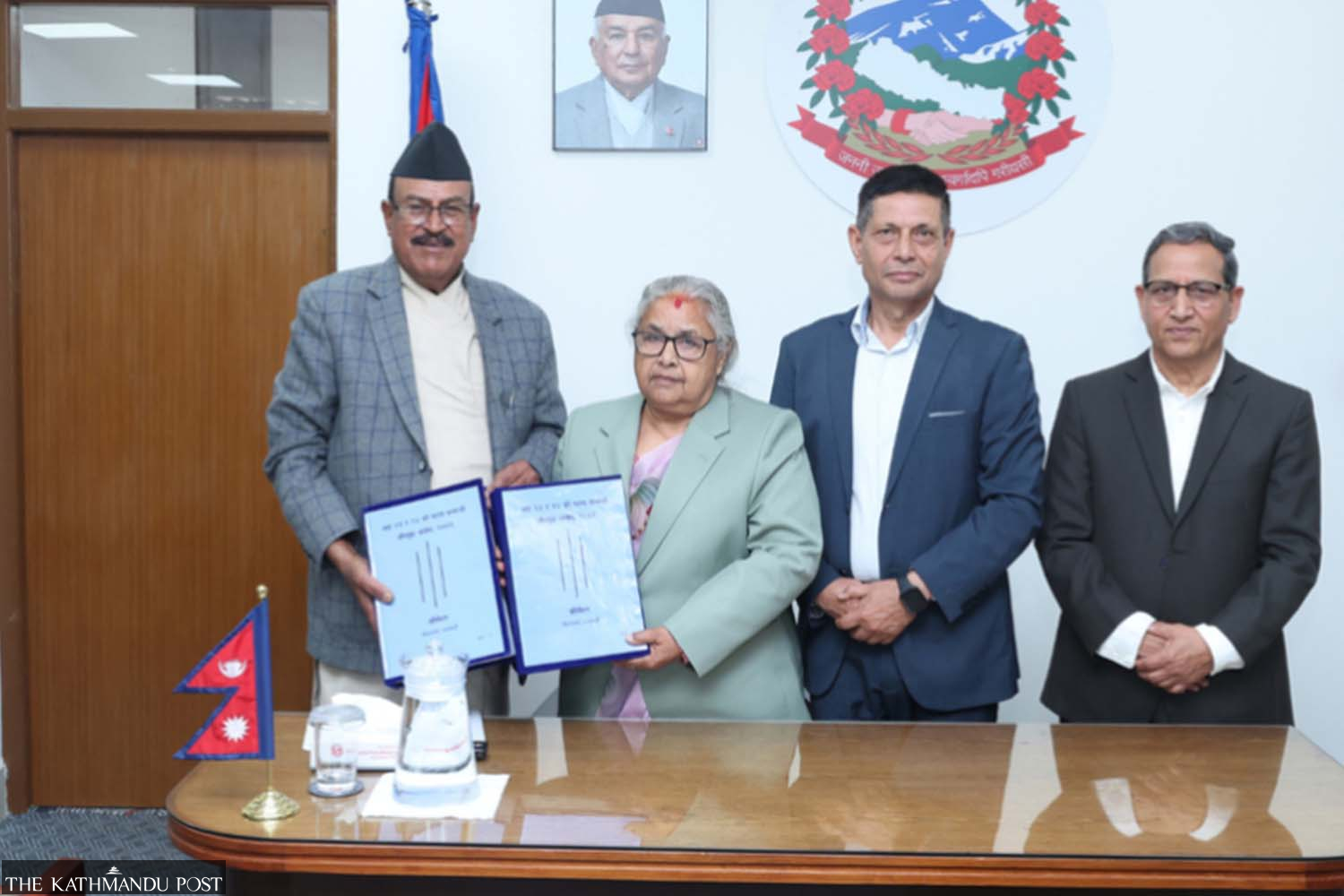
This photo from March 8 shows former chair of Special Court Gauri Bahadur Karki (left) handing over the Gen Z protest inquiry report to then Prime Minister Sushila Karki. Post file photo
But implementation of the Karki commission’s report has stalled. The government has been accused of selectively using the report for political retribution while failing to address the loss of life and destruction of property during the September 9 violence.
Gauri Bahadur Karki, chair of the commission formed to investigate the September 8-9 incidents, said the government must explain why their report remains unimplemented.
“We worked diligently to uncover the facts and provided recommendations to prevent future crises, but I have no idea why they are not being implemented,” Karki said. “In the past, the failure to implement reports on cooperatives and medical education meant that those exact problems have resurfaced today. Because this report contains vital institutional recommendations, it would be in the nation’s interest to implement it fully.”
Karki, who previously served on the commission looking into predatory lending practices, said the failure to implement past recommendations had contributed to the recurrence of similar problems. Victims of loan-sharking marched in Kathmandu again just days ago, he noted.
“Governments do not study the commission’s suggestions, nor do they implement them,” Karki said. “Recommendations and suggestions are given specifically for implementation. In the Gen Z incident, there were many systemic issues that needed addressing, but the government does not seem to be in the mindset to execute them.”
On September 9, the commission recommended further police investigation because photographs alone were insufficient to establish individual responsibility. The government has not formed the recommended follow-up committee.
Government spokesperson Sasmit Pokhrel said the September 9 events required “consultations with political parties” before administrative action could be finalised.
A separate report by the National Human Rights Commission on the Gen Z protests also remains at the Prime Minister’s Office. An NHRC committee led by member Lily Thapa made detailed recommendations on human rights violations on September 8 and 9 last year. The government has neither taken the recommendations to the Cabinet for endorsement nor indicated that it plans to revisit the investigations.
The government’s handling of the Gen Z reports has also left questions over the conduct of security personnel unresolved.
When the Cabinet decided on March 27 to implement parts of the Gauri Bahadur Karki report, it acknowledged that the original commission had not adequately examined the internal dynamics and failures of the security apparatus during the protests.
The Cabinet therefore decided to form a separate three-member committee to investigate the conduct of security personnel. Former judge Prem Raj Karki was appointed its coordinator on April 15, with the committee given a month to complete its work.
The committee sought and received a short extension, saying the initial time provision was insufficient. It subsequently completed its investigation.
But the home ministry refused to formally receive the report.
On July 9, committee members led by Karki went to the home ministry to submit their findings. They met senior ministry officials, including the home secretary. During the meeting, Home Minister Sudan Gurung said he would not accept the report at that time and directed the committee to submit it to Prime Minister Shah instead.
The committee has since been unable to secure an appointment with the prime minister.
On August 6, its members went to the prime minister’s office and met chief secretary Govinda Bahadur Karki. According to a committee member, the chief secretary said he would “create an environment” for the report to be received in the coming days.
Until then, the committee’s assessment of the security agencies’ conduct during the protests remains in limbo.
Beyond political and constitutional issues, the government’s failure to act on probe reports has left families of victims of tragedies waiting for answers and justice.
On July 9, Ganesh Nepali (Bishwakarma) attempted self-immolation after dousing himself in petrol outside the Department of Passports in Tripureshwar. The incident followed a dispute over a parking fine imposed by the Kathmandu Metropolitan City police. Nepali succumbed to injuries later while undergoing treatment.
His family blamed harassment by the KMC police for his death and initially refused to claim his body. To defuse the tension, the government agreed to address the family’s demands and formed a probe committee on July 22 led by former judge Keshav Prasad Bastola.
The Bastola committee completed its investigation and submitted a report to the government on August 3. A week later, however, the Cabinet had neither discussed the report nor begun the process of making its findings public, leaving the bereaved family waiting for answers.
A similar situation has emerged in eastern Nepal. Following a serious incident in Kaptanganj, Sunsari, on the night of July 26, the home ministry formed a seven-member study committee led by joint secretary Bhupendra Thapa.
Given one week to complete its work, the committee travelled to Kaptanganj, questioned witnesses, consulted local residents and security agencies, and prepared its report.
Despite the urgency, the government has yet to formally receive the document. According to a committee member, the home minister has repeatedly failed to make time to accept the findings.
The report, which requires immediate implementation to maintain local law and order, now sits in a committee member’s personal drawer.
The government’s inaction contrasts with its own commitments. Point 8 of its 100-day action plan acknowledged the long-standing practice of leaving commission reports in archives. It promised that within 30 days of receiving any commission report, the government would initiate the necessary legal, administrative and prosecutorial procedures for implementation.
Point 7 of the agenda promised to form a high-level committee within a week to investigate the September 9 incident. Both commitments were ratified at the first Cabinet meeting on March 27.
The government has sought to project transparency by declassifying several old investigative reports from previous administrations, including those concerning the Tribhuvan University’s land, Bal Mandir properties and the Rawal Commission on public land. But reports generated during its own tenure have remained largely inaccessible.
Asked by Kantipur about the failure to implement the findings, Home Minister Gurung said reports and committee findings received by the government were “under study” and would be made public in due course.
The government is also sitting on the investigative report concerning anomalies and serious errors in the Grade 12 examination results, as well as the probe into the recent Siraha and Saptari incidents.
Even active commissions have been paralysed.
The property investigation commission, established by the Shah administration to investigate the assets of public officials, has been effectively halted by an interim Supreme Court order. Unable to proceed with its investigation, the commission has merely opened bundles of property declarations submitted to its office.
The government’s list of investigative bodies includes the Gen Z probe, the NHRC recommendations, the Home Minister Gurung probe, the probe on security personnel’s role on Gen Z protests, the Ganesh Nepali self-immolation probe, the property investigation commission, the constitution amendment task force, the Grade 12 error committee, the Siraha/Saptari incident commission and the cooperatives probe.It is nothing new for successive governments to shelve investigation reports. Whether it was the Property Investigation Commission formed under the chairmanship of then Supreme Court Justice Bhairab Lamsal, or the Mallik and Raymajhi commissions formed to investigate repression during the 1990 and 2006 people’s movements, successive governments have largely ignored their findings. None of these reports was either made public or fully implemented.
During the 1990 movement against the Panchayat system, 45 people were killed and around 500 injured. The government subsequently formed a commission under the chairmanship of Justice Janardan Mallik to investigate the violence. The commission recommended action against those responsible for the repression. Its recommendations, however, were never fully implemented.
During the second People’s Movement in 2006, 26 people were killed and more than 4,000 injured. In April that year, the government formed an inquiry commission under former Supreme Court Justice Krishna Jung Raymajhi. The commission recommended action against those who led the government at the time and those involved in the repression of protesters. The report, too, remains largely unaddressed.
This pattern has extended beyond political movements and state repression. Successive governments have formed commissions and committees to investigate irregularities, corruption, smuggling and administrative failures, only to leave their reports gathering dust.
In 2015, as preparations were underway to promulgate the new constitution, violence in Tikapur, Kailali, left several people dead. In September 2016, the government formed an investigation commission under former Supreme Court Justice Girish Chandra Lal. Although the commission submitted its report, it has yet to be made public.
In March 2017, five people were killed when security forces opened fire during a protest in Malleth, Saptari. The investigation report into the incident also remains confidential.
In March 2018, after a 33-kg gold smuggling case came to light, the government formed an investigation committee under the leadership of Ishwar Raj Poudel. The committee submitted its report, but its findings were not acted upon. Years later, when a 61-kg gold smuggling case emerged, the government formed another investigation committee under former Justice Dilli Raj Acharya. That committee was reportedly not even given access to the earlier Poudel-led committee’s report.
The government’s reluctance to act on such findings is not limited to irregularities and smuggling cases. Reports on administrative and ministerial reforms have met a similar fate. Reports prepared under the leadership of economist Achyut Wagle, former Chief Secretary Leelamani Poudel, legal expert Kashiraj Dahal and Laxman Aryal remain unaddressed.
The same is true of investigations into the encroachment of public and trust land. The government has yet to implement the report prepared under the leadership of former Justice Mohan Raman Bhattarai. Likewise, the report of the commission formed in September 2023 under former judge Baburam Regmi to investigate irregularities at the Social Welfare Council has not been implemented.
Similarly, the report on institutional reform prepared under the leadership of former Finance Secretary Shankar Prasad Adhikari has yet to be made public. Other investigation reports, including the one concerning the Biratnagar Jute Mill, have also remained either unpublished or unimplemented.
The recurring pattern is clear: governments form commissions in response to public pressure, allow them to investigate and submit reports, and then often keep their findings out of the public domain or fail to act on their recommendations.




 14.4°C Kathmandu